
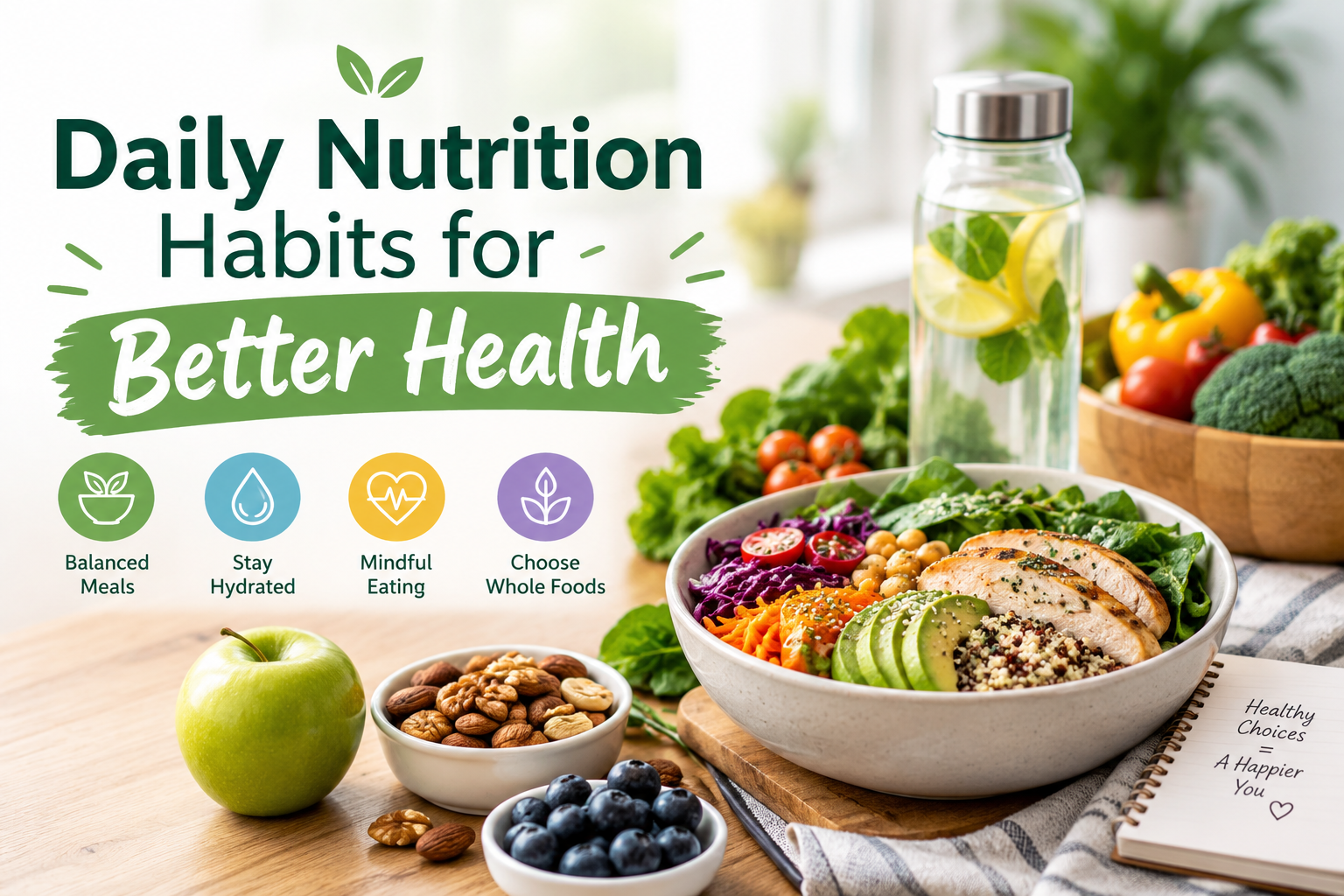
Good health often begins with the small choices made throughout the day. A balanced diet, regular hydration, and mindful eating can help support energy, digestion, and overall well-being. While many people associate healthy living with strict diets or major lifestyle changes, sustainable nutrition habits are usually more practical and easier to maintain.
Daily Nutrition Habits for Better Health focuses on simple, realistic actions that can become part of an everyday routine. From choosing nutrient-rich foods to planning balanced meals, these habits can help individuals build a healthier relationship with food and support long-term wellness.
Why Daily Nutrition Habits Matter
The body relies on essential nutrients to function properly. Carbohydrates provide energy, proteins support muscle maintenance, healthy fats assist important bodily processes, and vitamins and minerals help maintain normal body functions.
However, inconsistent eating patterns, frequent consumption of highly processed foods, and inadequate hydration can make it harder to meet nutritional needs. Sustainable nutrition habits help address these challenges by encouraging balance rather than perfection.
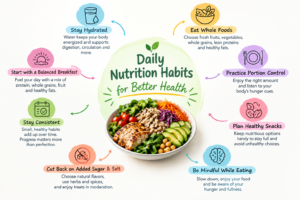
Small improvements, such as adding vegetables to meals or replacing sugary drinks with water, can gradually contribute to better overall health.
1. Start the Day with a Balanced Breakfast
A nutritious breakfast can help provide energy after the overnight fasting period. A balanced meal may include a source of protein, whole grains, fruit, or healthy fats.
For example, oatmeal with fruit and yogurt, or whole-grain toast with eggs, can offer a combination of nutrients that supports a satisfying start to the day.
Skipping breakfast does not affect everyone in the same way, but individuals who feel hungry or low on energy in the morning may benefit from establishing a consistent breakfast routine.
2. Include More Nutrient-Rich Foods
Nutrient-rich foods provide essential vitamins, minerals, fiber, and other beneficial compounds. Fruits, vegetables, whole grains, legumes, nuts, seeds, and lean protein sources can all contribute to a balanced diet.
A simple approach is to add variety and color to meals. Different fruits and vegetables contain different nutrients, so eating a wide range of foods can help support nutritional balance.
Rather than removing every favorite food, individuals can focus on adding more nourishing choices to their daily meals.
3. Practice Balanced Portion Control
Healthy eating is not only about what a person eats but also about how much is consumed. Portion control can help individuals enjoy a variety of foods while avoiding consistently eating beyond their body’s needs.
A balanced plate may include vegetables, a protein source, whole grains, and a moderate amount of healthy fat. Portion needs vary depending on age, activity level, health status, and individual goals.
Mindful eating can also help individuals recognize hunger and fullness cues, making meals more satisfying and intentional.
4. Stay Hydrated Throughout the Day
Water plays an important role in digestion, temperature regulation, circulation, and other bodily functions. Dehydration may contribute to fatigue, headaches, and difficulty concentrating.
Keeping water available throughout the day can make hydration easier. Individuals may also obtain fluids from foods such as fruits, vegetables, soups, and other beverages.
While hydration needs vary, paying attention to thirst and maintaining regular fluid intake can support everyday well-being.
5. Choose Whole Foods More Often
Whole foods are generally less processed and often provide more fiber and essential nutrients than highly refined alternatives. Examples include fresh produce, whole grains, beans, eggs, fish, and unsalted nuts.
Choosing whole foods more often does not mean avoiding all processed foods. Many processed options, such as frozen vegetables, canned beans, and plain yogurt, can also be nutritious and convenient.
The goal is to create a practical balance that fits an individual’s lifestyle and preferences.
6. Plan Healthy Snacks
Thoughtful snack planning can help prevent long gaps between meals and reduce the temptation to rely on less nutritious options when hunger strikes.
Simple choices may include fruit with nuts, yogurt, vegetable sticks with hummus, or whole-grain crackers with cheese. Combining protein, fiber, or healthy fats may help snacks feel more satisfying.
Keeping nutritious options available at home, work, or school can make healthy choices more convenient.
7. Reduce Excessive Added Sugar and Salt
Frequent consumption of foods and drinks high in added sugar or sodium may make it harder to maintain a balanced diet. Sugary beverages, sweets, and heavily salted packaged foods can be enjoyed occasionally, but moderation is important.
Individuals can gradually reduce added sugar by choosing unsweetened drinks more often and reduce excess sodium by using herbs, spices, and other flavoring alternatives.
These small adjustments can support healthier eating patterns without making meals feel restrictive.
8. Develop Mindful Eating Habits
Mindful eating involves paying attention to food, hunger, fullness, and the experience of eating. Eating slowly, minimizing distractions, and noticing how different foods affect satisfaction can encourage a more balanced relationship with meals.
This approach can also help individuals recognize emotional or habitual eating patterns. Mindful eating is not about judging food choices; it is about becoming more aware of them.
Over time, greater awareness may make it easier to make choices that support personal health goals.
9. Maintain Consistency Without Seeking Perfection
One of the most important parts of healthy nutrition is consistency. A single less-balanced meal does not undo an otherwise nutritious routine.
Sustainable habits allow flexibility for celebrations, travel, and personal preferences. Individuals are more likely to maintain changes when those changes fit their daily schedules and feel realistic.
Instead of attempting to change everything at once, a person may begin with one or two manageable habits and build from there.
10. Make Nutrition a Long-Term Priority
Daily nutrition habits work best when they become part of a broader healthy lifestyle. Regular physical activity, sufficient sleep, stress management, and routine medical care can complement nutritious eating.
Individuals with specific health conditions, allergies, or dietary requirements may benefit from guidance from a registered dietitian or qualified healthcare professional.
A long-term approach focuses on nourishing the body, enjoying food, and making informed choices that support overall well-being.
Conclusion
Building better nutrition habits does not require extreme diets or complicated meal plans. Simple actions—such as eating balanced meals, choosing nutrient-rich foods, staying hydrated, planning snacks, and practicing mindful eating—can make a meaningful difference over time.
The key to Daily Nutrition Habits for Better Health is consistency, flexibility, and a focus on realistic improvements. By making thoughtful food choices part of everyday life, individuals can support their energy, digestion, and long-term health while developing a more positive relationship with nutrition.









[…] the reasons behind nighttime overeating is an important first step. In many cases, the habit is connected to daily routines rather than a lack of […]
[…] sitting quietly, or taking a break from work. Recovery can also include gentle movement, proper nutrition, hydration, stretching, and activities that support overall […]
[…] diet, the goal is not simply to eat more protein. It is to create meals that support overall health, energy, and long-term […]