
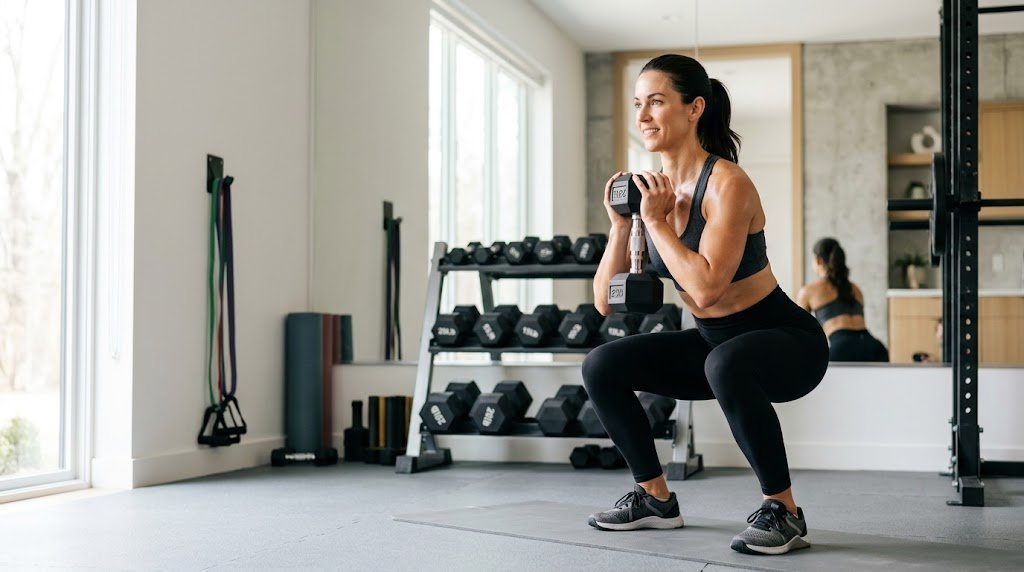
Finding time for the gym or using complicated equipment can make a consistent fitness routine difficult. Dumbbell workouts offer a practical alternative because they can target multiple muscle groups with relatively little equipment. Dumbbells can also be used for both isolated and full-body movements, making them suitable for different training goals and experience levels.
This article explores the benefits of dumbbell training, effective exercises for different muscle groups, and practical ways to create a simple workout routine at home or in the gym.
What Are Dumbbell Workouts?
Dumbbell workouts are strength-training routines that use dumbbells as resistance. Unlike some fixed gym machines, dumbbells allow each side of the body to work independently and can be used through a wide range of movements.
A routine can include exercises for the chest, back, shoulders, arms, legs, and core. This flexibility makes dumbbells useful for both individual muscle exercises and compound movements that involve several muscle groups at once.
Benefits of Dumbbell Workouts
1. They Help Build Strength
Regular resistance training can increase muscular strength and help maintain lean muscle mass. Strength training is also associated with benefits for bone health and overall physical function.
Dumbbells provide adjustable resistance, allowing individuals to gradually increase the challenge as their strength improves.
2. They Require Minimal Equipment
A pair of dumbbells can support a surprisingly broad range of exercises. This makes them particularly useful for people who prefer exercising at home or have limited access to gym equipment.
A well-planned routine can combine movements such as presses, rows, squats, lunges, and curls without requiring a large collection of machines.
3. They Can Train the Whole Body
Dumbbells can be incorporated into exercises for virtually every major muscle group. A full-body routine might combine a lower-body movement, an upper-body push, an upper-body pull, and a core-focused exercise.
Training multiple muscle groups can also make workouts more time-efficient.
Best Dumbbell Exercises for Beginners
Beginners generally benefit from learning basic movement patterns before progressing to heavier resistance. Proper technique should remain a priority throughout the workout.
Dumbbell Squat
The dumbbell squat primarily works the lower body, including the quadriceps and glutes. Holding dumbbells while performing a controlled squat adds resistance while allowing the movement to remain relatively simple.
Dumbbell Row
The dumbbell row is useful for strengthening the back and supporting muscles involved in pulling movements. A controlled tempo can help maintain good technique and keep the focus on the intended muscles.
Dumbbell Shoulder Press
The shoulder press works the shoulders and also involves the triceps. The exercise can be performed while standing or seated, depending on the individual’s preference and stability.
Dumbbell Chest Press
The dumbbell chest press is commonly used to train the chest, shoulders, and triceps. Each arm moves independently, which can make the exercise useful for developing balanced strength.
Dumbbell Romanian Deadlift
This movement targets the posterior chain, including the hamstrings and glutes. Maintaining a neutral back and controlling the movement is particularly important when learning the exercise.
How to Create an Effective Dumbbell Workout
A good routine does not have to be complicated. Beginners can start with a small number of fundamental movements and gradually increase the challenge.
A balanced session could include:
- A lower-body exercise
- A chest or shoulder press
- A back exercise
- An arm exercise
- A core movement
The resistance should be challenging while still allowing the individual to maintain proper form. As the body adapts, progression can come from increasing weight, repetitions, or sets.
Dumbbell Workouts at Home
One of the biggest advantages of dumbbells is their convenience. A suitable home workout can be performed in a relatively small space, provided there is enough room to move safely.
A simple full-body session could include squats, rows, chest presses, Romanian deadlifts, and shoulder presses. Beginners can start with lighter weights and focus on controlled movement before increasing resistance.
Consistency is more important than making every workout extremely long or intense. Current guidance from fitness and health sources emphasizes regular strength training and gradual progression rather than continually pushing for maximum effort.
How Often Should Dumbbell Workouts Be Done?
The appropriate frequency depends on the individual’s fitness level, goals, and recovery. For general strength training, adults are commonly advised to perform muscle-strengthening activities on at least two days each week.
Beginners can benefit from leaving recovery time between sessions, particularly when the same muscle groups are being trained. As fitness improves, the routine can be adjusted according to individual goals and training experience.
Tips for Safer Dumbbell Training
Proper technique should come before heavier weights. A few simple habits can make strength training more effective and safer:
- Start with manageable resistance.
- Learn the correct movement pattern before increasing weight.
- Keep movements controlled rather than rushing through repetitions.
- Warm up before demanding exercises.
- Allow muscles adequate time to recover.
- Stop if an exercise causes sharp or unusual pain.
- Consider professional instruction when learning unfamiliar exercises.
Using excessive weight or poor technique can increase injury risk, while gradual progression gives the body time to adapt.
Final Thoughts
Dumbbells provide a flexible and accessible way to incorporate strength training into a fitness routine. With the right exercises, manageable resistance, proper technique, and consistent training, they can support strength and overall physical fitness. The most effective routine is one that matches the individual’s ability and goals and can be maintained over time.





[…] also allow a workout to be adjusted according to the user’s strength and experience. Lighter weights can help […]
[…] sustainable approach combines nutritious eating, regular physical activity, adequate sleep, hydration, and sensible portion control. The goal is not simply to reach a number […]
[…] for energy. Carbohydrates can therefore play an important role in supporting everyday activities, exercise, and normal body […]
[…] a light resistance level and pedal at a comfortable pace. After several sessions, resistance or workout duration can be increased […]
[…] people who exercise regularly, sleep is especially valuable. Physical activity creates demands on the muscles and nervous system, while sufficient rest gives the body time to […]
[…] on a bench or chair and hold a light dumbbell in each […]