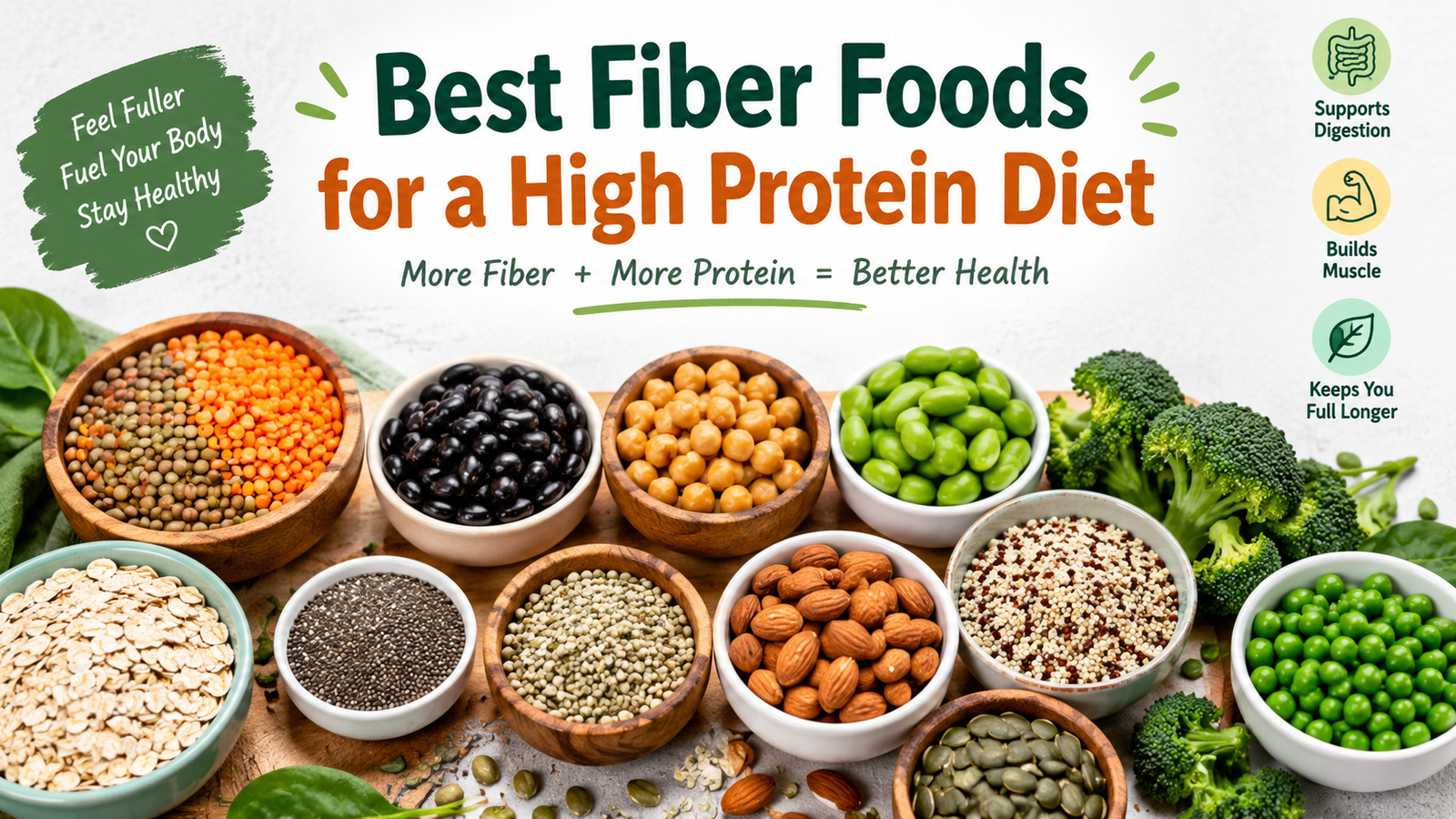
Eating enough protein is important for muscle growth, recovery, and overall health. However, a high-protein diet should not overlook fiber. Fiber supports digestive health, helps promote fullness, and contributes to balanced meals. The good news is that many nutritious foods provide both protein and fiber, making them useful additions to everyday eating.
This guide explores the Best Fiber Foods for a High Protein Diet, including legumes, seeds, whole grains, and plant-based options. It also explains how these foods can support a balanced, satisfying, and sustainable approach to nutrition.
Why Fiber Matters in a High-Protein Diet
Protein is often the main focus of muscle-building and fitness diets, but fiber plays an equally valuable supporting role. While protein helps maintain and repair body tissues, fiber supports regular digestion and can help meals feel more satisfying.
A diet built around protein-rich foods alone may lack variety if it excludes beans, whole grains, vegetables, and seeds. Adding fiber-rich choices can make meals more balanced while providing important nutrients such as vitamins, minerals, and healthy fats.
For people following a high-protein diet, the goal is not simply to eat more protein. It is to create meals that support overall health, energy, and long-term consistency.
Best Fiber Foods for a High Protein Diet
The following foods are among the most useful options for combining fiber with protein. Their nutritional values vary by preparation and serving size, so food labels or reliable nutrition databases can help when precise tracking is needed.
1. Lentils
Lentils are one of the most practical foods for a high-protein, high-fiber diet. They are affordable, easy to prepare, and work well in soups, salads, curries, and grain bowls.
A cooked serving provides both plant-based protein and a substantial amount of fiber. Lentils also contain iron, folate, and other nutrients that support overall nutrition.
How to use them: Add cooked lentils to salads, serve them with brown rice, or use them as a base for a protein-rich meal.
2. Black Beans
Black beans offer a combination of plant-based protein, fiber, and complex carbohydrates. Their hearty texture makes them a satisfying addition to meals, especially for people reducing their reliance on meat.
They can also contribute to better meal variety and help make a high-protein diet more affordable.
How to use them: Include black beans in burrito bowls, soups, tacos, or salads with vegetables and a protein-rich topping.
3. Chickpeas
Chickpeas are versatile legumes that provide protein and fiber while adding texture and flavor to meals. They are commonly used in hummus, roasted snacks, curries, and salads.
Their combination of nutrients can help create meals that are filling without relying entirely on animal-based protein sources.
How to use them: Add chickpeas to a grain bowl, blend them into hummus, or roast them with herbs and spices.
4. Edamame
Edamame, or young soybeans, is a particularly useful choice because it provides a relatively high amount of plant-based protein along with fiber. It also contains essential nutrients such as folate and vitamin K.
Edamame can be a convenient option for people looking to include more plant-based foods in a high-protein eating pattern.
How to use it: Serve steamed edamame as a snack, add it to salads, or mix it into stir-fries and rice bowls.
5. Chia Seeds
Chia seeds are small but nutrient-dense. They are especially rich in fiber and also provide plant-based protein and healthy fats, including omega-3 fatty acids.
Because they absorb liquid and form a gel-like texture, chia seeds can be used in several easy recipes.
How to use them: Stir them into yogurt, add them to overnight oats, or prepare chia pudding for a fiber-rich breakfast.
6. Hemp Seeds
Hemp seeds provide plant-based protein, fiber, and healthy fats. They have a mild, nutty flavor and can be added to meals without significantly changing their texture.
They are a convenient way to increase the nutritional value of everyday foods.
How to use them: Sprinkle hemp seeds over oatmeal, yogurt, salads, or roasted vegetables.
7. Quinoa
Quinoa is a whole grain-like seed that provides both protein and fiber. It is also valued for containing all nine essential amino acids, making it a useful plant-based protein choice.
Quinoa works well as a substitute for refined grains and can form the foundation of a balanced meal.
How to use it: Pair cooked quinoa with beans, vegetables, tofu, or grilled chicken for a nutritious bowl.
8. Oats
Oats are a convenient source of fiber, particularly beta-glucan, a type of soluble fiber. Although oats are not as protein-rich as legumes or soy foods, they can contribute to a balanced high-protein meal when paired with other ingredients.
How to use them: Prepare oatmeal with Greek yogurt, milk, chia seeds, or a protein-rich topping.
9. Almonds
Almonds provide protein, fiber, healthy fats, and several important micronutrients. They can be a convenient snack or a crunchy addition to meals.
Because nuts are calorie-dense, portion awareness can be helpful, especially for people tracking their energy intake.
How to use them: Add a small portion to yogurt, oatmeal, salads, or a balanced snack plate.
10. Pumpkin Seeds
Pumpkin seeds are a useful source of plant-based protein, fiber, magnesium, and healthy fats. They can add a satisfying crunch to meals while improving their nutritional variety.
How to use them: Sprinkle pumpkin seeds over salads, soups, oatmeal, or roasted vegetables.
11. Broccoli
Broccoli provides fiber, vitamins, minerals, and a modest amount of protein. While it is not a primary protein source, it can complement protein-rich foods and help create a more balanced plate.
How to use it: Serve steamed or roasted broccoli alongside chicken, fish, tofu, or beans.
12. Green Peas
Green peas contain both protein and fiber, making them a useful vegetable for people following a high-protein diet. They are easy to add to a wide range of meals and provide nutrients such as vitamin C and vitamin K.
How to use them: Mix peas into rice dishes, soups, pasta, or vegetable stir-fries.
How to Combine Fiber and Protein in One Meal
The most effective approach is to combine a protein-rich food with a fiber-rich food rather than relying on a single ingredient. This creates meals with greater nutritional variety and can make healthy eating easier to maintain.
Some simple combinations include:
- Lentils + quinoa: A plant-based meal with protein, fiber, and complex carbohydrates.
- Greek yogurt + chia seeds: A convenient breakfast or snack with protein and fiber.
- Chicken + broccoli + brown rice: A balanced meal with animal-based protein, vegetables, and whole grains.
- Tofu + edamame + vegetables: A plant-based combination with multiple protein sources.
- Oatmeal + hemp seeds + yogurt: A fiber-rich breakfast with additional protein.
Tips for Adding More Fiber to a High-Protein Diet
A sudden increase in fiber may cause bloating or digestive discomfort. Gradually increasing fiber intake and drinking enough water can help the body adjust.
A few practical habits include:
- Add legumes gradually: Start with smaller portions of lentils, beans, or chickpeas.
- Choose whole grains: Replace some refined grains with oats, quinoa, or brown rice.
- Include vegetables regularly: Add vegetables to lunch and dinner rather than treating them as optional.
- Use seeds and nuts mindfully: Small portions can add fiber, protein, and healthy fats.
- Drink enough water: Fluids help fiber work effectively in the digestive system.
- Prioritize variety: Different foods provide different nutrients, so a combination is better than relying on one ingredient.
Final Thoughts
The Best Fiber Foods for a High Protein Diet are not limited to one category. Legumes, seeds, whole grains, nuts, and vegetables can all contribute to a more balanced eating pattern. By combining these foods with reliable protein sources, individuals can create meals that support fullness, digestive health, and overall nutrition.
A sustainable high-protein diet is one that includes variety, enjoyable foods, and habits that can be maintained over time.