
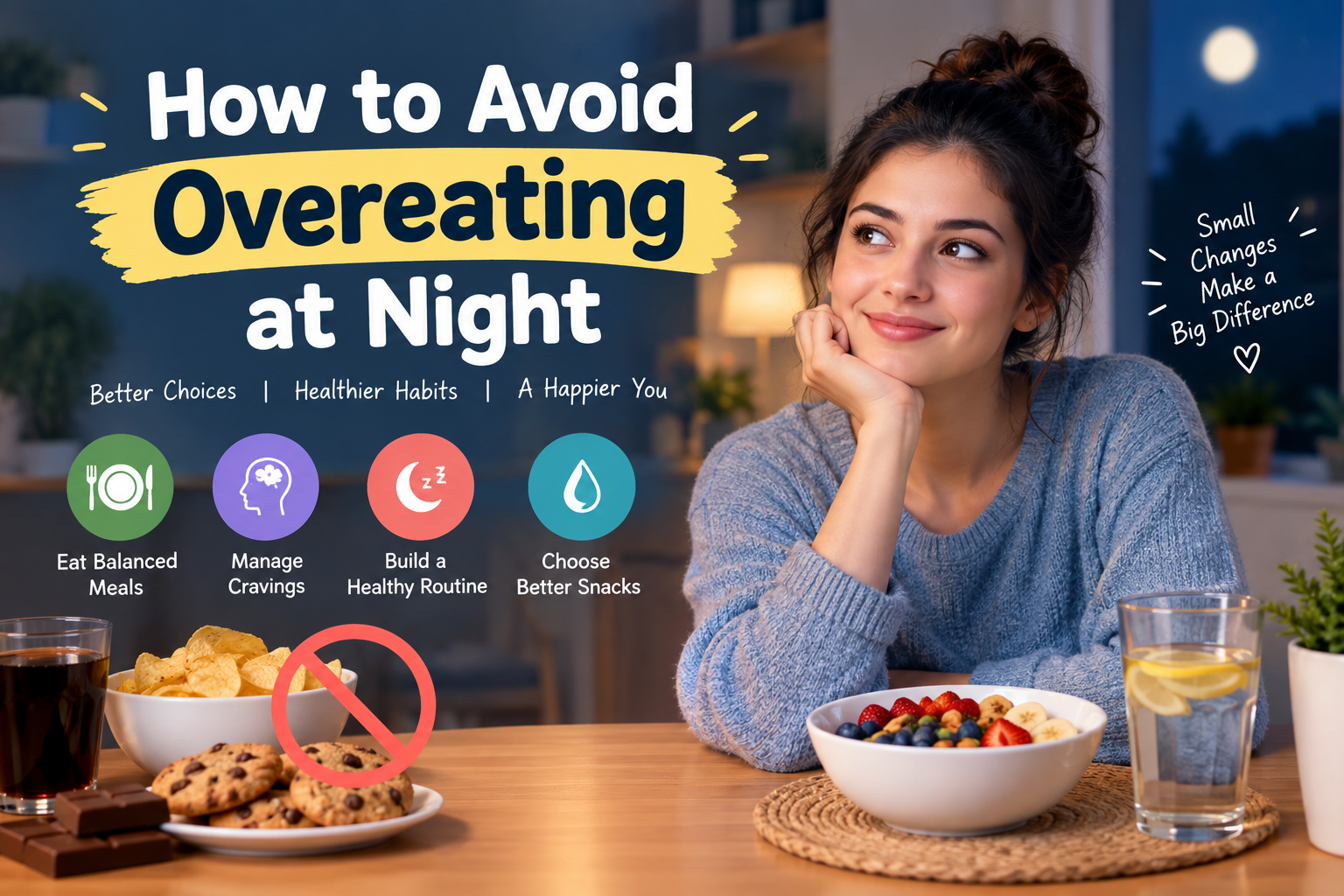
Night time overeating is a common challenge that can leave people feeling uncomfortable, frustrated, or disappointed with their eating habits. Late-night cravings may develop because of stress, boredom, irregular meals, or simply being awake for several hours after dinner. Fortunately, avoiding overeating at night does not require extreme dieting or ignoring genuine hunger. Small, sustainable changes can make evening eating more balanced and manageable.
Why Does Overeating Happen at Night?
Understanding the reasons behind nighttime overeating is an important first step. In many cases, the habit is connected to daily routines rather than a lack of willpower.
Skipping Meals During the Day
When someone eats too little during the day, hunger may become stronger in the evening. A light breakfast, rushed lunch, or missed afternoon snack can leave the body seeking extra energy later.
Regular, satisfying meals can help reduce intense nighttime hunger and make it easier to recognize when the body has had enough food.
Stress and Emotional Eating
Stressful days often increase the desire for comforting foods. After a busy schedule, snacks may become a way to relax, reward oneself, or temporarily escape uncomfortable emotions.
Recognizing emotional triggers can help a person respond more thoughtfully instead of automatically reaching for food.
Boredom and Habit
Sometimes, nighttime eating happens simply because a person is watching television, scrolling through a phone, or following a familiar routine. The desire to snack may be linked more to the activity than to physical hunger.
Changing the evening routine can help break this automatic pattern.
How to Avoid Overeating at Night
A few practical habits can make nighttime eating easier to manage without creating unnecessary restrictions.
Eat Balanced Meals Throughout the Day
Regular meals that include protein, fiber, healthy fats, and carbohydrates can help support steady energy and satisfaction. When the body receives enough nourishment during the day, intense evening cravings may become less frequent.
A balanced dinner may include vegetables, a protein source, whole grains, and a moderate amount of healthy fat.
Recognize the Difference Between Hunger and Cravings
Physical hunger often develops gradually and can be satisfied by a variety of foods. Cravings may appear suddenly and focus on a particular snack.
Before eating, a person can pause and ask:
- Is there physical hunger?
- Has the last meal been several hours ago?
- Is the desire to eat connected to stress, boredom, or tiredness?
- Would a satisfying snack help?
This brief pause can encourage mindful eating without requiring judgment.
Plan a Satisfying Evening Snack
If hunger is genuine, a planned snack may be more helpful than trying to ignore it. Choosing a satisfying option can prevent continued grazing later.
Examples include:
- Yogurt with fruit
- A small bowl of oatmeal
- Whole-grain toast with nut butter
- Fresh fruit with a handful of nuts
- Vegetables with hummus
The goal is not to eliminate evening food but to make the choice more intentional.
Avoid Eating Directly From the Package
Eating from a large packet or container can make it difficult to notice how much has been consumed. Serving a reasonable portion in a bowl or on a plate can create a clearer stopping point.
This simple habit can encourage awareness while still allowing enjoyable foods.
Create a Relaxing Bedtime Routine
A consistent evening routine can reduce the urge to use food as the main source of relaxation. Reading, listening to music, stretching, journaling, or taking a warm shower may help signal that the day is winding down.
A relaxing routine can also support better sleep, which may make it easier to manage appetite and energy the following day.

How to Manage Nighttime Cravings
Cravings do not always need to be resisted completely. Instead, they can be handled with awareness and flexibility.
Keep Trigger Foods Less Convenient
If certain snacks are frequently eaten without much thought, storing them out of immediate reach may help reduce automatic eating. More satisfying options can be kept visible and easy to access.
This approach changes the environment rather than depending entirely on willpower.
Drink Water and Check for Other Needs
Sometimes thirst, fatigue, or stress can feel similar to hunger. Drinking water and taking a short break may help clarify what the body needs.
However, water should not be used to suppress genuine hunger. If hunger remains, eating a satisfying snack is a reasonable choice.
Practice Mindful Eating
Mindful eating involves paying attention to taste, texture, hunger, and fullness. Eating slowly and reducing distractions can help a person notice when satisfaction begins.
Even a few distraction-free minutes can make nighttime eating feel more deliberate and enjoyable.
Common Mistakes to Avoid
Some approaches may unintentionally make nighttime overeating more difficult to manage.
Skipping Dinner
Avoiding dinner to compensate for earlier eating can increase hunger later. A balanced evening meal is generally more helpful than extreme restriction.
Following Strict Food Rules
Rules such as “no food after a certain hour” may work for some routines, but they can also create unnecessary guilt or lead to stronger cravings. A flexible approach that considers hunger, schedule, and overall nutrition is often more sustainable.
Treating One Evening as a Failure
One episode of overeating does not erase healthy habits. Feeling guilty may increase stress and encourage another cycle of emotional eating.
A more helpful response is to reflect on what happened and return to regular, balanced eating the next day.
When Should Someone Seek Additional Support?
Occasional nighttime overeating is common. However, if eating feels uncontrollable, causes significant distress, or happens frequently alongside guilt or secrecy, professional support may be helpful.
A registered dietitian or qualified mental health professional can help identify underlying triggers and develop a sustainable approach to eating. Seeking support is not a sign of failure; it is a practical step toward better well-being.
Final Thoughts
Learning How to Avoid Overeating at Night is less about strict rules and more about understanding hunger, building balanced routines, and responding to cravings with awareness. Regular meals, satisfying snacks, mindful eating, and a calming bedtime routine can all support healthier evening habits. With patience and consistency, nighttime eating can become more manageable without sacrificing enjoyment or flexibility.