Starting a weight loss journey can seem challenging, especially for beginners who are surrounded by strict diets, complicated workout plans, and quick-fix promises. A healthier approach focuses on small, realistic changes that can become part of everyday life.
This guide explores practical Weight loss Tips for Beginners to help make the journey simpler and more sustainable. From improving everyday eating habits to increasing physical activity, managing portions, getting enough sleep, and setting realistic goals, each step can contribute to long-term progress. The focus is not on achieving overnight results but on developing habits that can be maintained over time.
Why Sustainable Weight Loss Matters
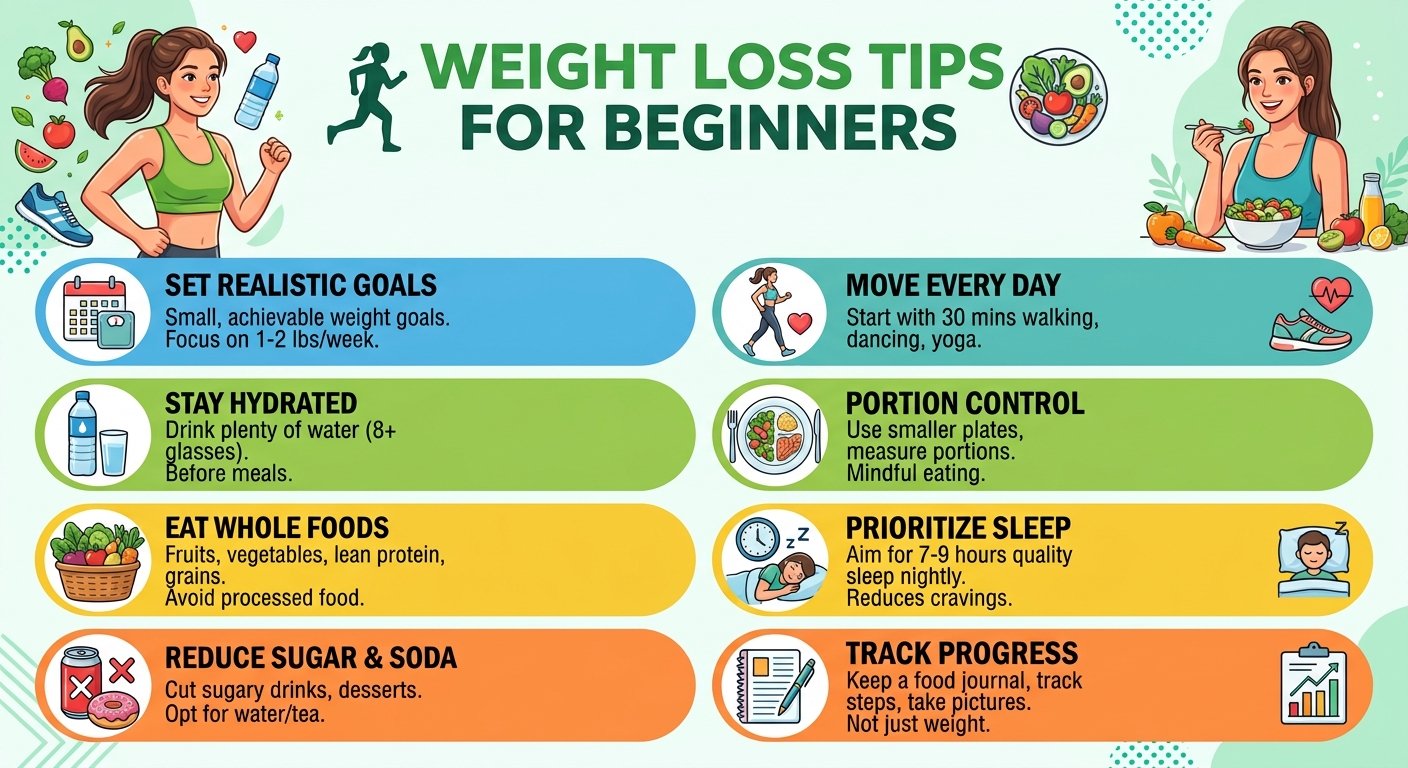
Sustainable weight loss is about creating healthy habits rather than following temporary restrictions. Extremely restrictive diets may be difficult to maintain and can make healthy eating feel frustrating.
A balanced approach allows beginners to make gradual changes while still enjoying a varied diet and normal daily activities. Consistency often matters more than perfection, making sustainable habits an important part of long-term weight management.
Set Realistic Weight Loss Goals
A clear and achievable goal can give the weight loss journey direction. Instead of focusing only on a target number on the scale, beginners can consider smaller milestones, such as becoming more active, improving food choices, or developing a consistent exercise routine.
Realistic goals also make progress easier to recognize. Even small improvements can encourage healthier choices and help build confidence.
Focus on Balanced Eating
Healthy eating does not have to mean eliminating entire food groups. A balanced diet can include vegetables, fruits, whole grains, lean sources of protein, and healthy fats.
Portion awareness can also be helpful. Paying attention to serving sizes and eating slowly may make it easier to recognize fullness and avoid unnecessary overeating.
Choose Nutrient-Dense Foods
Foods that provide plenty of nutrients relative to their calories can be useful during a weight loss journey. Vegetables, fruits, beans, whole grains, eggs, fish, and other lean protein sources can help create satisfying meals.
Rather than making dramatic dietary changes, beginners can gradually replace highly processed choices with more nutritious alternatives.
Increase Daily Physical Activity
Exercise can support weight loss, but beginners do not necessarily need an intense workout routine. Walking, cycling, swimming, dancing, and simple strength exercises can all contribute to an active lifestyle.
Starting with manageable activities can make exercise easier to maintain. As fitness improves, the duration or intensity can gradually increase.
Get Enough Sleep
Sleep is another important part of a healthy lifestyle. Poor or insufficient sleep can make healthy routines more difficult to maintain and may affect hunger, energy, and food choices.
A consistent sleep schedule and a relaxing bedtime routine can help support overall well-being alongside healthy eating and regular activity.

Stay Consistent Instead of Perfect
Weight loss rarely follows a perfectly straight path. There may be days when meals are less balanced or exercise is missed. One setback does not erase previous progress.
A flexible mindset can help beginners return to their routine without feeling discouraged. Long-term consistency is generally more valuable than trying to follow an unrealistic plan perfectly every day.
Track Progress in More Than One Way
The scale is only one way to monitor progress. Changes in energy levels, fitness, clothing fit, daily habits, and overall well-being can also provide useful indicators.
Tracking meals, physical activity, or personal milestones may help identify patterns and maintain motivation.
Avoid Quick-Fix Weight Loss Methods
Rapid weight loss plans can appear attractive because they promise fast results. However, approaches based on extreme calorie restriction or unsustainable habits may be difficult to continue.
Beginners can instead focus on gradual lifestyle improvements that support healthy weight management over the long term.
Final Thoughts
The best Weight loss Tips for Beginners are usually those that can realistically fit into everyday life. Balanced eating, regular movement, adequate sleep, realistic goals, and consistent habits can create a stronger foundation than extreme restrictions or short-term challenges.
With patience and a sustainable approach, beginners can work toward healthier routines and meaningful long-term progress.