
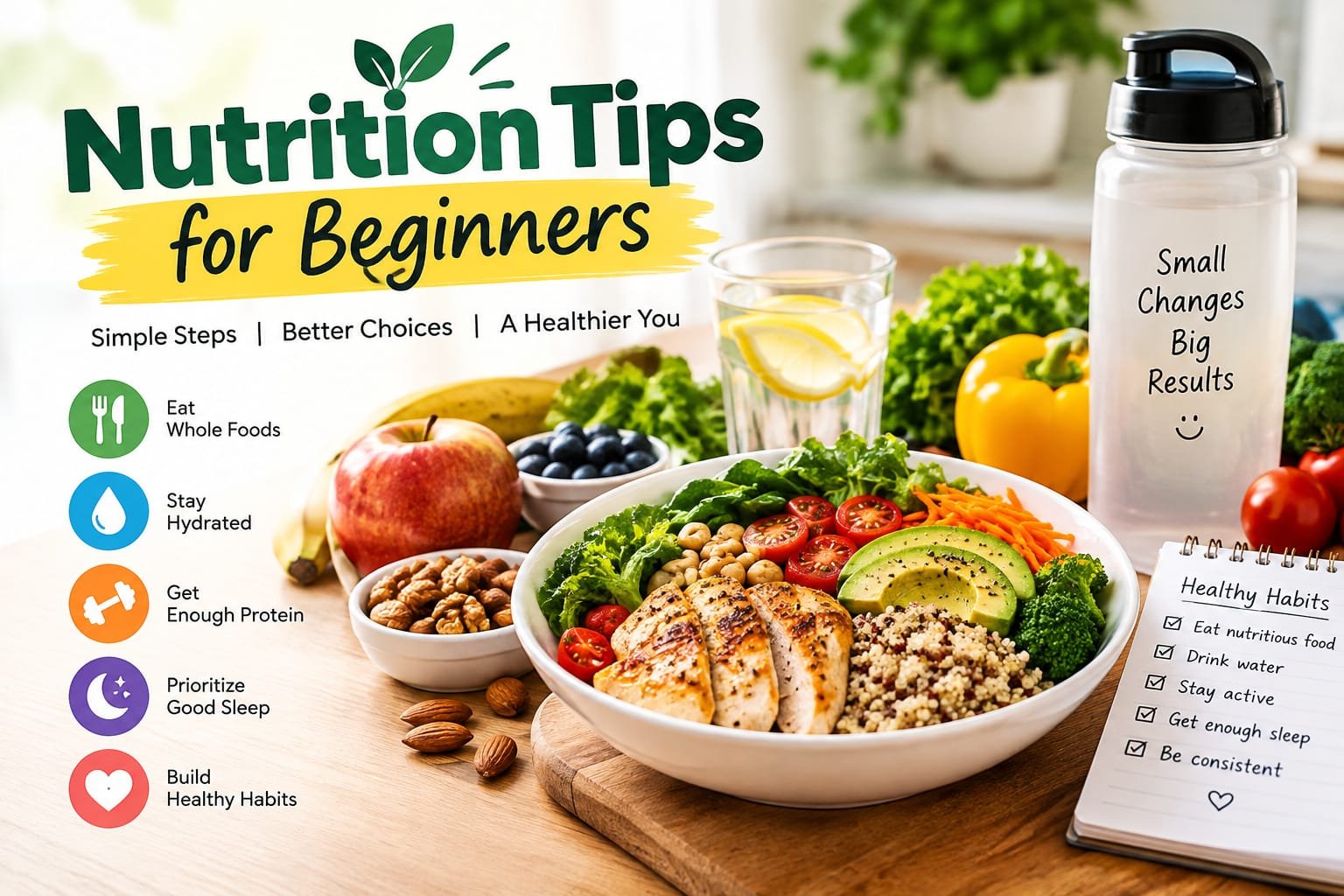
Starting a healthier diet can feel overwhelming, especially when there is so much nutrition advice available. Beginners do not need complicated meal plans or strict food rules to make meaningful changes. A few simple and consistent habits can create a strong foundation for better health.
This guide covers practical nutrition tips for beginners, from choosing balanced meals and understanding portion sizes to staying hydrated and making smarter food choices. It also explains how sustainable eating habits can become part of everyday life without making food feel restrictive or difficult.
Why Good Nutrition Matters
Nutrition provides the body with the energy and nutrients it needs to function properly. A balanced eating pattern can support energy levels, concentration, physical activity, and overall well-being.
For beginners, the goal should not be perfection. Instead, a healthy diet can be built gradually by adding more nutritious foods and reducing habits that may interfere with balanced eating.
Build Balanced Meals
One of the easiest ways to improve everyday nutrition is to create balanced meals. A meal can include a combination of vegetables or fruit, whole grains, protein, and healthy sources of fat.
For example, a simple meal might include grilled chicken, brown rice, and mixed vegetables. Another option could combine beans, whole-grain bread, salad, and avocado.
Including different food groups helps provide a wider range of essential nutrients.
Choose More Whole Foods
Whole foods can be a useful starting point for anyone learning about nutrition. Fresh vegetables, fruits, whole grains, beans, lentils, nuts, seeds, eggs, fish, and lean meats can all contribute valuable nutrients.
Highly processed foods do not necessarily have to be eliminated completely. However, beginners can focus on making nutritious foods a regular part of their meals while enjoying less nutritious options in moderation.
Understand Portion Sizes
Healthy foods can still contribute a large amount of energy when eaten in excessive portions. Learning basic portion awareness can therefore be helpful.
Rather than weighing every ingredient, beginners can use simple visual cues. A meal can contain a reasonable serving of protein, plenty of vegetables, a moderate amount of whole grains or other carbohydrates, and a small portion of healthy fats.
Listening to hunger and fullness signals can also help develop a healthier relationship with food.
Include Protein in Meals
Protein plays an important role in maintaining and repairing body tissues. It can also help meals feel more satisfying.
Good protein choices include eggs, poultry, fish, yogurt, milk, beans, lentils, tofu, nuts, and seeds. Including a protein source in breakfast, lunch, and dinner can make balanced eating easier.
Eat More Fruits and Vegetables
Fruits and vegetables provide vitamins, minerals, fiber, and other beneficial compounds. They can also add color, flavor, and variety to meals.
Beginners can start with small changes, such as adding fruit to breakfast, keeping washed vegetables available for snacks, or including a serving of vegetables with lunch and dinner.
Variety matters because different fruits and vegetables provide different nutrients.
Stay Hydrated
Water is essential for normal body functions, yet it can easily be overlooked during a busy day. Keeping water nearby can encourage regular drinking.
Individual fluid needs vary depending on factors such as activity, climate, and overall diet. Unsweetened drinks can also contribute to daily fluid intake.
Do Not Fear Carbohydrates
Carbohydrates are an important source of energy. Instead of avoiding them entirely, beginners can focus on choosing nutritious carbohydrate sources such as oats, brown rice, potatoes, whole-grain bread, fruits, and legumes.
The overall quality and balance of the diet matter more than labeling an entire food group as unhealthy.
Make Healthy Eating Sustainable
A nutritious diet should be realistic enough to maintain over time. Extremely restrictive plans may be difficult to follow and can make healthy eating feel like a temporary challenge.
Sustainable habits can include planning a few meals ahead, preparing basic ingredients at home, keeping nutritious snacks available, and allowing occasional favorite foods.
The idea behind Sustainable Lining in 2025! can also be connected to a broader focus on making everyday choices more responsible and long-lasting. For nutrition beginners, sustainability means finding an eating pattern that supports personal well-being while remaining practical for everyday life.
Start With Small Changes
Trying to change everything at once can make healthy eating unnecessarily difficult. A better approach is to choose one or two habits and build from there.
For example, a beginner might start by eating breakfast regularly, adding vegetables to one meal each day, drinking more water, or replacing refined grains with whole-grain alternatives.
Once these habits become comfortable, additional changes can be introduced.
Final Thoughts
Learning about nutrition does not require becoming an expert overnight. The most useful nutrition tips for beginner focus on balance, variety, moderation, and consistency.
By choosing more nutrient-rich foods, paying attention to portions, staying hydrated, including adequate protein, and developing realistic habits, beginners can create a healthier approach to eating. The key is to focus on steady progress rather than perfection.









[…] balanced approach to nutrition generally includes a variety of foods that provide carbohydrates, proteins, fats, vitamins, […]
[…] healthy lifestyle involves making daily choices that support the body and mind. It includes nutritious eating, regular physical activity, sufficient sleep, stress management, good hygiene, and time for […]