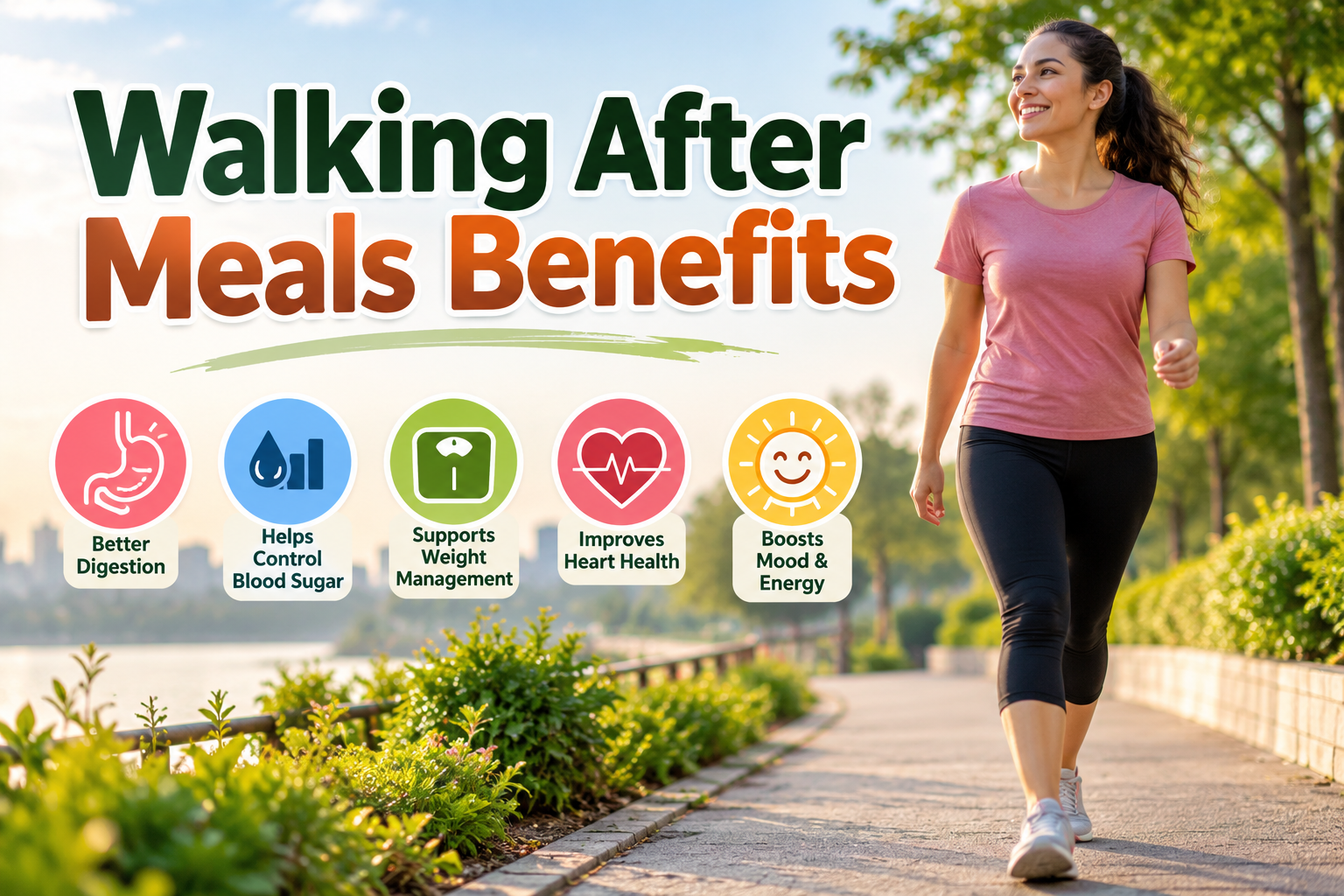
Walking After Meals Benefits can make a meaningful difference in everyday health and wellness. Taking a short walk after eating is a simple habit that may support blood sugar control, encourage healthy digestion, and improve overall well-being. Even 10–15 minutes of gentle walking can be a practical addition to a healthier lifestyle.
Many people sit immediately after eating, especially during busy workdays. However, adding a little movement after breakfast, lunch, or dinner can help reduce prolonged sitting and support a more active routine.
This article explores the key benefits of walking after meals, the science behind them, the best time to walk, and practical ways to build a sustainable walking habit.
What Are the Walking After Meals Benefits?
Walking after eating is a form of light physical activity that helps the body remain active during digestion. When someone walks, their muscles use energy, including glucose circulating in the bloodstream.
Research suggests that light walking after meals can reduce post-meal blood sugar increases compared with remaining seated. Other possible advantages include improved mood, greater daily activity, and support for long-term weight management.
The benefits do not require intense exercise. A comfortable walk around the neighborhood, office, or home may be enough to get started.
9 Important Health Benefits of Walking After Meals
1. Helps Control Blood Sugar Levels
One of the most well-supported advantages of walking after eating is improved post-meal blood sugar management.
After a meal, carbohydrates are broken down into glucose, which enters the bloodstream. The body releases insulin to help move glucose into cells for energy.
During walking, working muscles use glucose, which can help reduce the rise in blood sugar following a meal.
This may be particularly helpful for people who experience significant blood sugar fluctuations after eating.
A short walk after a carbohydrate-rich meal can be an accessible way to support metabolic health. However, people with diabetes who use insulin or medications that can cause low blood sugar should discuss exercise timing and precautions with their healthcare professional.
2. Supports Healthy Digestion
A gentle walk may help support normal digestive movement and reduce feelings of fullness after eating.
Physical activity can encourage movement through the gastrointestinal tract, although the effects vary depending on the individual and the type of meal.
Some people find that walking comfortably after dinner makes them feel less sluggish or overly full.
For a comfortable experience, a person can:
-
Begin with a slow walking pace.
-
Avoid intense exercise immediately after a large meal.
-
Wear comfortable clothing.
-
Choose a flat and safe walking route.
-
Stop or slow down if discomfort develops.
Walking is not a guaranteed treatment for bloating, constipation, or other digestive problems. Persistent symptoms should be assessed by a healthcare professional.
3. Supports Healthy Weight Management
Maintaining a healthy weight often depends on consistent habits rather than occasional intense workouts.
Walking after meals increases daily physical activity and contributes to energy expenditure.
Although a short walk burns a relatively modest number of calories, repeating this habit throughout the week can make a useful contribution to an active lifestyle.
For example, someone who walks for 10 minutes after breakfast, lunch, and dinner adds 30 minutes of movement to their day.
When combined with balanced nutrition, adequate sleep, and regular exercise, this habit may support long-term weight management.
It is important to remember that walking after eating does not specifically target belly fat or produce rapid weight loss.
4. Encourages Better Heart Health
Regular walking is a simple form of aerobic activity that can support cardiovascular health.
Walking helps the heart and circulatory system work more efficiently. Over time, consistent physical activity can contribute to healthier blood pressure, improved fitness, and better cardiovascular well-being.
Short walks after meals can help individuals gradually increase their total weekly activity.
For beginners, starting with gentle movement may feel more manageable than committing immediately to long exercise sessions.
The greatest long-term benefits generally come from maintaining an active lifestyle that includes sufficient moderate-intensity activity.
5. May Reduce Post-Meal Sluggishness
Feeling sleepy or sluggish after a large meal is common.
Meal size, food composition, sleep quality, and natural daily rhythms can all contribute to post-meal tiredness.
A short walk may help some people feel more alert by encouraging movement and providing a break from sitting.
Walking outdoors can also offer fresh air and a change of environment, which may improve the feeling of wakefulness.
Rather than relying on another cup of coffee, someone experiencing mild afternoon sluggishness may benefit from trying a comfortable 10-minute walk.
However, persistent or unusually severe fatigue after meals deserves medical attention.
6. Improves Mood and Reduces Everyday Stress
Walking provides benefits beyond physical fitness.
Light physical activity can help improve mood, reduce tension, and create a mental break from daily responsibilities.
An evening walk after dinner may be especially enjoyable for someone who spends much of the day working at a desk.
Walking in a quiet neighborhood, park, or garden can provide an opportunity to relax.
Regular movement may also support emotional well-being by helping people maintain a predictable, healthy daily routine.
Although walking can complement stress management, it should not replace professional care when mental health symptoms require treatment.

7. Helps Reduce Prolonged Sitting
Many modern routines involve extended periods of sitting, whether at work, during travel, or while watching television.
Remaining inactive for long periods can limit opportunities for movement throughout the day.
Walking after eating offers a convenient way to interrupt sedentary behavior.
For example, an office worker might take a short walk after lunch instead of immediately returning to their desk.
Similarly, families can make an evening stroll part of their regular routine.
These small activity breaks can gradually increase daily movement without requiring special equipment or gym membership.
8. May Support Better Sleep Habits
Regular physical activity is associated with better sleep quality.
A relaxing walk after dinner may help some people transition from a busy day into a calmer evening routine.
Gentle movement can provide an opportunity to unwind, especially when combined with reduced screen time and consistent sleeping hours.
However, the direct effects of post-meal walking on sleep have not been established as strongly as its blood sugar benefits.
For better sleep, walking should complement other healthy habits, including a regular bedtime, a comfortable sleeping environment, and adequate rest.
9. Builds a Sustainable Healthy Lifestyle
One of the biggest advantages of post-meal walking is its simplicity.
It does not require expensive equipment, a fitness subscription, or advanced training.
Most people who can walk comfortably can begin with a few minutes and gradually increase their activity.
This makes walking suitable for many beginners, busy professionals, and older adults.
The habit can also encourage other positive lifestyle changes, such as choosing balanced meals, spending more time outdoors, and reducing unnecessary sitting.
Consistency is often more valuable than trying to complete a demanding walking routine for only a few days.
How Long Should Someone Walk After Eating?
The ideal walking duration depends on fitness level, comfort, and personal health goals.
For many healthy adults, starting with 5–10 minutes of light walking is reasonable. Those who feel comfortable can gradually increase the duration.
| Walking duration | Practical purpose |
|---|---|
| 5 minutes | An easy starting point for beginners |
| 10 minutes | A manageable post-meal activity break |
| 15 minutes | Additional movement and potential blood sugar benefits |
| 20–30 minutes | More daily activity for those who are comfortable walking longer |
There is no single duration that guarantees the best results for everyone.
Someone who cannot complete a longer walk may still benefit from shorter periods of movement throughout the day.
What Is the Best Time to Walk After a Meal?
Walking relatively soon after eating may be particularly useful for managing post-meal blood sugar.
Some research suggests that beginning a gentle walk shortly after a meal can help limit glucose increases.
However, timing should also depend on comfort.
After a light meal, someone may feel comfortable walking almost immediately. Following a particularly large or heavy meal, a slower pace or a brief rest may be more suitable.
The goal is not to force exercise while feeling uncomfortable.
Walking After Breakfast
A short morning walk can introduce movement early in the day.
It may help someone establish a consistent routine before work or other responsibilities begin.
Walking After Lunch
A lunchtime walk provides an opportunity to interrupt prolonged sitting.
For office workers, even walking around the building or nearby streets can be a practical option.
Walking After Dinner
An evening walk can offer a relaxing way to finish the day.
It may also help reduce post-dinner blood sugar increases, particularly after meals containing substantial carbohydrates.
The most useful walking time is often the one a person can maintain consistently.
Is Walking After Meals Better Than Sitting?
For post-meal blood sugar management, light walking generally offers advantages over remaining seated.
Muscle contractions during walking increase glucose use, helping the body process some of the glucose entering the bloodstream after eating.
However, sitting briefly after a meal is not inherently harmful.
The important consideration is overall activity level and the opportunity to include regular movement.
A person does not need to walk after every single meal to maintain good health. A balanced lifestyle remains more important than following a rigid schedule.
Common Mistakes to Avoid When Walking After Meals
Walking Too Fast
Immediately beginning a brisk or intense workout after a heavy meal may cause discomfort.
A gentle pace is usually a better starting point.
Walking for Too Long Initially
Beginners sometimes attempt long walks before developing a consistent routine.
Starting with a manageable duration can help prevent unnecessary fatigue.
Ignoring Physical Discomfort
Walking should not cause chest pain, severe dizziness, or significant abdominal discomfort.
Anyone experiencing concerning symptoms should stop and seek appropriate medical care.
Expecting Immediate Weight Loss
Post-meal walking can support activity and weight management, but visible changes in body weight depend on several factors.
Long-term habits are more meaningful than expecting dramatic results after a few walks.
How to Build a Consistent Post-Meal Walking Routine
Building a sustainable walking habit does not have to be complicated.
A beginner can start by choosing one daily meal followed by a comfortable five-minute walk.
After several days, the duration can increase gradually if the activity feels manageable.
Simple strategies include:
-
Choosing a familiar and safe walking route.
-
Wearing supportive, comfortable shoes.
-
Walking with family members or friends.
-
Setting a gentle reminder after lunch or dinner.
-
Using indoor walking when outdoor conditions are unsuitable.
-
Tracking consistency rather than focusing only on steps.
People with limited mobility may benefit from suitable alternatives recommended by a healthcare professional or physiotherapist.
The most effective routine is one that fits naturally into daily life.
Frequently Asked Questions About Walking After Meals
Is walking for 10 minutes after eating beneficial?
Yes. A 10-minute walk can add useful physical activity and may help reduce post-meal blood sugar increases. Benefits depend on the individual, meal, and walking intensity.
Can walking after meals reduce belly fat?
Walking contributes to overall energy expenditure, but it cannot selectively remove belly fat. Consistent physical activity combined with appropriate nutrition may support overall fat loss.
Should someone walk immediately after dinner?
A gentle walk soon after dinner is generally comfortable for many healthy people. Those who experience discomfort after large meals may prefer to wait briefly or walk more slowly.
Is walking after every meal necessary?
No. Walking after every meal is not essential. Even one regular post-meal walk can be a practical way to increase daily movement.
Can walking after eating help with bloating?
Some individuals may experience improved digestive comfort after gentle movement. However, bloating has many causes, and walking is not a guaranteed solution.
Is a 15-minute walk better than a 5-minute walk?
A longer walk provides more physical activity and may offer additional benefits, but five minutes can still be a useful starting point. Comfort and consistency matter.
Conclusion
The Walking After Meals Benefits extend beyond simply adding more steps to a daily routine. Gentle walking after eating can help manage post-meal blood sugar, encourage physical activity, support cardiovascular health, and promote a more active lifestyle.
For beginners, starting with five to ten minutes after one meal is a realistic approach. As fitness and comfort improve, walking duration can increase gradually.
A sustainable walking habit works best alongside balanced nutrition, sufficient sleep, and other forms of regular exercise.
Small daily actions may seem insignificant at first, but consistent movement can make a valuable contribution to long-term health and well-being.