
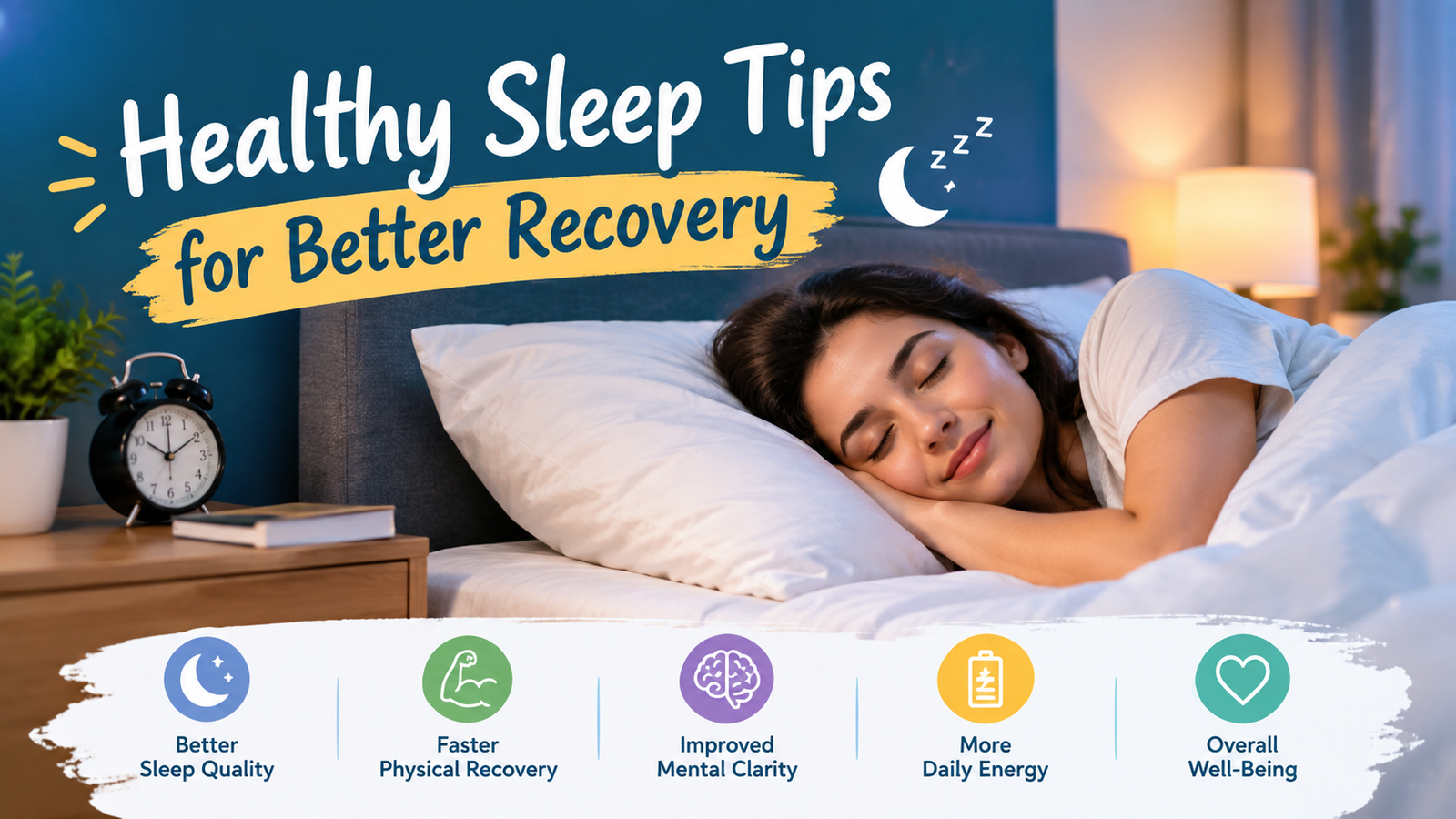
Sleep is more than a time for the body to rest. It is an essential part of physical repair, mental recovery, and overall well-being. When a person follows healthy sleep habits, the body gets a better opportunity to restore energy, support muscle recovery, and prepare for the demands of the next day.
However, busy schedules, stress, late-night screen use, and inconsistent bedtimes can make quality sleep difficult. The good news is that small, sustainable changes can make a meaningful difference. This article explores Healthy Sleep Tips for Better Recovery! and explains how practical sleep habits can support deeper rest, improve recovery, and help a person feel more refreshed.
Why Sleep Matters for Recovery
During sleep, the body carries out important restorative processes. Muscles recover from daily activity, energy levels are replenished, and the brain processes information and emotional experiences. Adequate sleep also supports concentration, mood, and the body’s ability to manage everyday stress.
For people who exercise regularly, sleep is especially valuable. Physical activity creates demands on the muscles and nervous system, while sufficient rest gives the body time to adapt and recover. Without enough sleep, a person may experience fatigue, reduced motivation, and slower recovery.
Sleep quality matters as much as sleep duration. A person may spend enough hours in bed but still feel tired if sleep is frequently interrupted or the sleeping environment is uncomfortable.
1. Maintain a Consistent Sleep Schedule
A consistent sleep schedule is one of the simplest ways to support better rest. Going to bed and waking up at similar times each day helps the body’s internal clock establish a predictable rhythm.
Even on weekends, large changes in sleeping and waking times can make it harder to fall asleep at night. A regular routine allows the body to recognize when it is time to become alert and when it is time to wind down.
A person can begin by choosing a realistic bedtime and wake-up time. Maintaining this schedule consistently can gradually make falling asleep and waking up feel more natural.
2. Create a Relaxing Bedtime Routine
A calming bedtime routine can help the body and mind transition from daytime activity to rest. Instead of moving directly from work, exercise, or entertainment into bed, a person can spend the final 30 to 60 minutes doing relaxing activities.
Helpful options may include:
- Reading a book
- Practicing gentle stretching
- Listening to quiet music
- Taking a warm shower
- Practicing slow breathing
- Preparing for the next day
The goal is to create a predictable signal that bedtime is approaching. A relaxing routine can also reduce the mental stimulation that often makes it difficult to settle down.
3. Improve the Sleep Environment
The bedroom plays an important role in sleep quality. A comfortable, quiet, and dark environment can make it easier to fall asleep and remain asleep throughout the night.
A person can improve the sleeping environment by keeping the room at a comfortable temperature, reducing unnecessary noise, and using curtains or an eye mask to limit light. A supportive mattress and pillow may also improve comfort.
Electronic devices should be kept away from the bed when possible. Notifications, bright screens, and stimulating content can interfere with relaxation and encourage later bedtimes.
4. Reduce Screen Use Before Bed
Phones, tablets, computers, and televisions can make it harder to prepare for sleep. Screen use may expose the eyes to bright light, while engaging content can keep the mind active.
Reducing screen time before bed can help create a calmer transition into sleep. A person may choose to stop using electronic devices 30 to 60 minutes before bedtime and replace them with a relaxing activity.
For those who need to use a device, lowering the brightness and avoiding stressful or highly stimulating content may be helpful. The main aim is to reduce mental stimulation and establish a more restful evening routine.
5. Pay Attention to Food and Caffeine
Daily eating and drinking habits can influence sleep. Caffeine, which is found in coffee, tea, energy drinks, and some other products, can remain active in the body for several hours. Consuming it late in the day may make it harder for some people to fall asleep.
Large or heavy meals close to bedtime may also cause discomfort. A person can experiment with finishing dinner earlier and choosing a lighter evening snack when needed.
Alcohol may make someone feel sleepy initially, but it can interfere with sleep quality and cause nighttime awakenings. Moderation and mindful timing can help support more consistent rest.
6. Exercise Regularly, but Allow Time to Recover
Regular physical activity can support better sleep, improve mood, and promote overall health. Exercise may also help a person feel naturally tired at the end of the day.
However, intense exercise immediately before bedtime can be stimulating for some individuals. Scheduling demanding workouts earlier in the day may make it easier to relax at night.
Recovery also requires balance. A person who exercises frequently should allow enough time for rest between demanding sessions. Sleep, nutrition, and appropriate recovery days work together to support physical performance and well-being.
7. Manage Stress Before Bedtime
Stress and racing thoughts can make it difficult to fall asleep. When the mind remains focused on unfinished tasks or worries, the body may struggle to enter a relaxed state.
A short wind-down practice can help. A person may write down concerns, prepare a simple to-do list for the next day, or practice slow breathing before bed.
Mindfulness, gentle stretching, and relaxation exercises may also help reduce mental tension. These habits do not need to be complicated. Even a few quiet minutes can create a more peaceful transition into sleep.

8. Get Enough Sleep Each Night
Most adults need approximately seven to nine hours of sleep per night, although individual needs can vary. Teenagers and children generally require more sleep.
Getting enough sleep gives the body sufficient time to move through different sleep stages, including stages associated with physical restoration and memory processing. Regularly sleeping too little can contribute to tiredness, reduced concentration, and difficulty recovering from daily activities.
A person can protect sleep time by setting a consistent bedtime, limiting unnecessary late-night activities, and treating sleep as an important part of the daily schedule rather than an optional extra.
9. Use Naps Carefully
Short naps can provide a temporary energy boost when nighttime sleep has been insufficient. However, long or late-afternoon naps may make it harder to fall asleep at the usual bedtime.
A person who needs a nap may benefit from keeping it relatively short and taking it earlier in the day. Naps should support nighttime sleep rather than replace a consistent sleep routine.
If daytime sleepiness continues despite adequate nighttime rest, it may be worth examining sleep quality, daily habits, or possible underlying concerns.
10. Make Sleep Habits Sustainable
The most effective sleep routine is one that a person can maintain over time. Trying to change every habit at once may feel overwhelming, so gradual improvements are often more practical.
A person might begin by:
- Setting a consistent wake-up time.
- Reducing screen use before bed.
- Improving bedroom comfort.
- Adding a short relaxation routine.
- Reviewing caffeine and exercise timing.
Small changes can become lasting habits when they fit comfortably into daily life. Sustainable sleep improvement is less about perfection and more about consistency.
When to Seek Professional Advice
Occasional poor sleep is common, but persistent sleep difficulties should not be ignored. A person who regularly struggles to fall asleep, wakes frequently, feels excessively tired during the day, or experiences loud snoring and breathing interruptions may benefit from speaking with a healthcare professional.
Professional guidance can help identify possible sleep disorders or other factors affecting rest. Addressing these concerns early may improve both sleep quality and overall recovery.
Conclusion
Healthy sleep habits can play a major role in physical repair, mental clarity, and daily energy. By maintaining a consistent schedule, creating a relaxing bedtime routine, improving the sleep environment, managing stress, and allowing enough time for rest, a person can build a stronger foundation for recovery.
The key to Healthy Sleep Tips for Better Recovery! is consistency. Small, realistic changes can gradually improve sleep quality and help the body and mind feel more prepared for the day ahead.










[…] of the most important benefits of regular walking is its positive effect on cardiovascular health. Brisk walking raises the heart rate and encourages the heart and lungs to work more […]
[…] requirements. People with certain medical conditions may also need specific fluid guidance from a healthcare […]