

Strong grip strength plays an important role in everyday activities, fitness, and sports performance. From carrying grocery bags to lifting weights, the hands and forearms help the body perform many essential movements. However, a weak grip can make these tasks more difficult and may limit progress during strength training.
Learning How to Improve Grip Strength! does not require complicated equipment or hours of training. With consistent practice, suitable exercises, and proper recovery, individuals can gradually build stronger hands, wrists, and forearms. This guide explains effective ways to improve grip strength and develop a reliable training routine.
What Is Grip Strength?
Grip strength refers to the force produced when the muscles of the hands, fingers, wrists, and forearms hold, squeeze, or support an object. It is commonly used when opening jars, carrying objects, hanging from a bar, or performing exercises such as deadlifts and rows.
Grip strength generally includes three main types:
- Crush grip: The ability to squeeze an object, such as a hand gripper.
- Pinch grip: The ability to hold an object between the fingers and thumb.
- Support grip: The ability to hold an object for an extended period, such as carrying dumbbells.
Training these different types can help create a more balanced and functional grip.
Why Is Grip Strength Important?
Grip strength supports more than just hand performance. It also contributes to better control, stability, and endurance during many physical activities.
Improves Everyday Activities
A stronger grip can make tasks such as carrying bags, turning handles, lifting boxes, and opening containers easier. It may also help individuals maintain independence as they age.
Supports Strength Training
A weak grip can become a limiting factor during exercises that require holding weights. Improving grip strength may help individuals perform pulling and carrying movements with greater confidence and control.
Enhances Sports Performance
Many sports rely on secure hand control. Climbing, tennis, martial arts, baseball, and racket sports all require different levels of grip strength and endurance.
Helps Develop Forearm Strength
Grip exercises activate several muscles in the hands and forearms. Regular training can contribute to stronger and more conditioned forearms.
How to Improve Grip Strength
Improving grip strength involves choosing suitable exercises and gradually increasing the challenge. The following methods can be performed at home or in a gym, depending on the available equipment.
1. Use a Hand Gripper
Hand grippers are compact tools designed to strengthen the muscles involved in squeezing. They are useful for beginners because resistance can often be adjusted according to ability.
How to perform the exercise:
- Hold the gripper comfortably in one hand.
- Squeeze the handles together with controlled effort.
- Hold the squeeze briefly.
- Slowly release the handles.
- Repeat for several repetitions before switching hands.
A suitable starting point is two to three sets of 8–15 repetitions per hand. The resistance should be challenging without causing pain or forcing poor technique.
2. Practice Farmer’s Carries
Farmer’s carries are one of the most effective exercises for developing support grip strength. They also challenge the shoulders, core, and upper back.
How to perform the exercise:
- Hold a dumbbell or kettlebell in each hand.
- Stand tall with the shoulders relaxed.
- Keep the wrists in a neutral position.
- Walk slowly for a set distance or duration.
- Place the weights down carefully.
Beginners can start with short walks and moderate weights. As grip endurance improves, the distance, duration, or load can gradually increase.
3. Try Dead Hangs
Dead hangs use body weight to challenge the fingers, hands, and forearms. They are especially useful for individuals who want to improve hanging endurance.
How to perform the exercise:
- Hold a secure pull-up bar with both hands.
- Allow the body to hang comfortably.
- Keep the shoulders controlled rather than completely collapsing into the joints.
- Hold the position for as long as good form is maintained.
- Step down safely and rest.
A beginner may start with several short holds instead of attempting one long hang.
4. Add Plate Pinches
Plate pinches target the thumb and fingers, making them useful for developing pinch grip strength.
How to perform the exercise:
- Place two weight plates together with their smooth sides facing outward.
- Hold them between the thumb and fingers.
- Lift the plates carefully from the floor or a stable surface.
- Hold them for a few seconds.
- Lower them with control.
Light plates are usually a sensible starting point. The exercise should be performed without excessive strain on the fingers or thumb.
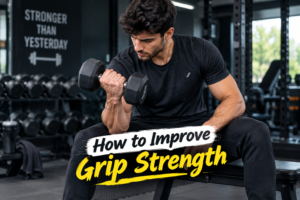
5. Include Wrist Curls and Reverse Wrist Curls
Wrist curls and reverse wrist curls strengthen the muscles that support wrist movement and grip control.
For wrist curls:
- Rest the forearms on a bench or thighs.
- Hold a light dumbbell with the palms facing upward.
- Move the wrists through a controlled range of motion.
For reverse wrist curls:
- Use the same setup with the palms facing downward.
- Lift the back of the hands while keeping the forearms stable.
Light resistance and controlled repetitions are generally more useful than lifting too heavily.
6. Train With Towel Holds
Towel holds can add variety to grip training by creating a thicker and less predictable surface to hold. They may be performed using a secure bar or by holding a towel attached to suitable equipment.
The towel should be firmly secured before training begins. Individuals should avoid using unstable setups that could cause a fall or sudden loss of control.
How Often Should Grip Strength Be Trained?
Grip strength can usually be trained two to three times per week, depending on the overall workout routine and recovery needs. Beginners may benefit from starting with two sessions per week and observing how the hands and forearms respond.
A balanced routine can include:
- One squeezing exercise
- One support grip exercise
- One pinch grip exercise
- Optional wrist-strengthening movements
Rest days are important because the muscles and connective tissues of the hands and forearms need time to recover.
Tips for Improving Grip Strength Safely
Start With Manageable Resistance
Resistance should match the individual’s current ability. Starting too aggressively can lead to excessive soreness or strain.
Focus on Consistency
Short, regular sessions are often more effective than occasional intense workouts. Progress tends to develop through gradual, repeated practice.
Increase Difficulty Gradually
Once an exercise becomes comfortable, the individual can increase the resistance, holding time, repetitions, or distance. Only one variable needs to change at a time.
Maintain Proper Form
The wrists should remain controlled, and movements should be performed without jerking. Good technique helps reduce unnecessary stress on the joints and tendons.
Allow Adequate Recovery
Persistent soreness, weakness, or discomfort may indicate that the hands and forearms need more rest. Training should be adjusted rather than pushed through pain.
Common Mistakes to Avoid
Several common mistakes can slow progress or increase the risk of discomfort.
- Training too frequently: Grip muscles may need more recovery than expected.
- Using excessive resistance: Heavy loads can encourage poor technique.
- Ignoring pinch and support grip: Focusing only on squeezing may leave other grip abilities underdeveloped.
- Skipping warm-ups: Gentle hand and wrist movements can prepare the area for exercise.
- Expecting immediate results: Grip strength generally improves gradually with consistent training.
How Long Does It Take to Improve Grip Strength?
The time required to improve grip strength varies according to training experience, consistency, age, recovery, and starting ability. Some individuals may notice improved endurance within a few weeks, while more significant strength gains can take several months.
Progress can be monitored by tracking:
- The resistance used with a hand gripper
- The duration of a dead hang
- The distance or weight used during farmer’s carries
- The number of controlled repetitions completed
Tracking these details can help individuals recognize gradual improvement and adjust their routines appropriately.
Final Thoughts
Improving grip strength is a practical way to support everyday movement, exercise performance, and overall forearm development. Exercises such as hand grippers, farmer’s carries, dead hangs, plate pinches, and wrist curls can help strengthen different aspects of grip when performed consistently.
The key is to begin at an appropriate level, use controlled technique, and progress gradually. With patience and regular training, individuals can build a stronger, more capable grip that supports both fitness goals and daily activities.