
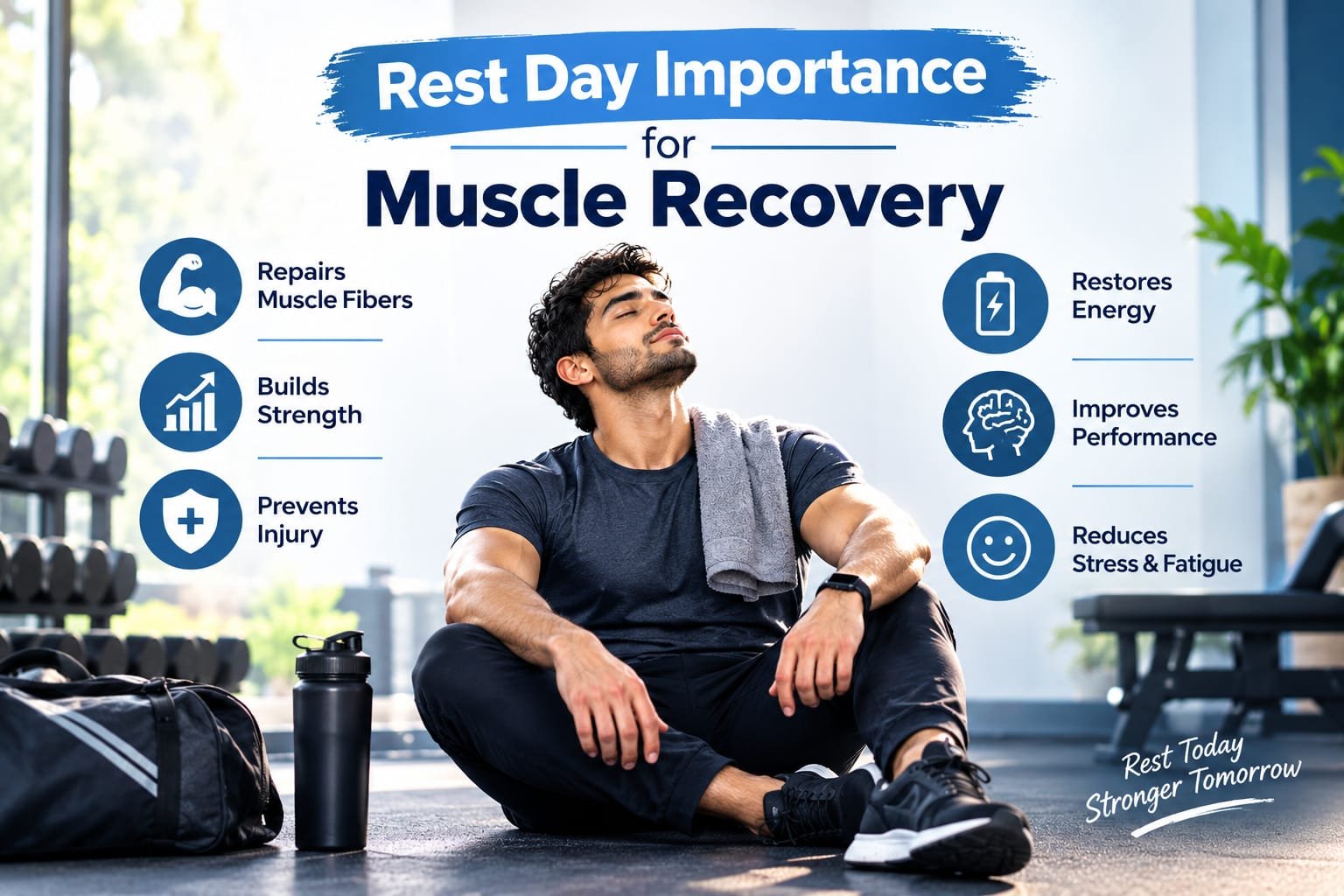
Building muscle requires more than consistent workouts and challenging exercises. The body also needs time to repair, rebuild, and prepare for the next training session. This is why understanding Rest Day Importance for Muscle Recovery is essential for anyone following a fitness routine. Rest days allow tired muscles to recover, reduce physical fatigue, and support steady progress. Rather than slowing results, proper recovery helps fitness enthusiasts train more effectively and maintain a balanced routine. This article explores how rest days contribute to muscle growth, why recovery matters, and how individuals can include rest in their training plans.
Why Are Rest Days Important for Muscle Recovery?
During strength training, muscles experience small amounts of stress and microscopic damage. The body responds by repairing these tissues, helping them become stronger over time. This process requires adequate recovery, nutrition, and sleep.
A rest day gives the muscles a break from intense exercise. It also allows the nervous system, joints, and connective tissues to recover. Without sufficient rest, repeated training may leave the body feeling tired and reduce workout quality.
How Rest Days Support Muscle Growth
Muscle Repair and Rebuilding
Muscle growth does not happen only during exercise. After a workout, the body repairs stressed muscle fibres and adapts to the demands placed on them. Rest provides the time needed for this rebuilding process.
When recovery is consistent, the muscles can gradually become stronger and better prepared for future workouts. This makes rest an important part of a muscle-building routine.
Reduced Muscle Fatigue
Frequent intense workouts can cause lingering soreness and fatigue. A rest day helps the body recover from this accumulated stress, allowing individuals to return to training with better energy and focus.
Reduced fatigue can also improve exercise technique, which is important for maintaining safe and effective workouts.
Better Workout Performance
A well-rested body is generally better prepared for strength, endurance, and coordination. Rest days can help individuals perform exercises with improved control and maintain the quality of their training sessions.
Consistent recovery may also make it easier to follow a workout plan over the long term.

What Happens When Someone Skips Rest Days?
Training without adequate recovery can create several challenges. Persistent muscle soreness, low energy, reduced motivation, and declining performance may indicate that the body needs more rest.
In some cases, insufficient recovery can contribute to overtraining, where the body struggles to adapt to repeated physical stress. Although occasional tiredness is normal, ongoing exhaustion should not be ignored.
A balanced routine helps prevent exercise from becoming a constant source of strain. Rest days allow individuals to maintain consistency without placing unnecessary stress on their bodies.
How Many Rest Days Does Muscle Recovery Require?
The ideal number of rest days depends on several factors, including training intensity, workout frequency, fitness level, sleep quality, and overall health.
Some individuals may benefit from one or two complete rest days each week, while others may need additional recovery between demanding sessions. Muscle groups trained intensely may also require more time before being exercised again.
Rather than following a fixed rule, individuals can adjust their schedules based on how their bodies respond to training. Persistent soreness, unusual fatigue, or reduced performance may be signs that additional recovery is needed.
Active Recovery vs. Complete Rest
Active Recovery
Active recovery involves gentle movement that promotes circulation without placing heavy stress on the muscles. Examples include walking, light cycling, stretching, or gentle mobility exercises.
These activities can help individuals stay mobile while giving their bodies a break from intense training. However, active recovery should remain comfortable and should not feel like another demanding workout.
Complete Rest
Complete rest involves taking a break from structured exercise. It may be especially helpful after demanding training sessions or during periods of significant fatigue.
A complete rest day can include relaxing activities, adequate meals, hydration, and quality sleep. The goal is to allow the body to recover without additional physical strain.
Tips for Making Rest Days More Effective
Prioritise Quality Sleep
Sleep plays a major role in physical recovery. During sleep, the body carries out important repair and restoration processes. A consistent sleep schedule can help individuals feel more refreshed and prepared for future workouts.
Maintain Balanced Nutrition
Muscle recovery requires adequate energy and nutrients. Protein supports muscle repair, while carbohydrates help replenish energy stores. A balanced diet can support recovery and overall training performance.
Stay Hydrated
Proper hydration helps support normal bodily functions and physical performance. Drinking enough fluids throughout the day is an important part of a recovery routine.
Listen to the Body
Individuals should pay attention to signs such as persistent soreness, unusual tiredness, poor sleep, or reduced motivation. These signals may indicate a need to reduce training intensity or take an additional rest day.
Plan Recovery Into the Schedule
Rest days are more effective when they are treated as part of the workout plan rather than an afterthought. Scheduling recovery in advance can help individuals maintain consistency and avoid the habit of training intensely every day.
Common Myths About Rest Days
“Rest Days Slow Down Muscle Growth”
Rest days do not automatically slow progress. They give the body time to repair and adapt, which supports the training process. Consistent recovery can be just as important as consistent exercise.
“Soreness Means a Workout Was Successful”
Muscle soreness is not the only measure of an effective workout. Progress can also be evaluated through strength, endurance, technique, and overall performance. Excessive soreness may indicate that the body needs more recovery.
“Every Rest Day Must Involve Exercise”
Not every recovery day needs movement. Some individuals benefit from gentle activity, while others may need complete rest. The most suitable approach depends on the body’s condition and training demands.
Final Thoughts
Understanding Rest Day Importance for Muscle Recovery helps individuals create a more balanced and sustainable fitness routine. Rest days support muscle repair, reduce fatigue, improve workout performance, and allow the body to adapt to training demands. By combining exercise with quality sleep, balanced nutrition, hydration, and appropriate recovery, fitness enthusiasts can work toward long-term progress without unnecessary strain. Rest is not a sign of weakness—it is an essential part of training smarter.










[…] routine. Understanding the Kegel Exercises Benefits for Men can help readers discover how targeted muscle training may support better daily comfort and confidence. This article explains the potential […]
[…] from a resting state into intense activity can make the transition feel sudden, especially when the muscles and joints have not been moving for a […]
[…] A balanced diet, progressive strength training, sufficient protein, quality sleep, and consistent recovery habits can help support steady […]