
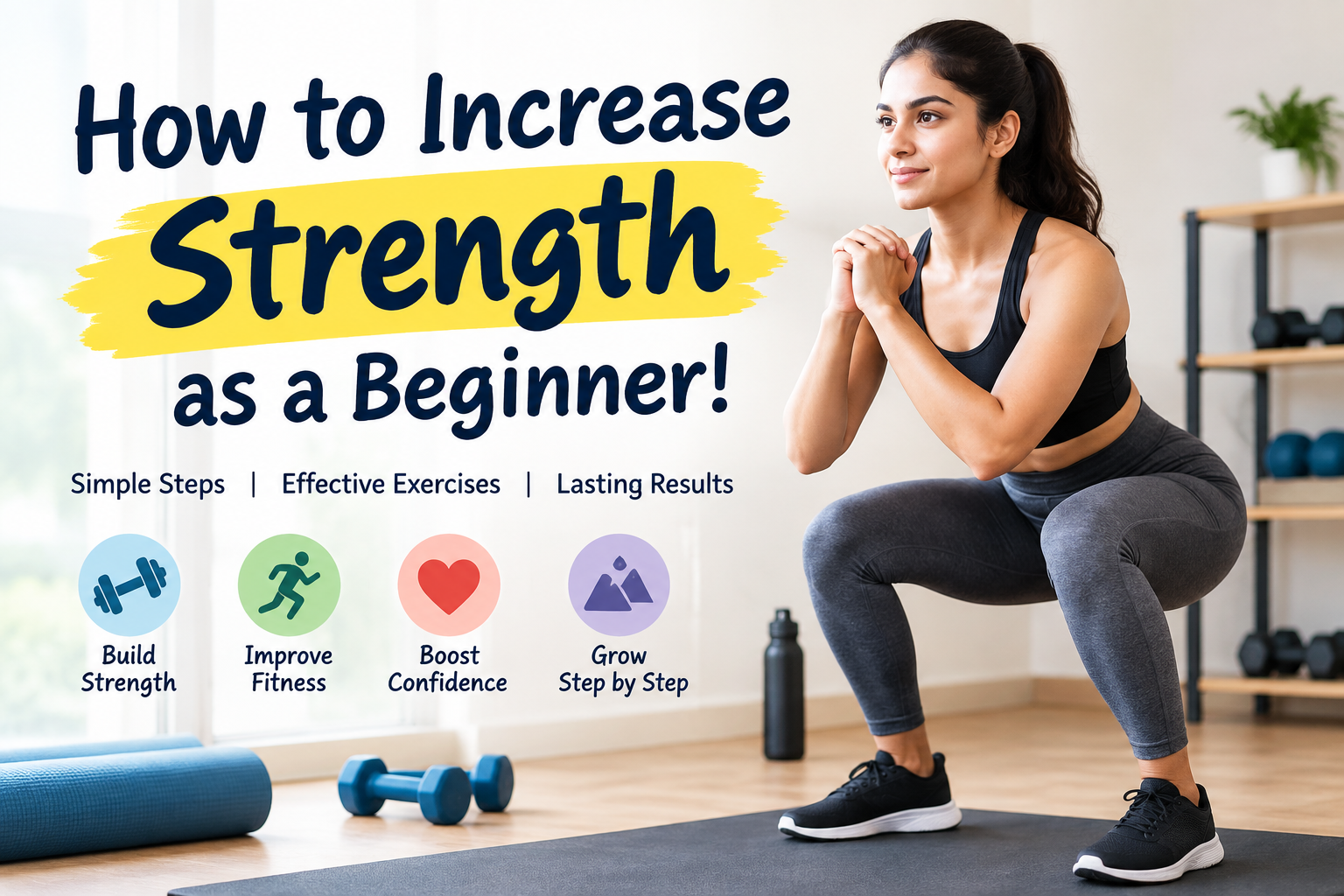
Building strength as a beginner does not require complicated workouts or lifting heavy weights immediately. With the right exercises, proper technique, and a consistent approach, beginners can make steady progress and develop lasting fitness habits. Understanding how to increase strength as a beginner helps individuals train safely, avoid common mistakes, and build a strong foundation for long-term results.
Why Strength Training Matters for Beginners
Strength training helps the body become stronger, more stable, and better prepared for everyday activities. It can make tasks such as carrying groceries, climbing stairs, and lifting objects feel easier. Regular resistance training also supports muscle development, bone health, balance, and overall physical fitness.
For beginners, the most important goal is not lifting the heaviest weight. It is learning how to move correctly and gradually improving performance over time.
1. Start with the Basics
A beginner-friendly strength routine should focus on fundamental movement patterns rather than advanced exercises. These movements train several muscle groups and help develop coordination and control.
Useful exercises include:
- Squats: Strengthen the legs and support lower-body stability.
- Push-ups: Train the chest, shoulders, and triceps.
- Rows: Strengthen the back and improve pulling strength.
- Lunges: Develop leg strength and balance.
- Planks: Build core stability.
- Hip hinges: Prepare the body for movements such as deadlifts.
Bodyweight exercises are often enough to begin. As technique improves, resistance bands, dumbbells, or gym machines can be introduced.
2. Focus on Proper Technique
Good form is one of the most important parts of strength training. Proper technique helps beginners target the intended muscles, control each movement, and reduce unnecessary strain.
A beginner should start with a manageable resistance and perform each repetition slowly and deliberately. A trainer, qualified coach, or reliable instructional resource can help correct movement patterns when needed.
Instead of increasing weight quickly, beginners should first aim to perform exercises with stable posture, controlled movement, and a comfortable range of motion.
3. Follow a Consistent Workout Routine
Strength improves through regular practice. Beginners do not need to train every day to see results. Two or three full-body strength sessions per week can provide a useful starting point, especially when combined with adequate recovery.
A simple weekly routine might include:
| Day | Activity |
|---|---|
| Monday | Full-body strength training |
| Tuesday | Light walking or rest |
| Wednesday | Full-body strength training |
| Thursday | Mobility work or rest |
| Friday | Full-body strength training |
| Weekend | Recovery or enjoyable physical activity |
Consistency matters more than an overly demanding schedule. A routine that fits comfortably into daily life is easier to maintain over time.
4. Gradually Increase Resistance
The body becomes stronger when it is challenged progressively. This process is known as progressive overload. It involves gradually increasing the difficulty of training as the body adapts.
Beginners can progress by:
- Adding a small amount of weight.
- Performing an extra repetition.
- Increasing the number of sets.
- Improving exercise control.
- Using a slightly more challenging variation.
- Reducing rest periods carefully when appropriate.
Progress should be gradual rather than rushed. If an exercise causes pain, affects technique, or feels excessively difficult, the resistance may need to be reduced.
5. Choose an Appropriate Number of Sets and Repetitions
Beginners often benefit from starting with a manageable training volume. A common starting point is 2–3 sets of 8–12 repetitions for many exercises, although the appropriate range depends on the movement, fitness level, and individual goals.
The final repetitions should feel challenging while still allowing proper form. Beginners should avoid training to complete exhaustion during every session. The focus should remain on controlled movement and steady improvement.
6. Give the Body Time to Recover
Muscles need time to recover and adapt after strength training. Rest is not a sign of weakness; it is an important part of progress.
Recovery habits may include:
- Taking rest days between demanding sessions.
- Getting sufficient sleep.
- Eating balanced meals.
- Staying hydrated.
- Managing training intensity.
- Performing gentle mobility work when helpful.
Training the same muscle groups intensely without adequate recovery can increase fatigue and make progress more difficult.
7. Support Strength Gains with Proper Nutrition
Nutrition provides the energy and nutrients needed for training and recovery. A balanced diet should include a variety of foods, such as vegetables, fruits, whole grains, protein-rich foods, and healthy fats.
Protein is especially important because it supports muscle repair and development. Suitable sources include eggs, dairy products, fish, poultry, beans, lentils, tofu, and other protein-rich foods.
Beginners do not necessarily need supplements to increase strength. Consistent training and a balanced diet are the foundation. Anyone considering supplements should seek advice from a qualified healthcare or nutrition professional.
8. Track Progress Beyond the Scale
Strength progress is not always reflected by body weight. Beginners can measure improvement in several ways, including:
- Lifting a slightly heavier weight.
- Completing more repetitions with good form.
- Performing an exercise more comfortably.
- Improving balance and stability.
- Recovering more easily between sessions.
- Feeling stronger during everyday activities.
Keeping a simple workout log can help beginners identify progress and stay motivated. Recording exercises, sets, repetitions, and resistance makes gradual improvements easier to recognise.
Common Mistakes Beginners Should Avoid
Several mistakes can slow progress or increase the risk of injury.
Lifting Too Much Too Soon
Using excessive weight often causes poor form and unnecessary strain. Beginners should choose a resistance that allows controlled repetitions.
Changing Workouts Too Frequently
Constantly switching exercises can make progress difficult to measure. A consistent routine gives the body time to adapt and allows beginners to identify improvements.
Ignoring Recovery
More training is not always better. Rest, sleep, and nutrition help the body recover and become stronger.
Comparing Progress with Others
Strength develops at different rates. Beginners should focus on personal improvement rather than comparing their performance with experienced lifters.
Expecting Immediate Results
Strength gains take time. Consistent training over several weeks and months is more effective than short periods of intense effort followed by inactivity.
How Long Does It Take to Increase Strength?
Beginners may notice improvements in coordination, confidence, and exercise performance within the first few weeks. These early changes often come from the nervous system becoming more efficient at performing movements.
Visible muscle development and larger strength gains generally require more time and consistent training. Progress depends on factors such as training frequency, exercise selection, nutrition, sleep, age, and individual starting fitness.
The most effective approach is to focus on steady progress rather than expecting dramatic changes immediately.
Final Thoughts
Learning how to increase strength as a beginner starts with simple exercises, proper technique, and a consistent routine. Gradually increasing resistance, eating balanced meals, and allowing enough recovery can help beginners build strength safely and sustainably. With patience and regular practice, strength training can become a rewarding part of a healthy lifestyle.










[…] more demanding workouts. Unlike traditional training sessions, the purpose is not to increase strength, burn maximum calories, or improve athletic performance […]