
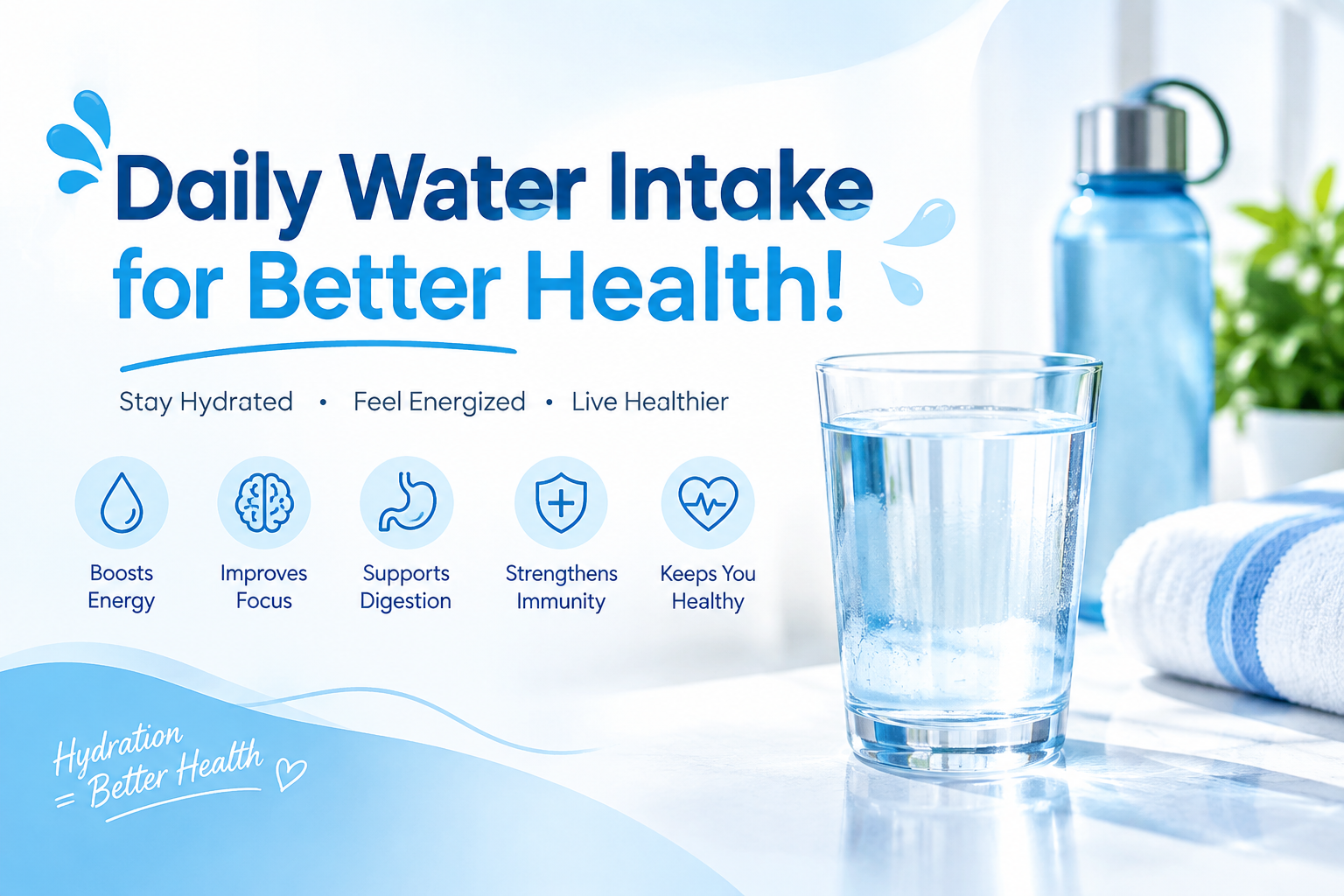
Water plays an essential role in keeping the body functioning properly. From supporting digestion to helping regulate body temperature, adequate hydration contributes to everyday wellness. Yet, busy schedules and simple forgetfulness can make it easy to overlook water throughout the day.
Understanding Daily Water Intake for Better Health! can help individuals develop healthier hydration habits without making their routines complicated. This article explains the importance of water, factors that influence daily water needs, the benefits of staying hydrated, and practical ways to make regular water consumption a natural part of daily life.
Why Is Water Important for the Body?
Water is one of the body’s most important nutrients. It supports several essential processes, including:
- Regulating body temperature: Sweating helps the body cool down during warm weather or physical activity.
- Supporting digestion: Water helps keep the digestive system functioning smoothly.
- Transporting nutrients: Blood, which contains a large amount of water, carries nutrients and oxygen throughout the body.
- Lubricating joints: Adequate fluid helps cushion and support joints.
- Removing waste: Water assists the kidneys and other organs in eliminating waste products.
- Maintaining energy and concentration: Dehydration may contribute to tiredness, headaches, and difficulty focusing.
These functions show why regular hydration is an important part of a balanced lifestyle.
How Much Water Does a Person Need Daily?
There is no single amount of water that suits everyone. Daily water needs can vary depending on age, body size, activity level, climate, diet, and overall health.
A commonly referenced general guideline from the National Academies of Sciences, Engineering, and Medicine is approximately 2.7 liters of total water per day for women and 3.7 liters for men. These amounts include water from beverages and food, not just plain drinking water. Individual needs may be higher or lower.
Hot weather, exercise, fever, vomiting, and diarrhea can increase fluid requirements. People with certain medical conditions may also need specific fluid guidance from a healthcare professional.
Benefits of Maintaining a Consistent Hydration Routine
A sustainable hydration routine can support several aspects of everyday health.
Supports Physical Performance
During exercise, the body loses water through sweat. Replacing those fluids helps maintain normal physical function and may reduce the effects of dehydration, such as fatigue and reduced endurance.
Helps Maintain Mental Focus
Even mild dehydration may affect mood, alertness, and concentration in some people. Regular water intake can help support normal cognitive function throughout the day.
Promotes Healthy Digestion
Water helps soften stool and supports the movement of food through the digestive tract. Combined with fiber-rich foods, adequate fluid intake can help maintain regular bowel movements.
Supports Temperature Regulation
The body relies on water and sweating to release excess heat. Sufficient hydration becomes especially important during hot weather or strenuous activity.
Helps the Body Remove Waste
The kidneys use water to filter waste from the blood and produce urine. Adequate fluid intake supports this normal process.
Signs That the Body May Need More Water
Thirst is one common signal that the body needs fluids, although it may not always appear early. Other possible signs of dehydration include:
- Dry mouth
- Darker-than-usual urine
- Headache
- Dizziness
- Unusual tiredness
- Reduced concentration
- Less frequent urination
Urine color can offer a general indication of hydration, but it is not a perfect measure. Certain foods, medications, and supplements can also change urine color.

Simple Ways to Drink More Water Every Day
Building a consistent routine is often easier than trying to drink a large amount of water at once. The following habits can make hydration more manageable:
Keep Water Within Reach
A reusable water bottle on a desk, in a bag, or beside the bed can serve as a simple reminder to drink regularly.
Drink Water With Meals
Having water with breakfast, lunch, and dinner creates natural opportunities to maintain fluid intake.
Set Gentle Reminders
Phone reminders or hydration-tracking apps can help people who frequently forget to drink water during busy periods.
Add Flavor Naturally
Fresh fruit, cucumber, or mint can add flavor to water for those who prefer a more refreshing taste.
Eat Water-Rich Foods
Fruits, vegetables, soups, and other water-rich foods contribute to total daily fluid intake.
Adjust Intake During Activity
People who exercise or spend time outdoors may need to drink more water to replace fluids lost through sweating.
Can Someone Drink Too Much Water?
Although adequate hydration is important, excessive water consumption can also be harmful. Drinking unusually large amounts in a short period may dilute sodium levels in the blood, a condition known as hyponatremia.
A balanced approach is best. Most people can support hydration by drinking regularly, responding to thirst, and adjusting intake to activity and environmental conditions. Individuals with kidney, heart, or other medical conditions should follow their healthcare professional’s fluid recommendations.
Final Thoughts
Daily water intake is a simple but important part of better health. While water needs differ from person to person, regular hydration supports digestion, temperature regulation, physical performance, and normal body function. By keeping water nearby, drinking with meals, and adjusting intake when needed, individuals can develop a sustainable routine that supports their overall well-being.