
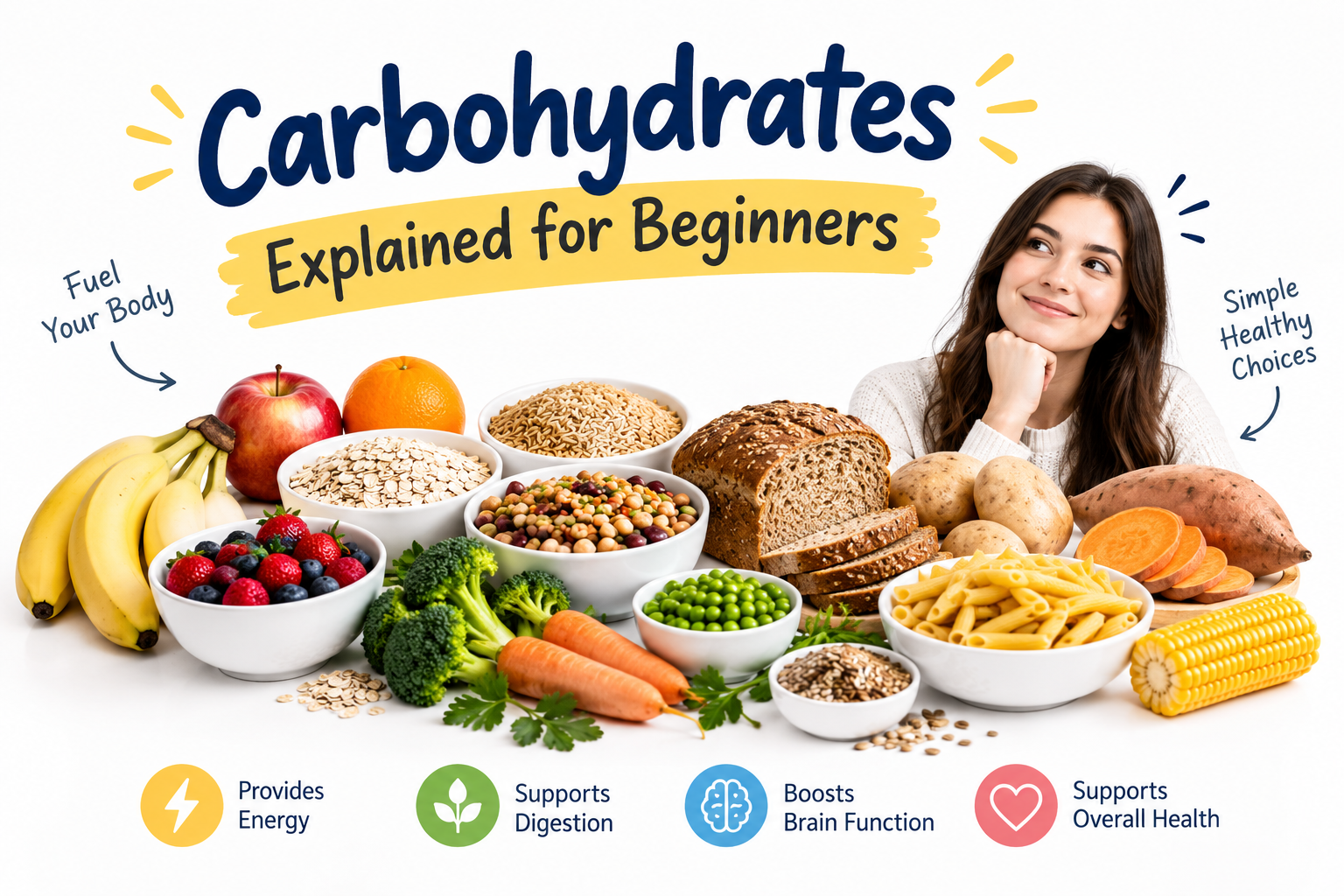
Carbohydrates are one of the three main macronutrients the body needs, along with protein and fat. They are found in many everyday foods, including fruits, vegetables, grains, beans, and dairy products. Despite their importance, carbohydrates are often misunderstood and sometimes unfairly labeled as unhealthy.
This guide to carbohydrates explained for beginners makes the topic simple. It explores what carbohydrates are, how they work in the body, the different types of carbohydrates, their health benefits, and how to choose better carbohydrate sources.
What Are Carbohydrates?
Carbohydrates are nutrients that provide the body with energy. During digestion, many carbohydrates are broken down into glucose, a type of sugar that cells can use for fuel.
The brain, muscles, and other tissues rely heavily on glucose for energy. Carbohydrates can therefore play an important role in supporting everyday activities, exercise, and normal body functions.
Carbohydrates generally contain carbon, hydrogen, and oxygen. They are naturally present in plant foods and are also added to many processed foods.
What Are the Different Types of Carbohydrates?
Carbohydrates can generally be divided into three main groups: sugars, starches, and fiber.
1. Sugars
Sugars are simple carbohydrates that can be naturally present in foods or added during food production.
Natural sugars are found in foods such as fruits and milk. Added sugars can be found in products such as sweets, soft drinks, desserts, and many packaged foods.
The source of the sugar matters. A whole fruit, for example, also provides fiber, vitamins, minerals, and other beneficial compounds.
2. Starches
Starches are complex carbohydrates made up of many sugar molecules joined together. They are commonly found in foods such as potatoes, rice, oats, bread, pasta, corn, and beans.
Whole or minimally processed sources of starch can provide carbohydrates along with fiber and other nutrients.
3. Fiber
Fiber is a type of carbohydrate that the body does not completely digest. Instead of being broken down and absorbed like many other carbohydrates, much of it passes through the digestive system.
Fiber can support digestive health and may help a person feel full after eating. Fruits, vegetables, whole grains, legumes, nuts, and seeds are useful sources.
Simple vs. Complex Carbohydrates
The terms “simple” and “complex” carbohydrates describe their chemical structure. However, food quality cannot always be determined simply by putting a food into one of these categories.
For example, fruit contains naturally occurring simple sugars but also provides fiber and micronutrients. On the other hand, some highly processed foods can contain refined carbohydrates with relatively little fiber or nutritional value.
For this reason, the overall food and its nutritional content are important when evaluating carbohydrate choices.
Why Does the Body Need Carbohydrates?
One of the main roles of carbohydrates is providing energy.
When carbohydrate-containing foods are digested, glucose becomes available to cells. The body can use this glucose immediately or store some of the energy for later use.
Carbohydrates can be particularly useful during physical activity because working muscles can use glucose and stored carbohydrate for energy.
A balanced diet does not need to treat carbohydrates as an enemy. Instead, attention can be placed on the type, amount, and overall nutritional quality of the foods being eaten.
Are Carbohydrates Healthy?
Carbohydrates themselves are not automatically healthy or unhealthy. Their nutritional value depends largely on the food source and the overall eating pattern.
Carbohydrate-rich foods such as vegetables, fruits, beans, lentils, and whole grains can provide fiber, vitamins, minerals, and other nutrients.
Highly refined foods with large amounts of added sugar may offer fewer beneficial nutrients. Regularly consuming large amounts of these foods can make it harder to maintain a balanced diet.
The goal is therefore not necessarily to eliminate carbohydrates but to make nutritious choices most of the time.
What Are Good Sources of Carbohydrates?
A variety of foods can provide nutritious carbohydrates, including:
- Fruits such as apples, bananas, oranges, and berries
- Vegetables such as potatoes, sweet potatoes, peas, and corn
- Whole grains such as oats, brown rice, and whole-grain bread
- Beans, chickpeas, and lentils
- Nuts and seeds
- Milk and some other dairy foods
Choosing minimally processed foods can make it easier to obtain carbohydrates alongside fiber and other important nutrients.
How Many Carbohydrates Does a Person Need?
There is no single carbohydrate intake that works perfectly for everyone. Individual needs can vary according to factors such as age, activity level, overall calorie needs, and personal health considerations.
Instead of focusing only on a specific number, beginners can start by building balanced meals. A meal can include a carbohydrate source alongside protein, vegetables or fruit, and a source of healthy fat.
People with specific medical conditions or dietary requirements may benefit from individualized advice from a qualified healthcare professional or registered dietitian.
What Happens When a Person Eats Too Many Carbohydrates?
Eating carbohydrates does not automatically cause weight gain. Body weight is influenced by overall energy intake, energy expenditure, genetics, activity, sleep, and many other factors.
However, regularly eating more calories than the body needs can contribute to weight gain, regardless of whether those calories come from carbohydrates, fat, or protein.
The type of carbohydrate also matters. Foods high in added sugar and low in fiber may be less filling than whole-food carbohydrate sources.
Carbohydrates and Blood Sugar
Carbohydrate-containing foods can affect blood glucose levels because many carbohydrates are eventually converted into glucose.
The effect can vary depending on the food, portion size, fiber content, preparation, and what other foods are eaten at the same time.
For people with diabetes or other blood-sugar concerns, carbohydrate management can be an important part of nutrition planning. Professional guidance can help determine an appropriate eating pattern.
How Can Beginners Make Better Carbohydrate Choices?
A few simple habits can make carbohydrate choices easier:
Choose Whole Foods More Often
Whole fruits, vegetables, legumes, and whole grains generally provide more fiber and nutrients than many highly processed alternatives.
Increase Fiber-Rich Foods
Beans, lentils, vegetables, fruits, oats, and other whole grains can help increase dietary fiber intake.
Limit Excess Added Sugar
Foods and drinks containing large amounts of added sugar can be enjoyed occasionally, but they do not need to form the foundation of a balanced diet.
Consider the Whole Meal
Rather than judging a carbohydrate in isolation, it can be more useful to consider the entire meal. Combining carbohydrates with protein, fiber, and healthy fats can create a more satisfying and balanced meal.
Common Myths About Carbohydrates
“All Carbohydrates Are Bad”
This is a common misconception. Many nutritious foods contain carbohydrates and also provide essential vitamins, minerals, fiber, and other beneficial compounds.
“Carbohydrates Always Cause Weight Gain”
Weight gain is not caused by carbohydrates alone. Overall energy balance and many other lifestyle and biological factors play a role.
“A Low-Carbohydrate Diet Is Necessary for Everyone”
Some people may choose or benefit from a lower-carbohydrate eating pattern, but it is not automatically necessary for everyone. Dietary needs differ between individuals.
The Bottom Line
Carbohydrates are an important source of energy and can be part of a healthy, balanced diet. Understanding the difference between sugars, starches, and fiber can help beginners make more informed food choices.
The most useful approach is usually to focus on the quality of carbohydrate sources. Fruits, vegetables, legumes, and whole grains can provide carbohydrates together with fiber and important nutrients, while highly processed foods and excessive added sugar can be limited.
With a basic understanding of how carbohydrates work, choosing balanced and nutritious meals becomes much less confusing.










[…] body relies on essential nutrients to function properly. Carbohydrates provide energy, proteins support muscle maintenance, healthy fats assist important bodily […]
[…] than marketing. A basic home-cooked meal containing a protein source, vegetables, and an affordable carbohydrate can often be both nutritious and […]
[…] a meal, carbohydrates are broken down into glucose, which enters the bloodstream. The body releases insulin to help move […]