
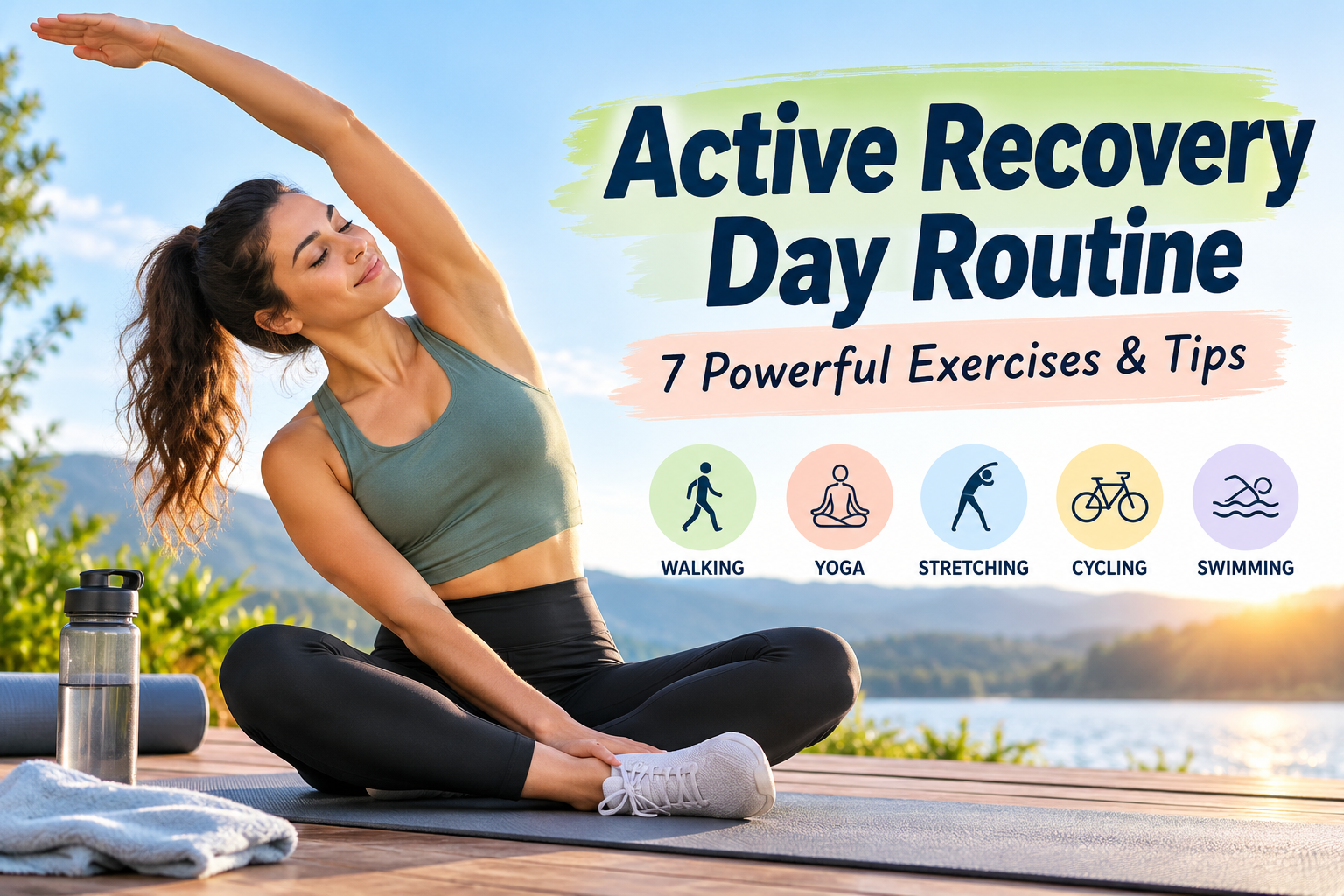
Active Recovery Day Routine is an important part of a balanced fitness plan that helps the body recover while maintaining gentle movement. After intense workouts, muscles may feel sore, stiff, or tired, making recovery essential for long-term progress. Instead of remaining completely inactive, activities such as walking, stretching, yoga, and light cycling can help maintain mobility and reduce discomfort. A well-planned recovery day also supports workout consistency without adding unnecessary physical stress. This guide explains the benefits of active recovery, the best low-intensity exercises, and how to build a sustainable routine that supports muscle recovery and overall fitness.
What Is an Active Recovery Day Routine?
An Active Recovery Day Routine is a planned period of low-intensity physical activity performed between more demanding workouts. Unlike traditional training sessions, the purpose is not to increase strength, burn maximum calories, or improve athletic performance directly.
Instead, the focus is on allowing the body to recover while remaining comfortably active.
Common recovery activities include gentle walking, relaxed cycling, stretching, swimming, and mobility exercises. These movements encourage blood circulation and help maintain joint flexibility without placing significant stress on tired muscles.
For example, someone who completes an intense leg workout may choose a comfortable 20-minute walk the following day instead of another demanding training session.
The key is keeping movement easy enough that it does not interfere with recovery.
Why Is Active Recovery Important?
Recovery is an essential part of physical fitness. During challenging workouts, muscles experience stress, energy stores become depleted, and the body requires time to adapt.
Without adequate recovery, repeated intense exercise can contribute to persistent fatigue, declining performance, and increased injury risk.
1. Helps Reduce Muscle Stiffness
Muscle stiffness is common after demanding exercise, particularly when someone performs unfamiliar movements.
Gentle activity may temporarily relieve stiffness by encouraging movement and improving circulation.
Although active recovery does not guarantee that muscle soreness will disappear faster, it can make everyday movement feel more comfortable.
2. Supports Healthy Blood Circulation
Low-intensity physical activity increases blood flow compared with remaining completely inactive.
Healthy circulation helps transport oxygen and nutrients throughout the body and supports normal tissue function.
Walking and easy cycling are practical ways to encourage circulation without creating excessive fatigue.
3. Improves Flexibility and Mobility
Intense workouts can sometimes leave muscles feeling tight and joints less comfortable.
Gentle stretching and mobility exercises help maintain a comfortable range of motion.
Regular mobility work can also support movement quality during future training sessions.
4. Helps Manage Exercise Fatigue
Training intensely every day can create accumulated fatigue.
Including lighter days allows individuals to reduce their training demands while maintaining a consistent exercise schedule.
This balance can help prevent unnecessary exhaustion and make long-term fitness habits easier to maintain.
5. Supports Mental Well-Being
Recovery involves more than physical rest.
Relaxed walking, gentle yoga, and outdoor activities can provide an opportunity to unwind after demanding workouts or stressful days.
Enjoyable movement may improve mood, encourage relaxation, and make exercise feel more sustainable.
7 Best Exercises for an Active Recovery Day Routine
The most effective recovery exercises are comfortable, low-impact, and easy to adjust according to individual fitness levels.
1. Walking
Walking is one of the simplest recovery activities because it requires no special equipment.
A relaxed walk can help maintain circulation, encourage joint movement, and reduce the discomfort associated with prolonged inactivity.
A duration of 15–30 minutes may be suitable for many healthy adults, although shorter sessions are perfectly acceptable.
The pace should remain comfortable enough for normal conversation.
2. Gentle Stretching
Stretching can help maintain flexibility and relieve feelings of muscular tightness.
Useful movements include hamstring stretches, calf stretches, shoulder stretches, and gentle hip flexor stretches.
Each position can be held for approximately 15–30 seconds without bouncing or forcing the movement.
Stretching should produce mild tension rather than pain.
3. Light Cycling
Cycling at an easy pace provides gentle movement for the legs while avoiding the impact associated with running.
A stationary bicycle can be especially convenient because resistance and speed are easy to control.
Around 10–20 minutes of comfortable cycling can be included in a recovery session.
The goal is movement, not cardiovascular exhaustion.
4. Gentle Yoga
Yoga combines controlled movement, breathing, and stretching.
Beginner-friendly poses such as Child’s Pose, Cat-Cow, and gentle seated stretches can encourage relaxation and comfortable mobility.
A short 10–15-minute session may be enough.
Demanding yoga flows, deep stretches, and prolonged strength-based poses should be avoided when muscles are already fatigued.
5. Swimming
Easy swimming provides a low-impact option for individuals who enjoy exercising in water.
Water supports body weight, which may make movement more comfortable for some people.
Slow swimming or gentle water walking can be included for approximately 10–20 minutes.
The activity should remain relaxed rather than becoming a challenging swimming workout.
6. Foam Rolling
Foam rolling is a self-massage technique that may temporarily improve range of motion and reduce perceived muscle soreness.
Common areas include the calves, quadriceps, glutes, and upper back.
Gentle pressure for 30–60 seconds per muscle group is generally sufficient.
Individuals should avoid rolling directly over injured areas, joints, or locations that produce sharp pain.
7. Mobility Exercises
Mobility exercises involve moving joints through comfortable ranges of motion.
Examples include shoulder circles, ankle rotations, hip circles, and controlled spinal movements.
These exercises can be particularly useful for people who spend long periods sitting.
A brief mobility session may help maintain movement quality without creating additional fatigue.
Sample 30-Minute Active Recovery Day Routine
A simple recovery session does not need complicated equipment or advanced exercises.
The following example provides a balanced starting point for generally healthy adults.
| Activity | Duration | Purpose |
|---|---|---|
| Comfortable walking | 10 minutes | Gentle movement and circulation |
| Easy cycling or continued walking | 5 minutes | Maintain low-intensity activity |
| Joint mobility exercises | 5 minutes | Support comfortable movement |
| Gentle stretching | 5 minutes | Maintain flexibility |
| Relaxed yoga and breathing | 5 minutes | Encourage relaxation |
| Total | 30 minutes | Light recovery session |
This schedule is flexible rather than mandatory. Individuals experiencing greater fatigue may benefit from a shorter session or complete rest.
How to Build a Sustainable Recovery Routine
A sustainable recovery plan should match an individual’s training schedule, physical condition, and daily responsibilities.
Choose the Right Intensity
Recovery exercise should feel noticeably easier than a regular workout.
On a perceived exertion scale of 1–10, an effort around 2–3 is a useful starting point.
Breathing should remain comfortable, and conversation should be possible without difficulty.
Adjust Activities to Muscle Soreness
Different workouts create different recovery needs.
Someone experiencing leg soreness after squats may prefer gentle walking or upper-body mobility.
A person with tired shoulders may choose relaxed cycling rather than swimming.
The best activity is one that feels comfortable and does not aggravate existing soreness.
Include Recovery in the Weekly Schedule
Planning recovery days helps prevent them from being overlooked.
For example, someone training four days per week might schedule one or two lighter days between demanding sessions.
The exact frequency depends on workout intensity, fitness level, sleep, and individual recovery needs.
Prioritize Consistency Over Duration
A short, comfortable recovery session is often more useful than forcing a long workout when the body is tired.
Even 10–15 minutes of gentle movement can provide an opportunity to maintain mobility.
Consistency matters, but recovery should never become another demanding fitness obligation.
Active Recovery vs. Complete Rest
Both approaches play important roles in a balanced exercise program.
| Active Recovery | Complete Rest |
|---|---|
| Includes gentle physical movement | Avoids structured exercise |
| May reduce feelings of stiffness | Minimizes additional physical demands |
| Helps maintain comfortable mobility | Useful during significant fatigue |
| Examples include walking and stretching | Examples include relaxation and sleep |
| Suitable when light movement feels comfortable | Preferable when the body needs more recovery |
Neither option is universally better.
Complete rest may be more appropriate during illness, unusual exhaustion, injury, or persistent pain.
Nutrition and Hydration for Better Recovery
Physical movement is only one part of effective recovery.
Nutrition, hydration, and sleep also influence how the body responds to training.
Eat Enough Protein
Protein supplies amino acids needed for muscle repair and maintenance.
Foods such as eggs, fish, chicken, yogurt, beans, and lentils can contribute to daily protein requirements.
A balanced eating pattern is generally more important than relying on a single recovery meal.
Include Healthy Carbohydrates
Carbohydrates help replenish glycogen, an important energy source used during exercise.
Whole grains, potatoes, rice, oats, fruits, and vegetables can support energy restoration.
People who train frequently may particularly benefit from adequate carbohydrate intake.
Stay Properly Hydrated
Water supports temperature regulation, circulation, and normal muscle function.
Fluid requirements vary with body size, activity level, weather, and sweat losses.
Drinking regularly throughout the day is a practical approach for most healthy adults.
Get Quality Sleep
Sleep plays a central role in physical recovery.
Most adults benefit from approximately seven to nine hours of sleep per night.
Maintaining a consistent sleep schedule and creating a comfortable sleeping environment can support recovery between workouts.
Common Active Recovery Mistakes to Avoid
Turning Recovery Into Another Workout
One of the most common mistakes is exercising too intensely.
Fast cycling, demanding circuits, and exhausting yoga sessions may create additional fatigue rather than provide recovery.
The session should remain gentle.
Ignoring Persistent Pain
Normal post-workout soreness is different from sharp, worsening, or localized pain.
Exercise should not be used to push through a suspected injury.
Persistent or concerning symptoms should be assessed by a qualified healthcare professional.
Stretching Too Aggressively
Deep stretching is not always helpful when muscles are already sensitive.
Gentle, controlled movements are preferable to forcing uncomfortable positions.
Neglecting Sleep and Nutrition
Light exercise cannot compensate for consistently inadequate sleep or insufficient food intake.
Recovery works best when movement is combined with proper rest, hydration, and balanced nutrition.
Believing Every Rest Day Requires Activity
Some individuals feel pressured to exercise every day.
However, complete rest is a legitimate and sometimes necessary part of a healthy training program.
Recovery should respond to the body’s needs rather than follow a rigid rule.
How Often Should Someone Have an Active Recovery Day?
The ideal frequency depends on training volume, workout intensity, and individual recovery.
Beginners may benefit from several lower-intensity days each week, especially when adjusting to a new exercise program.
Experienced athletes may schedule recovery sessions between demanding strength or endurance workouts.
For many recreational exercisers, one or two planned lighter days per week can be a practical starting point.
However, no single schedule works for everyone.
Persistent fatigue, declining performance, poor sleep, and soreness that does not improve may indicate that additional rest is needed.
Frequently Asked Questions
Is Active Recovery Better Than Resting Completely?
Not necessarily. Gentle movement can help maintain mobility and reduce perceived stiffness, but complete rest may be more appropriate when someone feels exhausted, injured, or unwell.
Can Active Recovery Reduce Muscle Soreness?
Light movement may temporarily reduce feelings of soreness and stiffness. However, evidence that it consistently speeds up muscle repair is limited.
Is Walking Enough for a Recovery Day?
Yes. A comfortable walk can be a suitable recovery activity. Additional exercises are optional rather than necessary.
Can Beginners Follow a Recovery Routine?
Yes. Beginners can start with short walks, gentle stretching, or basic mobility exercises and adjust the duration according to comfort.
Should Someone Exercise With Sore Muscles?
Mild muscle soreness may allow comfortable, low-intensity movement. Sharp pain, significant swelling, weakness, or worsening symptoms are reasons to stop and seek appropriate medical advice.
Conclusion
An Active Recovery Day Routine provides a practical way to balance regular exercise with the body’s need for rest. Gentle activities such as walking, stretching, cycling, yoga, and mobility exercises can help maintain movement, reduce feelings of stiffness, and support a sustainable fitness schedule.
Effective recovery also depends on sufficient sleep, balanced nutrition, proper hydration, and recognizing when complete rest is necessary.
By choosing comfortable activities and adjusting recovery days to individual needs, fitness enthusiasts can build healthier exercise habits and prepare more effectively for future workouts.