
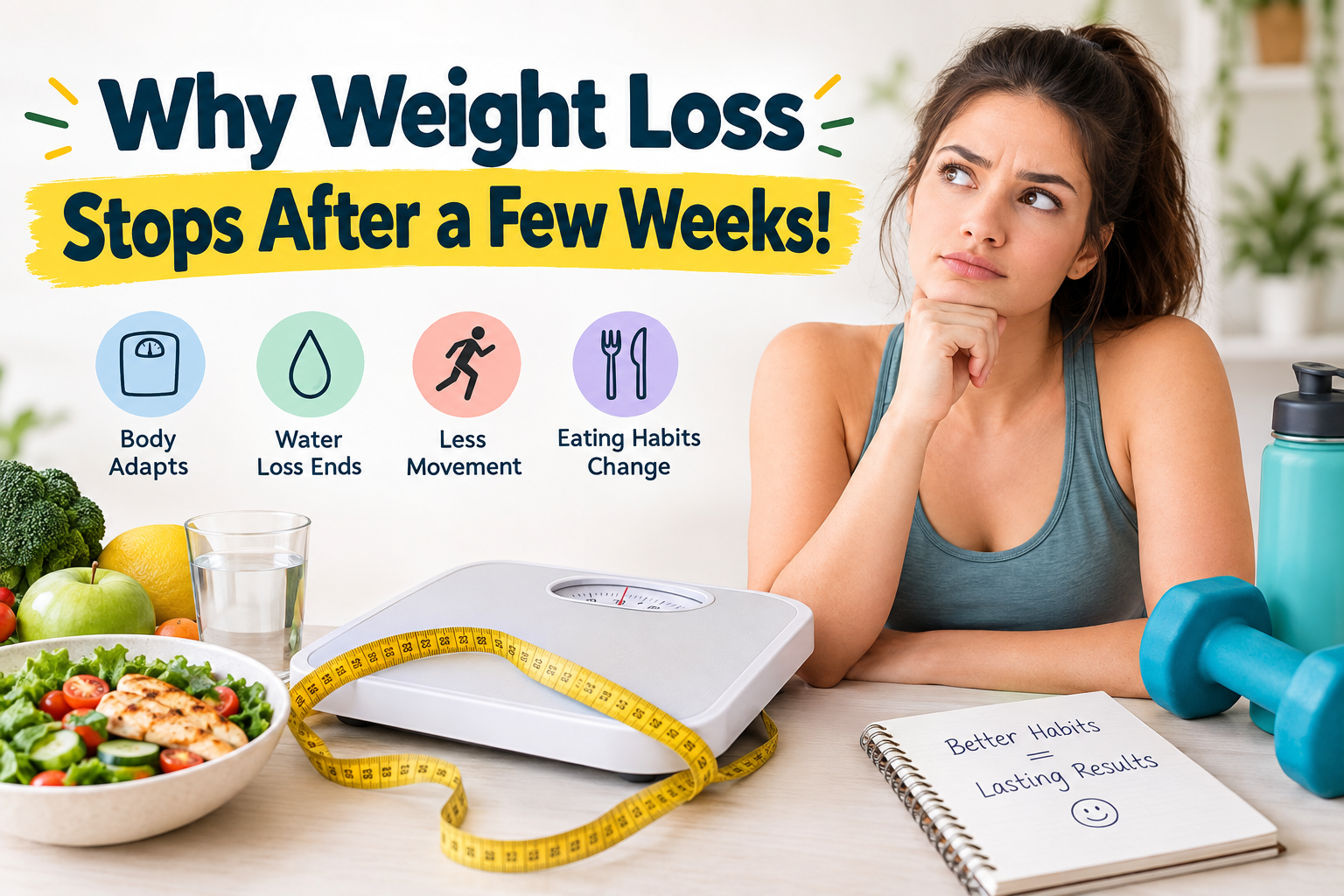
Why Weight Loss Stops After a Few Weeks!
Why Weight Loss Stops After a Few Weeks This is a common question among people who begin a new diet or exercise routine and notice that the number on the scale no longer changes. In many cases, this slowdown is a normal part of the weight-loss process rather than a sign of failure. The body adapts to changes in food intake, activity levels, and body weight, which can make progress appear slower over time.
Understanding the reasons behind a weight-loss plateau can help individuals make practical adjustments without following extreme diets or exercising excessively. Sustainable progress usually depends on consistency, realistic expectations, and a balanced approach.
Why Weight Loss Stops After a Few Weeks Happens
Weight loss rarely follows a straight line. During the first few weeks, a person may lose weight quickly because the body uses stored glycogen and releases excess water. After this initial phase, fat loss may become slower and less noticeable.
“Understanding why weight loss stops after a few weeks can help…” As body weight decreases, the body also requires fewer calories to maintain itself. This means that a food and exercise routine that created a calorie deficit at the beginning may eventually produce a smaller deficit. The result is slower progress or a temporary plateau
The Body Adapts to a Lower Calorie Intake
When calorie intake decreases, the body gradually adjusts to the change. A lighter body burns fewer calories during daily activities, and the body may also become more energy-efficient.
This does not mean that metabolism stops working. Instead, the difference between calories consumed and calories used may become smaller. A person may need to review portion sizes, activity levels, and overall habits to understand what has changed.
Early Water Loss Can Make Progress Look Faster
Many people experience rapid weight loss during the first week or two of a diet. Some of this change comes from water loss rather than body fat. When carbohydrate intake decreases, the body uses stored glycogen, which holds water.
Once water levels stabilize, weight loss may slow down. This is normal and does not necessarily mean that fat loss has stopped. Measuring progress over several weeks gives a more accurate picture than focusing on daily scale changes.
Daily Activity May Decrease
A person may exercise regularly but unconsciously move less during the rest of the day. For example, someone might spend more time sitting, take fewer steps, or feel less energetic after changing their diet.
These small changes can reduce total daily energy expenditure. Regular walking, standing breaks, household tasks, and other forms of everyday movement can help maintain activity levels.
Common Reasons for a Weight-Loss Plateau
Several lifestyle factors can contribute to a plateau. Often, the issue is not one major mistake but a combination of small changes that develop over time.
Portion Sizes Gradually Increase
Even healthy foods contain calories, and portion sizes can become larger without a person noticing. Extra cooking oil, sauces, dressings, snacks, sweetened drinks, and frequent tasting while preparing meals can also add up.
A short period of mindful food tracking may help identify patterns. The goal should not be obsessive counting but greater awareness of serving sizes and eating habits.
Exercise Becomes Less Challenging
The body becomes more efficient at performing familiar workouts. A routine that once required significant effort may eventually burn fewer calories because the muscles and cardiovascular system have adapted.
Adding variety can help. Depending on fitness level, a person might increase walking time, change the pace, add resistance training, or introduce new activities. However, exercise should remain manageable and enjoyable rather than becoming punishment for eating.
Sleep and Stress Affect Daily Habits
Poor sleep and ongoing stress can make weight management more difficult. Tired individuals may experience stronger cravings, reduced motivation, and less energy for exercise or meal preparation.
Stress can also encourage emotional eating or irregular routines. Establishing a consistent sleep schedule, taking short breaks, practicing relaxation techniques, and planning meals in advance may support better long-term habits.
Weekend Habits Offset Weekday Progress
Some people follow a structured routine during the week but consume significantly more food or alcohol on weekends. Restaurant meals, desserts, large portions, and reduced activity can reduce the calorie deficit created during the previous days.
This does not mean that social meals must be avoided. A balanced approach may include smaller portions, mindful choices, and a return to normal habits afterward rather than an extreme restriction cycle.

Inconsistent Tracking Creates Confusion
People sometimes underestimate how much they eat or overestimate how much they burn through exercise. Fitness trackers and calorie estimates can be useful, but they are not always precise.
Tracking food, activity, sleep, and body weight for a limited period can reveal useful patterns. It is also important to remember that weight can fluctuate because of hydration, sodium intake, digestion, hormonal changes, and exercise-related inflammation.
Medical Factors and Medications May Play a Role
Certain medical conditions, hormonal changes, and medications can affect appetite, energy levels, fluid retention, or body weight. Conditions involving the thyroid, insulin regulation, or reproductive hormones may sometimes influence weight management.
If weight changes are unexpected, persistent, or accompanied by symptoms such as unusual fatigue, swelling, or significant changes in appetite, professional medical guidance may be appropriate. A healthcare professional can review symptoms, medications, and possible underlying causes.
How to Move Past a Plateau Sustainably
A plateau does not always require a dramatic change. Small, consistent adjustments are often more effective than following another restrictive diet.
Review Progress Beyond the Scale
Body weight is only one measure of progress. Waist measurements, clothing fit, strength, stamina, energy levels, and consistency with healthy habits can also provide useful information.
Weighing at the same time of day and looking at weekly averages may reduce confusion caused by normal daily fluctuations. Progress should be evaluated over several weeks rather than a single weigh-in.
Recheck Portions Without Extreme Restriction
A person can review portion sizes while still eating satisfying meals. Using smaller serving dishes, measuring calorie-dense ingredients, planning snacks, and eating slowly may help restore awareness.
Severely restricting food can increase hunger, fatigue, and the likelihood of overeating later. A moderate, sustainable calorie deficit is generally easier to maintain than an aggressive approach.
Prioritize Protein, Fiber, and Balanced Meals
Meals containing protein, fiber, healthy fats, and nutrient-rich carbohydrates can support fullness and stable energy. Protein sources may include eggs, fish, poultry, beans, lentils, yogurt, tofu, or other suitable options.
Vegetables, fruit, whole grains, and legumes can provide fiber and important nutrients. A balanced plate can help reduce frequent snacking while making meals more satisfying.
Combine Strength Training With Everyday Movement
Strength training can help preserve muscle during weight loss and support long-term physical function. Walking, cycling, swimming, dancing, and other enjoyable activities can also contribute to daily energy expenditure.
A practical routine may include resistance exercise several times per week, regular walking, and movement breaks throughout the day. The best plan is one that fits the person’s schedule and can be maintained consistently.
Improve Sleep and Manage Stress
Adults often benefit from a regular sleep schedule and a relaxing bedtime routine. Limiting late-night screen use, keeping the bedroom comfortable, and avoiding excessive caffeine late in the day may support better sleep.
Stress management does not need to be complicated. Deep breathing, journaling, stretching, time outdoors, social connection, and short mindfulness sessions may help reduce stress-related eating patterns.
Make One Adjustment at a Time
Changing everything at once can make it difficult to identify what works. A person might begin by adding a daily walk, reducing sugary drinks, improving breakfast choices, or setting a consistent bedtime.
After observing the results for a few weeks, another adjustment can be made if necessary. This approach encourages learning and reduces the risk of burnout.
When to Seek Professional Guidance
A short plateau is usually not a reason for concern. However, professional guidance may be useful when weight loss stops for an extended period despite consistent habits, or when other symptoms appear.
A registered dietitian can review food intake and create a practical eating plan. A healthcare professional can assess possible medical factors, review medications, and recommend appropriate tests when needed.
Individuals should avoid unverified weight-loss supplements, crash diets, prolonged fasting without guidance, or excessive exercise. These approaches may create short-term changes but can be difficult to sustain and may carry health risks.
Conclusion
Knowing why weight loss stops after a few weeks helps people stay consistent, a slowdown happens because the body adapts, early water loss ends, daily movement changes, or small eating habits reduce the calorie deficit. A plateau is not necessarily a failure; it is often a signal to review the current routine.
By focusing on balanced meals, regular movement, strength training, quality sleep, stress management, and realistic expectations, individuals can continue working toward their goals safely. Progress may be slower than it was at the beginning, but consistency and patience are more valuable than extreme measures.