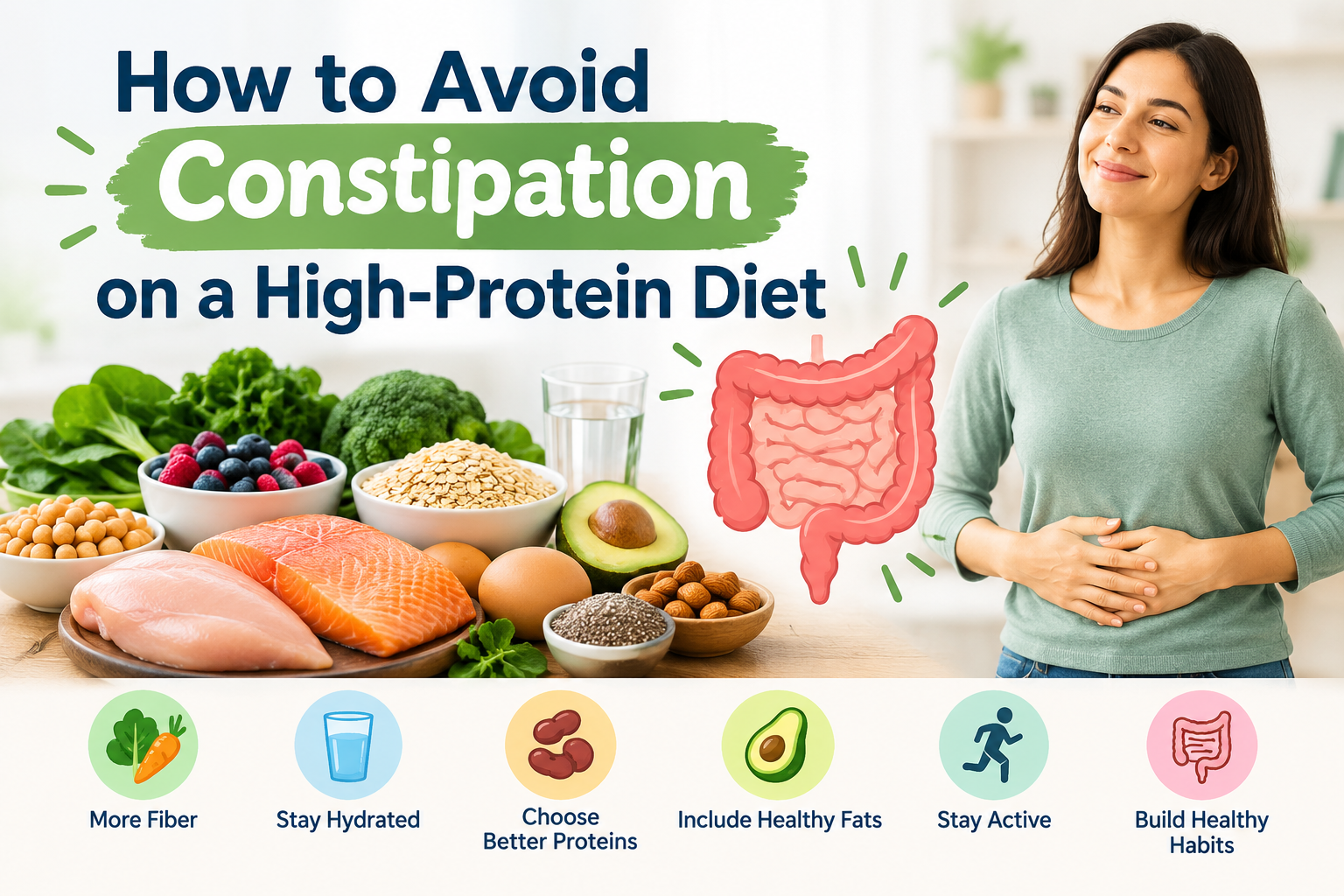
How to Avoid Constipation on a High Protein Diet: Practical Tips
Learning how to avoid constipation on a high protein diet can help individuals maintain better digestion while working toward fitness, weight-management, or muscle-building goals. High-protein eating plans often include foods such as eggs, chicken, fish, dairy products, protein shakes, and meat. However, when these foods replace fiber-rich foods, constipation may become more likely.
Constipation can cause hard stools, straining, bloating, discomfort, and fewer bowel movements. The good news is that a high-protein diet does not have to be low in fiber or fluids. With a few practical adjustments, individuals can support regular digestion while continuing to meet their protein needs.
Why Can a High Protein Diet Cause Constipation?
A high-protein diet may contribute to constipation when it reduces the amount of fiber in daily meals. Many protein-rich foods contain little or no fiber, especially meat, poultry, fish, eggs, and some dairy products.
Constipation may also occur when a person:
- Drinks too little water
- Eats fewer fruits and vegetables
- Replaces whole grains with refined foods
- Uses large amounts of protein powder
- Increases protein intake too quickly
- Spends long periods sitting
- Ignores the urge to use the bathroom
Protein itself does not automatically cause constipation. The problem is often an unbalanced eating pattern that lacks enough fiber, fluids, and movement.
1. Increase Fiber Gradually
One of the most effective ways to learn how to avoid constipation on a high protein diet is to increase fiber intake slowly. Foods such as oats, lentils, beans, berries, apples, vegetables, and chia seeds can help improve stool bulk and support digestion.
High-fiber foods that can fit into a high-protein diet include:
- Oats
- Lentils
- Beans
- Chickpeas
- Chia seeds
- Flaxseeds
- Apples
- Pears
- Berries
- Broccoli
- Carrots
- Sweet potatoes
- Whole-grain bread
- Brown rice
Fiber should be increased gradually. A sudden increase may cause gas, bloating, or abdominal discomfort. Adding one fiber-rich food to each meal can make the change easier to manage.
2. Drink Enough Water
Hydration is another important part of how to avoid constipation on a high protein diet. Drinking water throughout the day helps fiber work properly and may prevent stools from becoming hard or difficult to pass
Helpful habits include:
- Keeping a water bottle nearby
- Drinking water with meals
- Having a glass of water after waking
- Drinking fluids before and after exercise
- Choosing water instead of sugary drinks
Individual hydration needs differ, especially for people with kidney, heart, or other medical conditions. Anyone with fluid restrictions should follow professional medical advice.
3. Add Vegetables to Protein-Based Meals
A protein-focused meal can become more balanced when it includes a generous serving of vegetables. Vegetables provide fiber, water, vitamins, and minerals that support overall digestive health.
For example, grilled chicken can be served with roasted broccoli and sweet potato. Eggs can be paired with spinach and whole-grain toast. Fish can be combined with a mixed salad and brown rice.
A simple meal structure may include:
- A protein source
- A fiber-rich carbohydrate
- One or two servings of vegetables
- A healthy fat source
- Water or another suitable beverage
This approach supports digestion without reducing the protein content of the meal.
4. Choose High-Fiber Protein Sources
A high-protein meal should not contain protein alone. To understand how to avoid constipation on a high protein diet, individuals should combine protein sources with vegetables, whole grains, legumes, and healthy fats. This creates a more balanced eating pattern and supports digestive health.
Useful choices include:
- Lentils
- Black beans
- Kidney beans
- Chickpeas
- Edamame
- Peas
- Quinoa
- Tofu
- Tempeh
- Nuts and seeds
Plant-based foods can be included alongside meat, fish, eggs, or dairy products. Even one plant-based protein meal several times per week may increase fiber intake.
5. Use Protein Powder Carefully
Protein shakes can be convenient, but some products may contribute to digestive discomfort. Certain powders contain little fiber, while others include ingredients such as lactose, sugar alcohols, or artificial sweeteners that may affect digestion.
A person experiencing constipation after using protein powder can consider:
- Checking the ingredient label
- Choosing a product with added fiber
- Trying a lactose-free option if dairy causes discomfort
- Avoiding excessive servings
- Blending protein powder with fruit and oats
- Drinking additional water throughout the day
Protein powder should support a balanced diet rather than replace most whole-food meals.
6. Include Healthy Fats
Healthy fats can be part of a balanced diet and may help make meals more satisfying. Suitable options include olive oil, avocado, nuts, seeds, and natural nut butter.
Adding a small amount of healthy fat to meals may also improve food variety. For example, a person can add olive oil to vegetables, avocado to a sandwich, or chia seeds to yogurt.
Fat should be consumed in appropriate portions because very large amounts may cause digestive discomfort in some individuals.
7. Stay Physically Active
Regular movement can also help individuals understand how to avoid constipation on a high protein diet. Walking after meals, stretching during work breaks, and completing light exercise may support normal bowel activity.
Simple activities can include:
- Walking after meals
- Stretching during work breaks
- Cycling
- Swimming
- Light jogging
- Household chores
- Gentle yoga
- Regular strength training
A short daily walk may be a practical starting point for someone who is not currently active. Individuals should increase activity gradually and choose movements that match their fitness level.
8. Respond to the Body’s Natural Signals
Ignoring the urge to use the bathroom can make bowel habits less regular. A person should allow enough time for bathroom visits and avoid rushing whenever possible.
A consistent routine may help. Some individuals find it useful to sit on the toilet at a similar time each day, particularly after breakfast or another meal.
Good bathroom habits include:
- Responding promptly to the urge
- Avoiding excessive straining
- Allowing enough privacy and time
- Keeping the feet supported if needed
- Maintaining a relaxed posture
If bowel movements remain difficult despite lifestyle changes, professional guidance may be appropriate.
9. Increase Protein Intake Slowly
A sudden increase in protein may cause digestive changes, particularly when it replaces carbohydrates, fruits, vegetables, or whole grains. A gradual adjustment can give the digestive system time to adapt.
Instead of adding several protein shakes or large servings of meat at once, individuals can increase protein through balanced meals. Each meal can include a moderate protein portion alongside fiber-rich foods and fluids.
A balanced daily plan may include:
- Eggs with whole-grain toast and fruit
- Yogurt with berries and chia seeds
- Chicken with vegetables and brown rice
- Lentil soup with a side salad
- Fish with sweet potato and greens
Foods That May Help Relieve Constipation
Certain foods are especially useful for increasing fiber and supporting regular bowel movements.
Fruits
Prunes, pears, apples, kiwi, oranges, and berries can provide fiber and natural fluids. Prunes may be particularly helpful for some individuals because they contain fiber and naturally occurring compounds that support bowel movement frequency.
Seeds
Chia seeds and ground flaxseeds contain fiber. They can be added to oatmeal, yogurt, smoothies, or salads. Adequate fluid intake is important when increasing seed-based fiber.
Whole Grains
Oats, barley, brown rice, and whole-grain bread can help replace refined grains with more fiber-rich choices.
Legumes
Beans, lentils, and chickpeas provide both protein and fiber, making them especially suitable for high-protein meal plans.
When Should Someone Seek Medical Advice?
Occasional constipation may improve with dietary and lifestyle changes. However, medical advice is important when constipation is persistent, severe, or accompanied by concerning symptoms.
A healthcare professional should be contacted if a person experiences:
- Severe or ongoing abdominal pain
- Blood in the stool
- Unexplained weight loss
- Vomiting
- Persistent bloating
- A sudden change in bowel habits
- Inability to pass gas
- Constipation that does not improve
Individuals should also seek guidance before using laxatives regularly, especially if they have an existing medical condition or take prescription medication.
Conclusion
Understanding how to avoid constipation on a high protein diet involves more than choosing protein-rich foods. A balanced plan should also include fiber, water, vegetables, whole grains, healthy fats, and regular movement.
By increasing fiber gradually, choosing plant-based protein sources, using protein powder carefully, and responding to natural bathroom signals, individuals can support better digestion while maintaining their protein goals. The most effective approach is a balanced and sustainable routine rather than an overly restrictive diet.