
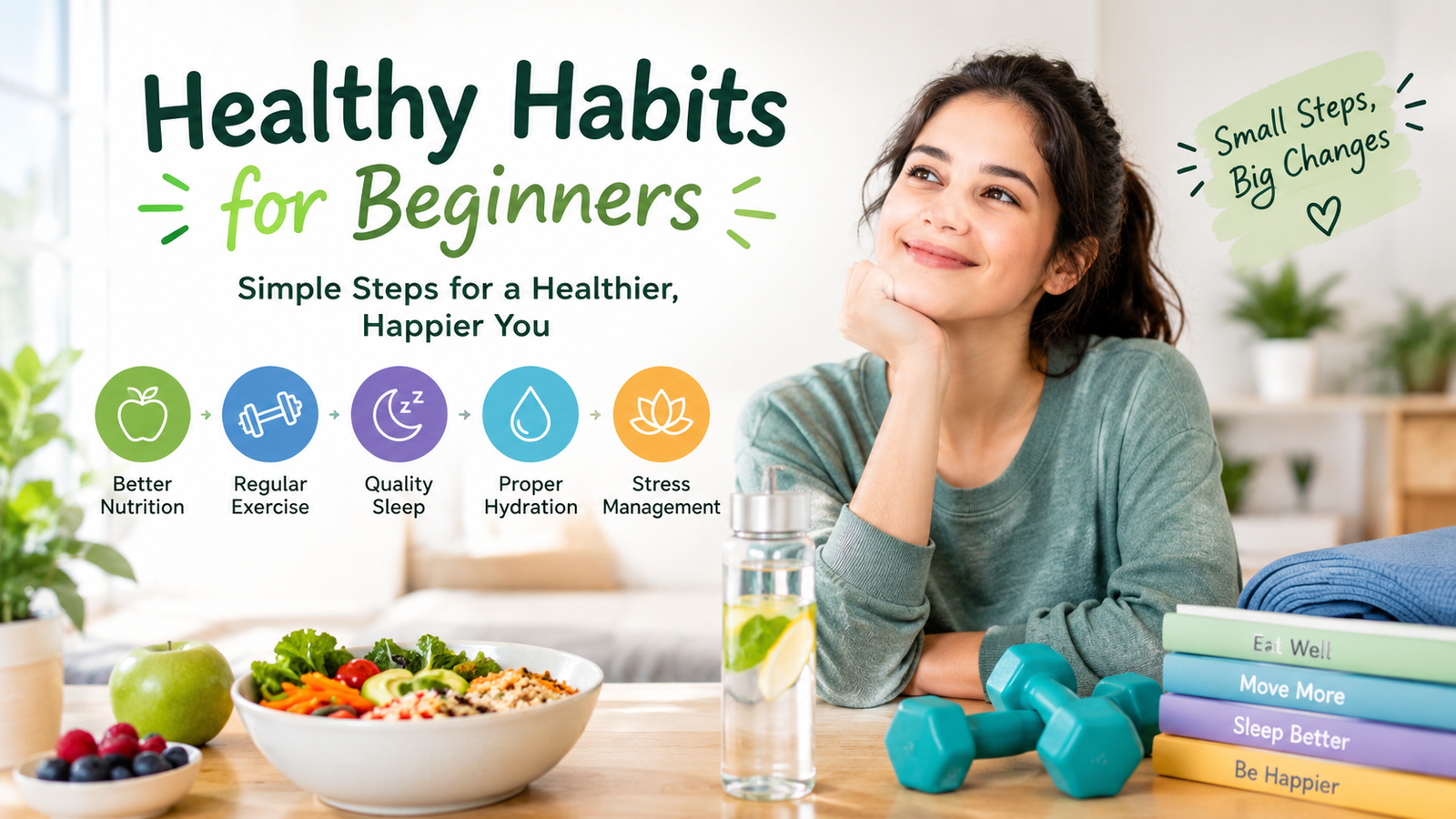
Starting a healthier lifestyle can feel overwhelming, especially when there are countless diets, workout plans, and wellness trends competing for attention. For beginners, the better approach is often much simpler: focus on small changes that can become part of everyday life. Healthy habits for beginners can include eating balanced meals, staying active, drinking enough water, getting quality sleep, and making time for relaxation. These habits do not need to be perfect to be effective. With consistency and realistic goals, small improvements can gradually create a healthier and more sustainable lifestyle.
Why Healthy Habits Matter
Daily routines have a significant influence on overall well-being. Eating nutritious foods can support the body’s nutritional needs, while regular movement can help maintain strength, mobility, and fitness. Adequate sleep and proper hydration also play an important role in helping the body function effectively.
For someone beginning a wellness journey, the key is consistency rather than making several major changes at once. A simple routine is easier to follow and can eventually become second nature.
Start With Better Nutrition
Food provides the energy and nutrients the body needs throughout the day. Beginners can start by building meals around a variety of whole foods instead of relying heavily on highly processed options.
A balanced plate can include vegetables, fruits, whole grains, protein sources, and healthy fats. Meals do not have to be complicated. Simple combinations such as oatmeal with fruit and nuts, a grain bowl with vegetables and protein, or whole-grain toast with eggs can provide a practical starting point.
Portion awareness can also help. Rather than completely eliminating favorite foods, beginners can focus on balance and moderation.
Make Physical Activity Part of the Routine
Exercise does not necessarily mean spending hours in a gym. Walking, cycling, stretching, dancing, swimming, or simple bodyweight exercises can all contribute to a more active lifestyle.
Beginners should choose activities that feel manageable and enjoyable. Starting with short sessions can make regular movement less intimidating. As fitness and confidence improve, the duration or intensity can gradually increase.
Strength exercises can also be useful because they support muscles and everyday physical function. Even basic movements such as squats, lunges, and controlled bodyweight exercises can become part of a beginner-friendly routine.
Prioritize Quality Sleep
Sleep is sometimes overlooked when people focus on diet and exercise. However, adequate rest is an important part of a healthy routine.
A consistent bedtime, a relaxing evening routine, and reduced screen use before sleeping may help create better sleep habits. Keeping the bedroom comfortable and avoiding unnecessary disruptions can also support a more restful night.
Instead of trying to change everything immediately, beginners can start by establishing a regular sleep and wake schedule.
Stay Properly Hydrated
Water is essential for normal body functions, making hydration another simple habit worth developing. Some people may forget to drink regularly during busy days, so keeping a reusable water bottle nearby can serve as a helpful reminder.
Water should generally be the main everyday beverage, while sugary drinks can be consumed less frequently. Individual fluid needs can vary depending on factors such as activity level, climate, and overall health.
Manage Stress in Healthy Ways
A healthy lifestyle is not only about food and exercise. Emotional well-being also deserves attention. Everyday responsibilities can create stress, and beginners can benefit from having simple ways to unwind.
Reading, walking outdoors, breathing exercises, hobbies, journaling, or spending quality time with supportive people can provide opportunities to relax. The most useful strategy is one that fits naturally into the individual’s routine.
Build Habits Gradually
One of the biggest mistakes beginners can make is expecting immediate transformation. Sustainable progress usually comes from repeating manageable actions over time.
Instead of setting several demanding goals at once, a beginner might start with one change, such as taking a daily walk or adding vegetables to one meal. Once that behavior becomes familiar, another habit can be introduced.
Tracking progress can also provide motivation. A simple checklist or calendar can make small achievements visible and encourage continued consistency.
Choose Sustainable Healthy Habits
Long-term health is easier to support when healthy choices fit realistically into everyday life. A routine that is extremely restrictive may be difficult to maintain, while a flexible routine can adapt to changing schedules and circumstances.
This is where sustainable thinking becomes important. Whether it involves choosing nutritious foods, reducing unnecessary waste, preparing meals at home, or selecting practical forms of exercise, sustainability can complement personal wellness.
The idea of Sustainable Lining in 2025! can also be considered as part of a broader conversation about making lifestyle choices that are practical for both personal well-being and the world around them.
Simple Healthy Habits for Beginners to Try
Beginners can start with a few straightforward habits:
- Eat a variety of nutritious foods.
- Include fruits and vegetables regularly.
- Drink water throughout the day.
- Move the body regularly.
- Include basic strength and flexibility exercises.
- Maintain a consistent sleep schedule.
- Take regular breaks to relax.
- Set realistic goals instead of pursuing perfection.
- Make gradual changes that can be maintained over time.
These steps may appear small, but repeated consistently, they can create a strong foundation for a healthier lifestyle.
Final Thoughts
Building a healthier lifestyle does not require perfection or dramatic changes. Healthy habits for beginners are most effective when they are realistic, enjoyable, and sustainable. Better nutrition, regular physical activity, sufficient sleep, hydration, and stress management can all contribute to a balanced routine.
The most important step is simply getting started. By introducing one manageable habit at a time and allowing progress to develop gradually, beginners can create routines that support long-term health and well-being.









[…] first workout should focus on learning rather than pushing the body to its limits. A beginner does not need to train every muscle with maximum intensity on day […]