
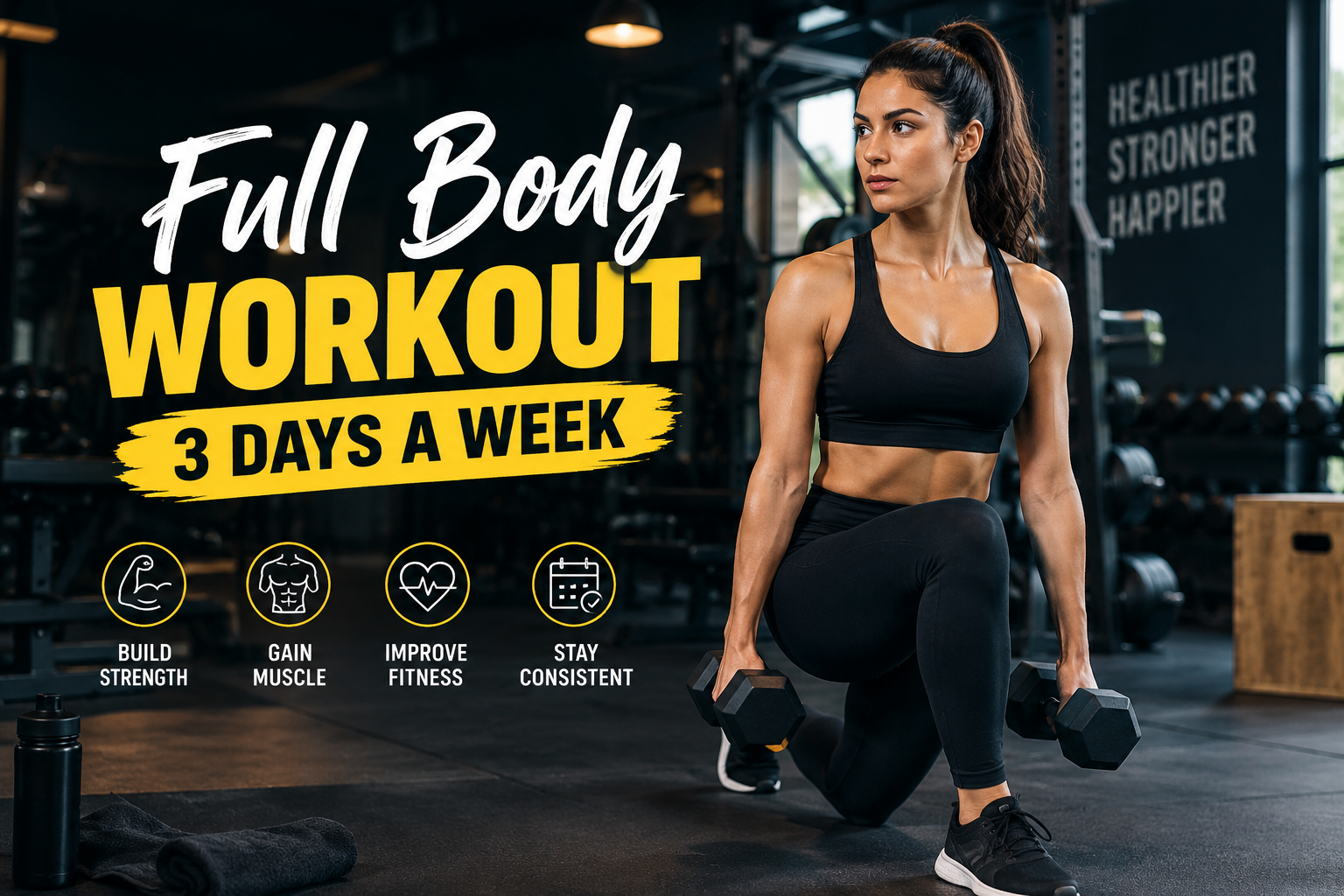
Finding time for regular exercise can be difficult, especially when work, family, and other responsibilities compete for attention. A Full Body Workout 3 Days a Week routine offers a practical solution for people who want to improve their fitness without spending every day in the gym.
By training the major muscle groups during three weekly sessions, this approach supports strength development, muscle growth, and overall fitness while allowing sufficient recovery between workouts. The key is to choose effective exercises, maintain proper form, and follow a consistent schedule.
This guide explains how to structure a three-day full-body workout, which exercises to include, and how to make the routine sustainable for long-term progress.
What Is a Full Body Workout 3 Days a Week?
A full-body workout targets several major muscle groups in the same training session. Instead of dedicating separate days to the chest, back, or legs, each workout includes exercises that work the upper body, lower body, and core.
A typical three-day schedule may involve training on Monday, Wednesday, and Friday. The rest days give the muscles time to recover and prepare for the next session.
This structure can work well for beginners, busy professionals, and experienced gym-goers who prefer an efficient training schedule.
Why Train the Full Body Three Times a Week?
Efficient Use of Time
Three weekly sessions can provide a balanced training routine without requiring daily gym visits. Each workout can be completed in approximately 45 to 60 minutes, depending on the exercises and rest periods.
Better Recovery
Recovery plays an important role in strength and muscle development. Rest days between workouts allow the body to repair muscle tissue and adapt to training demands.
Consistent Muscle Stimulation
Training each major muscle group several times per week can help maintain regular exercise stimulus. With appropriate volume and intensity, this approach can support steady progress.
Easier Long-Term Consistency
A manageable schedule is often easier to maintain than an overly demanding routine. Three planned sessions can fit into many lifestyles while leaving time for other responsibilities.
How to Structure a Three-Day Full-Body Workout
A balanced routine should include movements that target the major muscle groups. Each session can follow a similar structure while using different exercises or variations to keep training effective and engaging.
1. Lower-Body Exercise
Lower-body movements train the quadriceps, hamstrings, glutes, and calves.
Examples include:
- Squats
- Goblet squats
- Romanian deadlifts
- Lunges
- Leg presses
2. Upper-Body Push Exercise
Push exercises target the chest, shoulders, and triceps.
Examples include:
- Push-ups
- Bench presses
- Dumbbell shoulder presses
- Incline dumbbell presses
3. Upper-Body Pull Exercise
Pulling movements strengthen the back and biceps.
Examples include:
- Lat pulldowns
- Seated cable rows
- Dumbbell rows
- Assisted pull-ups
4. Core Exercise
Core training supports stability, balance, and controlled movement.
Examples include:
- Planks
- Dead bugs
- Bird dogs
- Pallof presses
Sample Full Body Workout 3 Days a Week
The following sample routine provides a balanced starting point. Exercise selection, resistance, and repetitions can be adjusted according to individual fitness levels.
Day 1: Strength Foundation
| Exercise | Sets | Repetitions |
|---|---|---|
| Squat | 3 | 8–10 |
| Push-ups or bench press | 3 | 8–12 |
| Lat pulldown | 3 | 10–12 |
| Romanian deadlift | 3 | 8–10 |
| Plank | 3 | 20–40 seconds |
Day 2: Balanced Training
| Exercise | Sets | Repetitions |
|---|---|---|
| Goblet squat | 3 | 10–12 |
| Dumbbell shoulder press | 3 | 8–12 |
| Seated cable row | 3 | 10–12 |
| Reverse lunges | 3 | 8–10 per leg |
| Dead bug | 3 | 10 per side |
Day 3: Full-Body Progression
| Exercise | Sets | Repetitions |
|---|---|---|
| Leg press or squat variation | 3 | 10–12 |
| Incline dumbbell press | 3 | 8–12 |
| Dumbbell row | 3 | 10–12 |
| Hip thrust | 3 | 10–12 |
| Pallof press | 3 | 10 per side |
A short warm-up should be completed before each session. The routine can also include light stretching or gentle movement after training.
How Many Sets and Repetitions Are Best?
The ideal number of sets and repetitions depends on training experience, exercise selection, and fitness goals.
For general strength and muscle development, many exercises can be performed for 2–4 sets of 6–12 repetitions. Beginners may start with fewer sets and lighter resistance while learning proper technique.
The final repetitions should feel challenging without compromising form. Gradually increasing resistance, repetitions, or control over time can help support continued progress.
Tips for Making the Routine Sustainable
Focus on Proper Form
Good technique helps the muscles work effectively and reduces unnecessary strain. Beginners should prioritize controlled movement over lifting heavier weights.
Increase Training Difficulty Gradually
Progressive overload does not always require a large increase in weight. Additional repetitions, improved form, or slightly greater resistance can all contribute to progress.
Allow Time for Recovery
Sleep, rest days, and adequate nutrition support recovery. The body needs time to adapt between training sessions.
Keep Workouts Manageable
A routine that is too long or exhausting may become difficult to maintain. A focused selection of compound and supporting exercises can make each session more efficient.
Track Progress
Recording exercises, sets, repetitions, and resistance can help identify improvements and guide future workouts.
Who Can Benefit From This Workout Schedule?
A three-day full-body routine can suit a wide range of people. Beginners may appreciate its simple structure, while experienced trainees may use it to maintain strength or complement other activities.
It can also be useful for individuals returning to exercise after a break, provided the routine is adjusted to their current fitness level and any relevant limitations.
Final Thoughts
A Full Body Workout 3 Days a Week routine provides an efficient and balanced way to train the major muscle groups while allowing time for recovery. With appropriate exercises, consistent effort, and gradual progression, three weekly sessions can support strength, muscle growth, and overall fitness.
The most effective routine is one that fits the individual’s schedule and can be maintained over time. Consistency, proper technique, and realistic progress remain more important than following an unnecessarily complicated plan.










[…] how to stay active during the day does not require long workouts or expensive equipment. Small movements, consistent habits, and simple lifestyle changes can help […]