
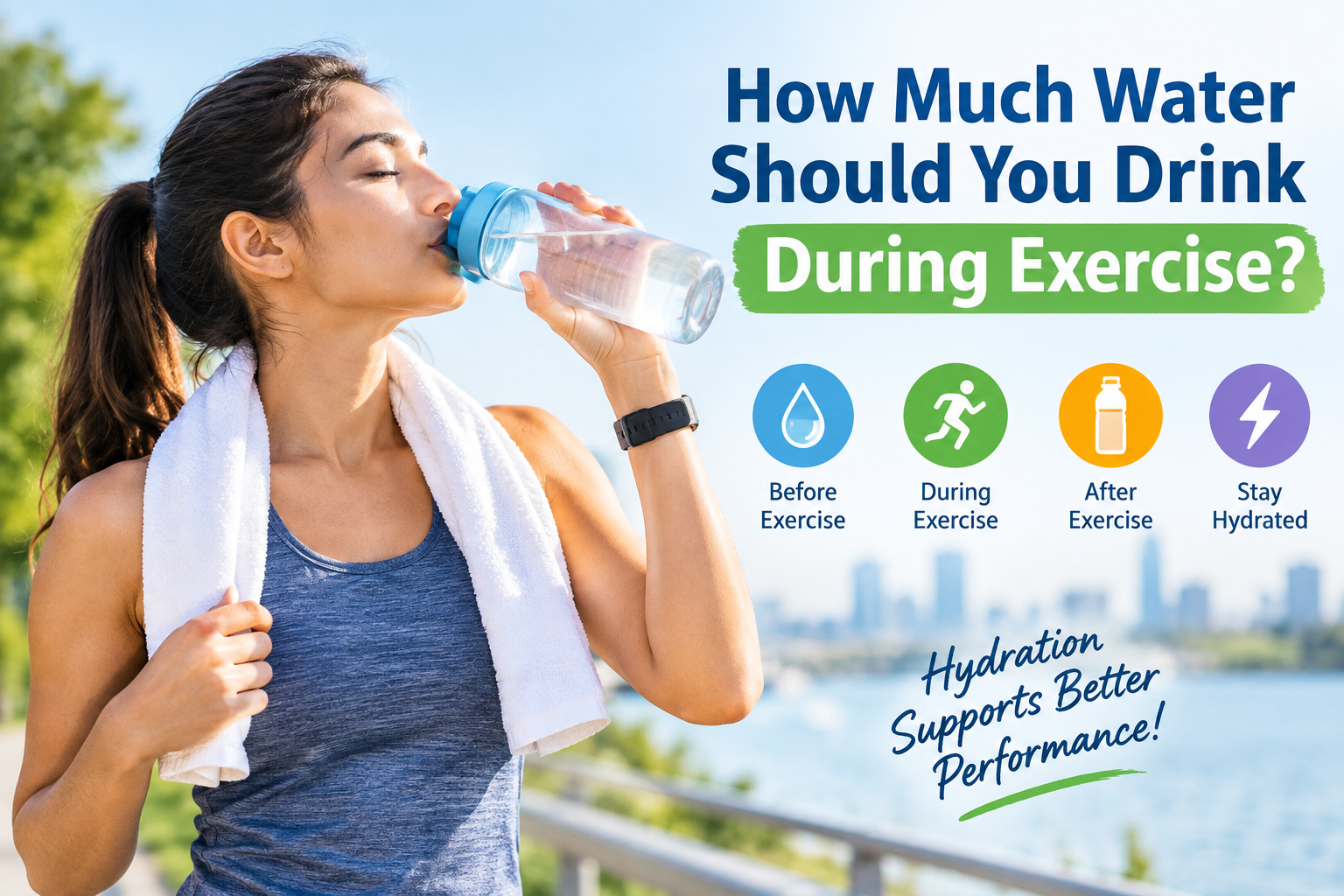
How Much Water Should You Drink During Exercise?
How Much Water Should You Drink During Exercise? The answer depends on workout intensity, duration, sweat loss, and the surrounding temperature. Proper hydration helps the body regulate heat, support muscle function, and maintain energy during physical activity. However, drinking too little can lead to dehydration, while excessive water intake may also create health risks. This guide explains practical hydration strategies before, during, and after exercise, helping readers understand how to meet their fluid needs safely.
Why Hydration Matters During Exercise
During physical activity, the body produces heat and releases sweat to cool itself. Sweat contains water and electrolytes, including sodium, which are important for maintaining fluid balance. As exercise continues, fluid loss can increase, especially in hot or humid conditions
When the body does not replace enough lost fluid, dehydration may affect performance and comfort. Common effects include:
- Increased thirst and dry mouth
- Fatigue or reduced energy
- Headache
- Dizziness
- Muscle cramps
- Difficulty maintaining exercise intensity
Adequate hydration supports normal circulation, temperature regulation, and muscle function. It also helps the body recover after demanding physical activity.
How Much Water Should You Drink During Exercise?
There is no single amount that suits every person or workout. A practical starting point for many adults is 400–800 milliliters of fluid per hour of exercise, adjusted according to sweat rate, weather, body size, and exercise intensity.
This range is a general guide rather than a strict rule. Some people may need less, while others who sweat heavily may require more. Drinking small amounts regularly is often more comfortable than consuming a large quantity at once.
Hydration Guidelines by Workout Duration
| Exercise duration | General hydration approach |
|---|---|
| Less than 30 minutes | Water may not be necessary unless the weather is hot or the person begins thirsty. |
| 30–60 minutes | Small, regular sips of water can help maintain comfort and hydration. |
| More than 60 minutes | Fluid needs increase, and electrolytes may become useful during prolonged or intense exercise. |
| Several hours | A structured hydration plan may be needed, especially in heat or during endurance events. |
These are broad guidelines. Individual needs vary, and thirst, sweat loss, and exercise conditions should also be considered.
How Much Water Should Be Consumed Before Exercise?
Starting exercise adequately hydrated can help reduce the risk of excessive fluid loss. Many adults can drink water with regular meals and throughout the day, then have a moderate amount before beginning a workout.
A practical approach is to drink approximately 400–600 milliliters of water during the two hours before exercise. Another small amount may be taken closer to the start if needed.
The goal is to begin comfortably hydrated rather than drinking excessive water immediately before activity. Overdrinking can cause discomfort and may increase the need for bathroom breaks during exercise.
How Much Water Should Be Consumed After Exercise?
Post-workout hydration helps replace fluid lost through sweat. The amount required depends on how much fluid was lost, the workout duration, and the environmental conditions.
A useful method is to compare body weight before and after exercise. A noticeable decrease may indicate fluid loss. For more accurate recovery, many sports hydration guidelines recommend replacing approximately 1.25–1.5 liters of fluid for every kilogram of body weight lost.
Water may be sufficient after shorter or moderate workouts. After prolonged, intense exercise or heavy sweating, a drink containing electrolytes and a meal with sodium may support fluid replacement more effectively.
Factors That Affect Exercise Hydration Needs
Workout Intensity
High-intensity exercise generally produces more heat and may increase sweating. Running, cycling, circuit training, and competitive sports can therefore require more fluid than gentle stretching or light walking.
Exercise Duration
The longer a workout continues, the more time the body has to lose water through sweat. A short session may require little additional fluid, while endurance training may require a planned approach.
Temperature and Humidity
Hot, humid weather can increase sweat loss and make it harder for sweat to evaporate. Outdoor exercise in these conditions may require more frequent drinking and additional attention to cooling.
Individual Sweat Rate
Sweat rates vary significantly between individuals. Two people completing the same workout may lose very different amounts of fluid. A person who finishes with heavily soaked clothing may need a different hydration strategy from someone who sweats lightly.
Clothing and Exercise Environment
Heavy clothing, protective equipment, indoor heat, and poor ventilation can increase body temperature and fluid loss. These factors should be considered when planning hydration.
Water or Electrolytes: Which Is Better?
For many workouts lasting less than an hour, plain water is usually sufficient. However, longer or more intense sessions may involve substantial sweat and sodium loss.
Electrolyte drinks may be useful when:
- Exercise lasts longer than 60 minutes
- Sweating is heavy
- The weather is hot or humid
- The workout involves endurance activity
- Fluid replacement continues after prolonged exercise
Sports drinks can contain added sugar, so the choice should match the activity and individual needs. For everyday workouts, water and balanced meals often provide adequate hydration and electrolytes.
Signs of Dehydration During Exercise
Recognizing early signs of dehydration can help prevent symptoms from becoming more serious. Possible signs include:
- Strong thirst
- Dry mouth
- Darker-than-usual urine
- Headache
- Unusual tiredness
- Dizziness
- Reduced exercise performance
Thirst is useful, but it is not always a perfect measure of fluid needs during prolonged activity. In demanding conditions, a planned approach based on sweat loss and exercise duration may be more reliable.
If someone experiences confusion, fainting, severe weakness, or an inability to continue safely, exercise should stop and urgent medical assistance should be sought.
Can Someone Drink Too Much Water During Exercise?
Yes. Excessive water intake can dilute sodium in the blood, a condition known as exercise-associated hyponatremia. Although uncommon, it can be serious.
The risk is higher when a person drinks large amounts of water beyond their fluid losses, particularly during long-duration exercise. Symptoms may include nausea, headache, confusion, or unusual swelling.
A safer approach is to avoid forcing excessive amounts of water. Fluid intake should generally reflect thirst, sweat loss, workout duration, and environmental conditions. During prolonged exercise, electrolytes may also be important.
Practical Tips for Staying Hydrated During Exercise
Drink Regularly
Small, consistent sips can help maintain hydration without causing stomach discomfort.
Carry a Reusable Bottle
A bottle makes water easier to access during workouts, outdoor walks, and sports sessions.
Monitor Urine Color
Pale-yellow urine often suggests adequate hydration, while consistently dark urine may indicate a need for more fluids. Urine color can also be affected by certain foods, supplements, and medications.
Weigh Before and After Long Workouts
For athletes and people training in hot conditions, tracking body weight before and after exercise can help estimate sweat loss and refine hydration habits.
Adjust for Weather
Hot or humid conditions may increase fluid needs. Training schedules should include breaks, shade, and access to water when possible.
Avoid Overhydration
Drinking more water is not always better. A balanced approach helps reduce the risks associated with both dehydration and excessive fluid intake.
Frequently Asked Questions
Is drinking water during exercise necessary?
Water may not be necessary during every short workout, especially in comfortable conditions. However, longer sessions, hot weather, and heavy sweating increase the importance of regular fluid intake.
How often should someone drink water while exercising?
Small sips every 10–20 minutes can be a practical starting point, but the ideal frequency depends on thirst, sweat rate, workout intensity, and duration.
Is it better to drink cold or room-temperature water?
Both can support hydration. Cold water may feel more refreshing during hot exercise, while room-temperature water may be more comfortable for some people. Personal preference and tolerance are usually the deciding factors.
Does coffee or tea count toward hydration?
Coffee and tea contribute to daily fluid intake. However, water remains a simple choice during exercise, particularly when the goal is to replace sweat losses.
Should water be consumed during a workout if there is no thirst?
For short, low-intensity exercise, drinking according to thirst may be sufficient. During prolonged activity or hot conditions, planned small sips may help prevent excessive fluid loss.
Conclusion
Understanding how much water should be consumed during exercise helps people make better hydration decisions without relying on a one-size-fits-all rule. Workout duration, intensity, temperature, humidity, and individual sweat rate all influence fluid needs. Water is often enough for shorter sessions, while prolonged or intense exercise may require electrolytes and a more structured plan. By drinking regularly, monitoring signs of dehydration, and avoiding excessive intake, individuals can support performance, comfort, and recovery.








[…] guide explains how to structure an advanced full-body routine, which exercises can form its foundation, how to manage intensity, and how to make training sustainable over […]