
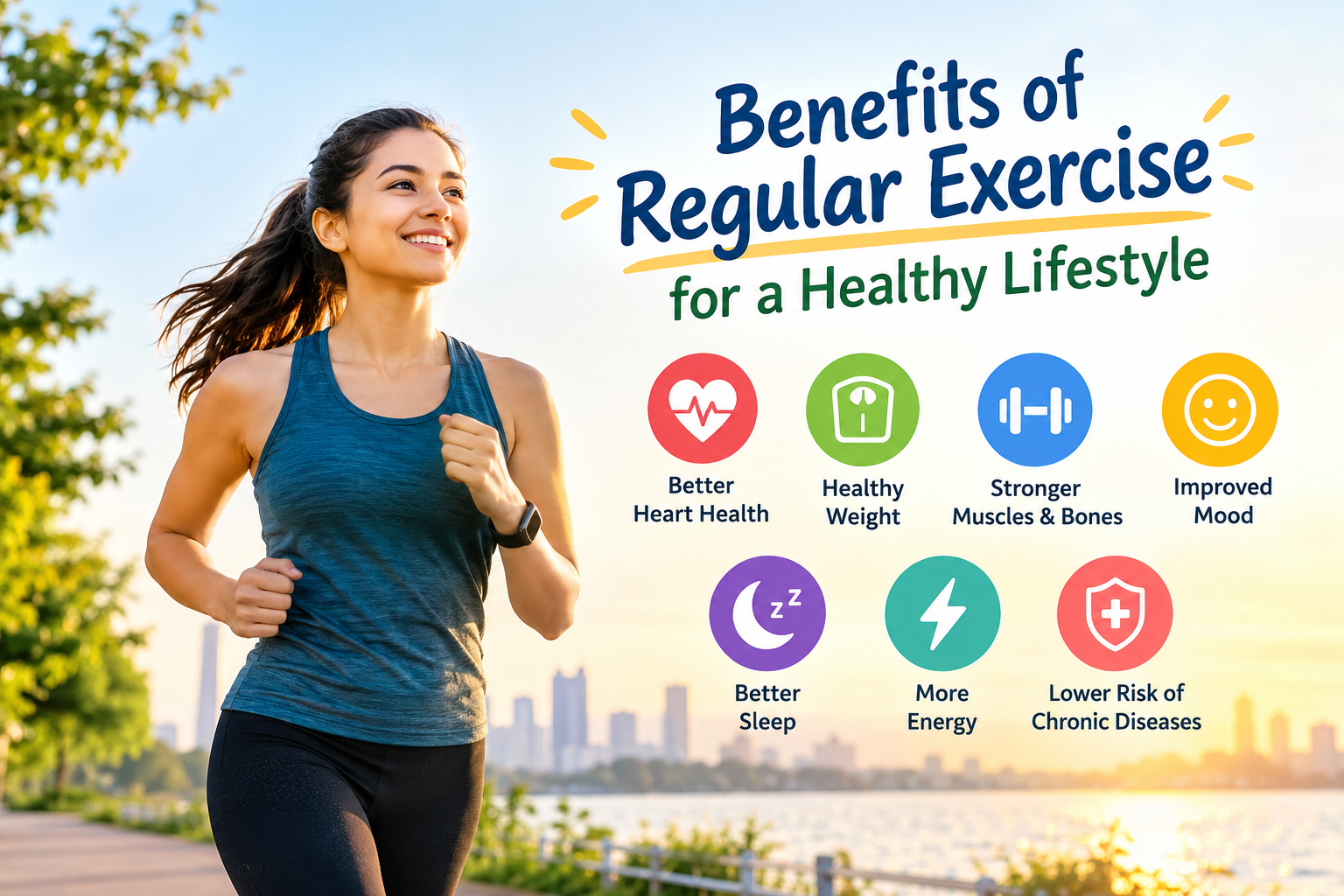
Benefits of Regular Exercise for a Healthy Lifestyle
Benefits of Regular Exercise for a Healthy Lifestyle extend far beyond improving physical fitness. Regular movement supports heart health, strengthens muscles and bones, improves mood, and helps people maintain a healthy weight. In a world where busy schedules and prolonged sitting are common, exercise offers a practical way to protect both physical and mental well-being. The good news is that a healthier lifestyle does not always require intense workouts. Consistent, enjoyable activities can make a meaningful difference over time.
Why Regular Exercise Matters for a Healthy Lifestyle
The benefits of regular exercise for a healthy lifestyle are important for people of all ages. Exercise helps improve physical fitness, supports mental well-being, and reduces the risk of several health problems. Even simple activities such as walking, cycling, stretching, or jogging can make a positive difference in daily life. By making exercise a regular habit, people can enjoy better health, more energy, and a higher quality of life.
7 Benefits of Regular Exercise for a Healthy Lifestyle
1. Improves Heart Health
One of the major benefits of regular exercise for a healthy lifestyle is improved heart health. Physical activity strengthens the heart, improves blood circulation, and helps maintain healthy blood pressure levels. Regular exercise may also reduce the risk of heart disease and stroke. Activities such as brisk walking, swimming, and cycling are excellent ways to support cardiovascular health.
2. Helps Maintain a Healthy Weight
The benefits of regular exercise for a healthy lifestyle also include healthy weight management. Exercise helps the body burn calories and maintain a balanced metabolism. When combined with a nutritious diet, regular physical activity can support weight loss and prevent unwanted weight gain. Strength training and aerobic exercises are especially helpful for maintaining a healthy body composition.
Physical activity also helps preserve muscle mass, which is valuable during weight management. Rather than relying on short-term or extreme routines, a sustainable approach encourages gradual progress and long-lasting results.
3. Strengthens Muscles and Bones
Strength training, bodyweight exercises, and weight-bearing activities help build and maintain muscle strength. Stronger muscles support posture, movement, and everyday physical tasks.
Exercise also contributes to bone health. Activities such as walking, jogging, and resistance training place healthy demands on the bones, helping support their strength and density. These benefits become especially important as people grow older.
4. Boosts Mood and Supports Mental Well-Being
Another important benefit of regular exercise for a healthy lifestyle is its positive effect on mental health. Physical activity can reduce stress, improve mood, and help manage feelings of anxiety. Exercise encourages the release of endorphins, which are natural chemicals that make people feel happier and more relaxed. A short daily workout can improve emotional well-being and increase self-confidence.
5. Improves Sleep Quality
People who exercise regularly often find it easier to establish a healthy sleep routine. Physical activity can help the body manage stress and prepare for restful sleep.
Moderate exercise during the day may support deeper, more consistent rest. However, intense workouts close to bedtime may feel stimulating for some people, so exercise timing can be adjusted according to individual preferences.
6. Increases Energy and Daily Productivity
Although exercise requires energy, it can help improve energy levels over time. Regular movement supports cardiovascular fitness and makes the body more efficient at performing physical tasks.
As endurance improves, everyday responsibilities may feel less tiring. Better energy levels can also encourage greater participation in work, family activities, hobbies, and social life.
7. Reduces the Risk of Certain Chronic Diseases
Regular physical activity is associated with a lower risk of several chronic health conditions, including type 2 diabetes and certain cardiovascular diseases. It can support blood sugar regulation, healthy blood pressure, and overall metabolic health.
Exercise is not a guarantee against illness, but it is an important part of a broader preventive lifestyle. Combined with medical care, nutritious food, and adequate rest, it can contribute to better long-term health outcomes.
Types of Exercise That Support a Healthy Lifestyle
A balanced routine usually includes different forms of physical activity. Each type offers unique benefits, and combining them can make exercise more effective and enjoyable.
Aerobic Exercise
Aerobic activities increase the heart rate and improve cardiovascular endurance. Examples include:
- Brisk walking
- Cycling
- Swimming
- Dancing
- Jogging
- Recreational sports
These activities can often be adjusted to suit different fitness levels and preferences.
Strength Training
Strength exercises help develop muscle power and support bone health. They may include:
- Bodyweight squats
- Push-ups
- Resistance-band exercises
- Weightlifting
- Lunges
- Core-strengthening movements
Beginners can start with light resistance and gradually increase difficulty as strength improves.
Flexibility and Balance Exercises
Stretching, yoga, and balance exercises help support mobility and body control. They may improve flexibility, reduce stiffness, and make everyday movement more comfortable.
These activities are particularly useful when included alongside aerobic and strength training.
How to Make Exercise a Sustainable Habit
The long-term benefits of exercise depend largely on consistency. A routine that feels manageable is more likely to become a lasting habit than one that is overly demanding.
Start with Small, Realistic Goals
A beginner does not need to complete an intense workout immediately. Starting with a 10- or 15-minute walk can make physical activity feel approachable. Gradually increasing duration and intensity allows the body to adapt.
Choose Enjoyable Activities
Exercise becomes easier to maintain when it feels enjoyable rather than like a chore. Walking with friends, dancing at home, cycling, or joining a recreational class can make movement more engaging.
Create a Regular Schedule
Setting aside specific times for physical activity can help exercise become part of a daily or weekly routine. Even short sessions can be valuable when performed consistently.
Include Rest and Recovery
Rest is an important part of a healthy exercise routine. Adequate recovery allows muscles to repair and helps reduce the risk of overuse injuries. A balanced plan should include rest days, hydration, and sufficient sleep.
Listen to the Body
Exercise should challenge the body without causing unnecessary pain. Beginners should increase activity gradually and adjust the routine when discomfort, excessive fatigue, or other warning signs appear. Individuals with existing health concerns should seek professional guidance before beginning a new exercise program.
Common Mistakes to Avoid
Some habits can make exercise harder to maintain or reduce its benefits. Avoiding these common mistakes can support safer and more effective progress.
- Doing too much too soon: Rapidly increasing intensity may lead to soreness or injury.
- Ignoring warm-ups: Gentle movement before exercise can prepare the body for activity.
- Focusing only on one type of exercise: A balanced routine supports cardiovascular fitness, strength, flexibility, and balance.
- Neglecting recovery: Rest and sleep are essential for adaptation and performance.
- Expecting immediate results: Sustainable improvements usually develop through consistent effort over time.
Conclusion
In conclusion, the benefits of regular exercise for a healthy lifestyle go beyond physical fitness. Exercise supports heart health, helps maintain a healthy weight, strengthens muscles and bones, improves mood, and promotes better sleep. The key is to choose enjoyable activities and make them part of a consistent routine. Even small daily efforts can lead to long-term health benefits and a healthier lifestyle.








[…] guide explains beginner-friendly mobility exercises, their benefits, proper technique, and how a person can build a realistic routine that is easy to […]