Lower Belly Fat Exercises at Home: A Practical Guide to Building a Stronger Core
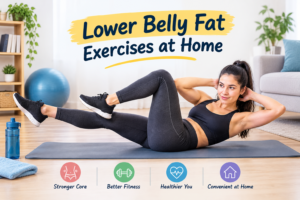
Lower Belly Fat Exercises at Home can help people build core strength, improve mobility, and support a healthier lifestyle without needing a gym membership. Although no exercise can specifically burn fat from only the lower belly, a consistent combination of strength training, cardio, balanced nutrition, and daily movement can support overall fat loss. This guide explains effective exercises, how to perform them safely, and how to create a realistic home workout routine that is easier to maintain.
Can Lower Belly Fat Exercises at Home Really Help?
Lower belly fat is a common concern, but it is important to understand how the body loses fat. Fat loss generally occurs throughout the body rather than in one specific area. Genetics, hormones, age, sleep, nutrition, and activity levels can all influence where fat is stored and how quickly it changes.
Exercises that target the abdominal muscles can strengthen and tone the core. However, visible changes around the waist usually require a broader approach that includes regular physical activity and sustainable eating habits.
The goal should not be to eliminate every trace of belly fat. Instead, a healthier approach focuses on improving strength, fitness, energy, and overall body composition.
7 Effective Lower Belly Fat Exercises at Home
The following exercises require little or no equipment and can be adapted for different fitness levels. Beginners should start slowly and focus on proper form rather than speed.
1. Reverse Crunches
Reverse crunches work the abdominal muscles by bringing the knees toward the chest while the hips gently lift from the floor.
How to perform:
- Lie on a mat with the knees bent and feet lifted.
- Place the arms beside the body or under the hips for support.
- Tighten the core and slowly bring the knees toward the chest.
- Lift the hips slightly without swinging.
- Lower the hips with control.
A beginner can try 2 sets of 8–12 repetitions.
2. Dead Bug
The dead bug is a beginner-friendly core exercise that helps improve abdominal control and stability.
How to perform:
- Lie on the back with the arms extended toward the ceiling.
- Lift the legs so the knees are bent at approximately 90 degrees.
- Slowly extend the right arm and left leg toward the floor.
- Return to the starting position.
- Repeat on the opposite side.
The lower back should remain gently supported against the floor. Beginners can perform 2 sets of 8 repetitions per side.
3. Mountain Climbers
Mountain climbers combine core engagement with a cardiovascular challenge. They can help increase overall activity while strengthening the muscles around the abdomen.
How to perform:
- Begin in a high-plank position with the hands beneath the shoulders.
- Keep the body in a straight line.
- Bring one knee toward the chest.
- Return it to the starting position and switch sides.
- Continue at a controlled pace.
A beginner can start with 20–30 seconds, followed by a short rest.
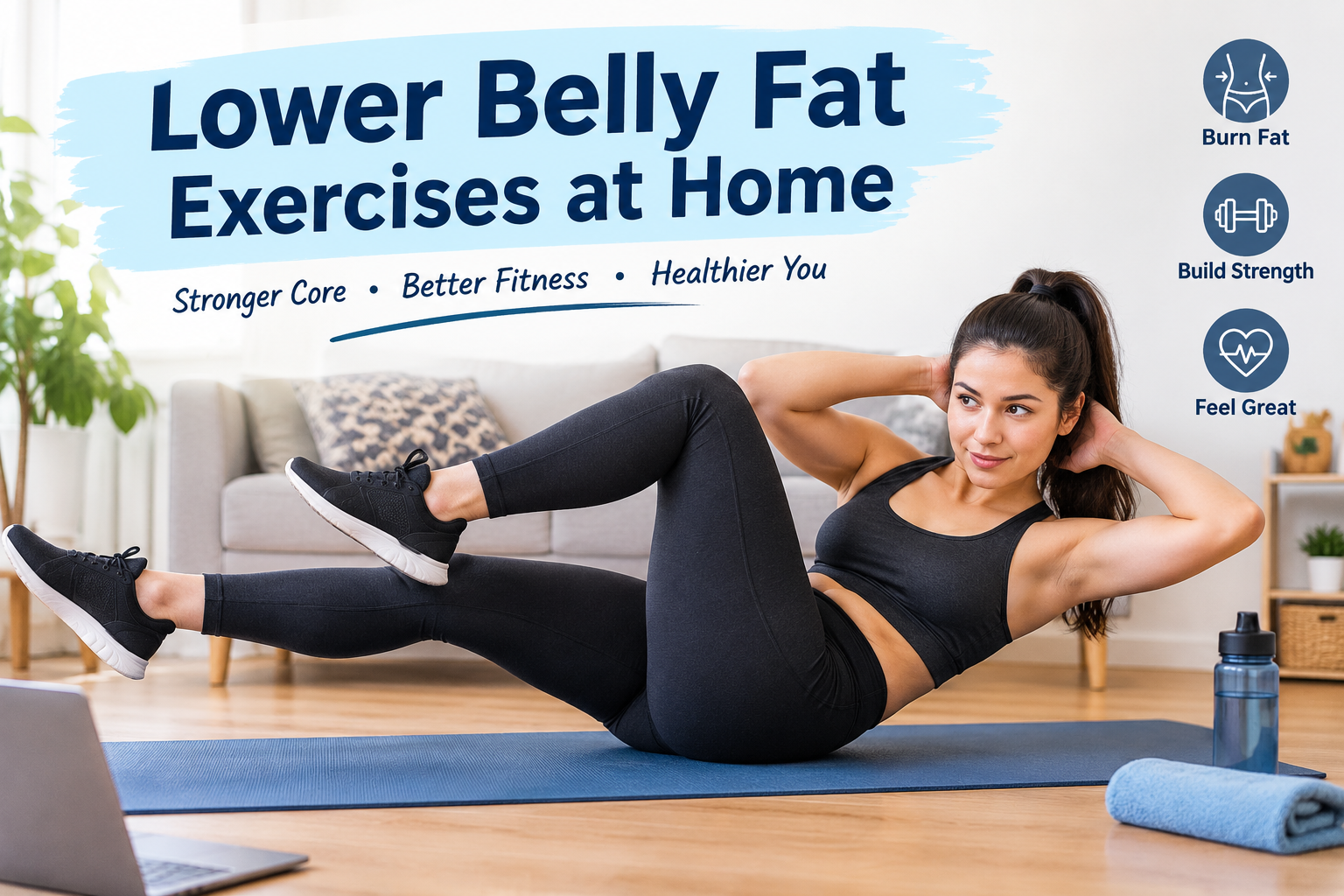
4. Bicycle Crunches
Bicycle crunches engage several abdominal muscles and encourage controlled torso rotation.
How to perform:
- Lie on the back with the hands lightly behind the head.
- Lift the shoulders slightly from the floor.
- Bring the right knee toward the chest while extending the left leg.
- Rotate the torso so the left elbow moves toward the right knee.
- Switch sides in a slow, controlled motion.
Avoid pulling on the neck. A good starting point is 2 sets of 10 repetitions per side.
5. Forearm Plank
The forearm plank strengthens the core and helps improve stability throughout the body.
How to perform:
- Place the forearms on the floor with the elbows beneath the shoulders.
- Extend the legs behind the body.
- Keep the hips aligned with the shoulders and heels.
- Tighten the abdominal muscles and breathe normally.
- Hold the position without allowing the lower back to sag.
Beginners can hold the plank for 15–30 seconds and gradually increase the duration.
6. Heel Taps
Heel taps are a gentle abdominal exercise that can be useful for beginners who want to improve core control.
How to perform:
- Lie on the back with the knees bent and feet flat on the floor.
- Lift the shoulders slightly if comfortable.
- Keep the core engaged as the right hand reaches toward the right heel.
- Return to the center and repeat on the left side.
- Continue alternating sides.
Try 2 sets of 12–16 alternating taps.
7. Glute Bridge
Although the glute bridge primarily targets the glutes and hips, it also encourages core stability and supports stronger movement patterns.
How to perform:
- Lie on the back with the knees bent and feet flat.
- Keep the arms beside the body.
- Tighten the core and squeeze the glutes.
- Lift the hips until the body forms a comfortable straight line from the shoulders to the knees.
- Lower slowly.
Perform 2–3 sets of 10–15 repetitions.
How to Create a Simple Home Workout Routine
A balanced routine can combine abdominal exercises with full-body movement. This approach is more useful for overall fitness than performing only crunches every day.
Beginner 20-Minute Routine
| Exercise | Suggested Duration |
|---|---|
| Warm-up march | 3 minutes |
| Reverse crunches | 10 repetitions |
| Dead bug | 8 repetitions per side |
| Mountain climbers | 20 seconds |
| Glute bridges | 12 repetitions |
| Forearm plank | 20 seconds |
| Rest | 30–45 seconds |
| Repeat | 2–3 rounds |
The routine can be completed 3–4 days per week, with rest or light movement on the other days. Beginners may start with fewer rounds and increase gradually.
Why Cardio and Full-Body Exercise Matter
Core exercises strengthen the abdominal muscles, but they do not directly remove fat from the lower belly. Cardio and full-body strength training help increase energy expenditure and improve cardiovascular fitness.
Useful home-based activities include:
- Brisk walking
- Dancing
- Stair climbing
- Marching in place
- Bodyweight squats
- Lunges
- Push-ups against a wall or sturdy surface
- Resistance-band exercises
Combining these activities with core training creates a more complete fitness routine.
Nutrition Habits That Support Fat Loss
Exercise works best when paired with practical eating habits. Extreme diets are often difficult to maintain and may lead to fatigue or inconsistent progress.
A balanced approach can include:
- Eating adequate protein to support muscle maintenance
- Choosing vegetables, fruits, whole grains, and other fiber-rich foods
- Drinking enough water throughout the day
- Limiting frequent sugary drinks and highly processed snacks
- Paying attention to portion sizes
- Avoiding unnecessary crash diets
The goal is to develop eating habits that support energy, recovery, and long-term consistency.
Common Mistakes to Avoid
Expecting Spot Reduction
Performing hundreds of abdominal exercises does not guarantee fat loss in the lower belly. Fat reduction happens according to the body’s overall fat-loss process.
Exercising Too Intensely Too Soon
Starting with excessive repetitions or difficult variations can lead to soreness, poor form, or injury. Gradual progression is usually more sustainable.
Ignoring Form
Poor posture, swinging movements, or pulling on the neck can reduce exercise quality. Controlled movements are more important than completing a high number of repetitions.
Skipping Recovery
Muscles need time to recover. Rest days, adequate sleep, and lighter activities can help support progress.
Focusing Only on Appearance
Fitness improvements may include better balance, stronger muscles, improved stamina, and greater confidence—even before visible body changes occur.
Safety Tips for Home Workouts
A safe workout begins with a suitable exercise space and a gradual warm-up. A mat can provide comfort during floor exercises, while supportive footwear may be useful for standing movements.
Anyone experiencing sharp pain, dizziness, unusual shortness of breath, or persistent discomfort should stop exercising and seek appropriate medical advice. People with existing injuries or health concerns may benefit from guidance from a qualified healthcare professional or fitness specialist.
Conclusion
Lower Belly Fat Exercises at Home can be a practical part of a healthier fitness routine. While targeted exercises cannot specifically burn fat from the lower belly, they can strengthen the core, improve stability, and support overall physical activity. Combining exercises such as reverse crunches, dead bugs, planks, and mountain climbers with cardio, balanced nutrition, and adequate recovery can create a more sustainable approach to fitness. Consistency, realistic expectations, and gradual progress are more valuable than quick fixes.