
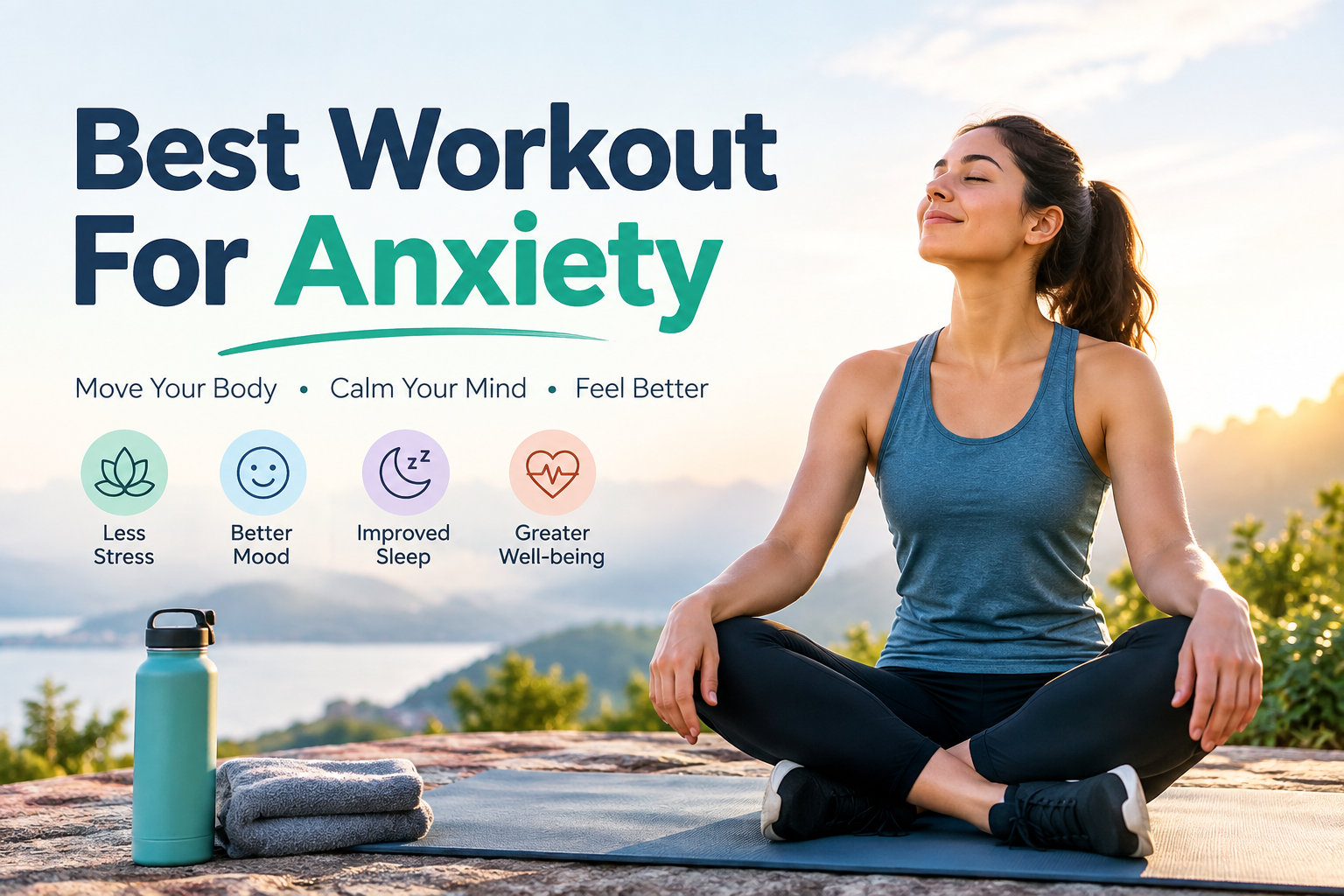
Anxiety can leave a person feeling tense, restless, and mentally exhausted. Finding the right workout can help release built-up stress while supporting better mood, sleep, and overall well-being. However, the best exercise routine is not necessarily the most intense one. A sustainable approach focuses on movement that feels manageable, enjoyable, and easy to maintain. This article explores the Best Workout For Anxiety, explains how different forms of exercise may support anxiety management, and offers practical guidance for building a routine that fits everyday life.
How Exercise Helps With Anxiety
Physical activity can support mental well-being in several ways. During exercise, the body releases chemicals that can improve mood and help reduce feelings of tension. Movement also provides a healthy way to redirect attention away from persistent worries.
Regular exercise may also support better sleep, improve energy levels, and strengthen confidence. These benefits can make it easier for a person to manage everyday stress. While exercise is not a replacement for professional mental health care, it can be a valuable part of a broader approach to anxiety management.
What Is the Best Workout For Anxiety?
The Best Workout For Anxiety depends on a person’s comfort level, fitness experience, and preferences. A workout that feels calming and enjoyable is often easier to maintain than one that creates additional pressure.
Some people may benefit from gentle movement, while others may prefer more active workouts. The most suitable options often include walking, yoga, cycling, swimming, and moderate strength training.
Walking
Walking is one of the simplest ways to introduce exercise into a daily routine. It requires little equipment and can be adjusted to suit different fitness levels.
A relaxed walk may help a person clear the mind, spend time outdoors, and release physical tension. Brisk walking can also provide a moderate cardiovascular workout without feeling overly demanding.
Yoga
Yoga combines physical movement, breathing, and mindfulness. This combination may help reduce muscle tension and encourage a greater sense of calm.
Gentle yoga styles, stretching routines, and restorative poses can be especially suitable for people who prefer a slower pace. Yoga may also help individuals become more aware of how stress affects the body.
Cycling
Cycling can provide an enjoyable way to improve cardiovascular fitness while giving the mind a break from daily worries. Indoor cycling may suit people who prefer exercising at home, while outdoor cycling can add variety and fresh air.
The intensity can be adjusted according to comfort, making cycling a flexible option for different fitness levels.
Swimming
Swimming offers a full-body workout with relatively low impact on the joints. The repeated rhythm of movement and breathing may feel calming for some people.
A relaxed swim can provide gentle exercise, while longer or more energetic sessions can support cardiovascular health. The choice of pace should depend on the individual’s fitness level and comfort.
Strength Training
Strength training can support physical health and improve confidence. It may also provide a sense of achievement as a person gradually becomes stronger.
Bodyweight exercises, resistance bands, and light weights can all be useful starting points. A manageable routine may help prevent exercise from becoming another source of pressure.
How to Build a Sustainable Workout Routine
A sustainable workout routine should feel realistic rather than overwhelming. Starting with small, achievable goals can make exercise easier to maintain over time.
Start Slowly
A person who is new to exercise may begin with 10 to 15 minutes of movement. The duration can gradually increase as comfort and fitness improve.
Starting slowly can also help reduce the risk of soreness, fatigue, or frustration.
Choose Enjoyable Activities
Enjoyment plays an important role in consistency. A person who dislikes running may find walking, dancing, swimming, or cycling more appealing.
The most effective routine is often the one that feels comfortable enough to repeat regularly.
Create a Realistic Schedule
A flexible schedule can make exercise easier to fit into daily life. Short sessions may be more practical than long workouts for someone with a busy routine.
Consistency matters more than perfection. Missing a session does not mean the routine has failed.
Pay Attention to Intensity
Exercise should support well-being rather than create additional stress. A person may need to reduce intensity if a workout causes excessive fatigue, dizziness, or discomfort.
Moderate movement is often a useful starting point, especially for individuals who are unfamiliar with regular exercise.
How Often Should Someone Exercise for Anxiety?
The ideal exercise frequency varies from person to person. A practical starting point may include short sessions several days a week, with gradual increases as the routine becomes comfortable.
Some people may prefer daily walks, while others may choose a combination of cardio, strength training, and stretching throughout the week. Rest days can also help the body recover and prevent exercise from feeling overwhelming.
The focus should remain on building a routine that is sustainable and supportive rather than aiming for rapid results.
Tips for Making Exercise More Enjoyable
A few simple adjustments can make physical activity feel more approachable:
- Choosing a comfortable environment for exercise.
- Listening to music or a calming podcast during a walk.
- Exercising with a supportive friend or family member.
- Setting small, realistic goals.
- Trying different activities to discover personal preferences.
- Celebrating consistency instead of focusing only on performance.
These habits can help exercise become a positive part of everyday life.
When to Seek Professional Support
Exercise can be helpful for managing stress and supporting mental well-being, but it does not replace professional treatment for anxiety disorders.
A person should consider speaking with a qualified mental health professional if anxiety is persistent, interferes with daily activities, or becomes difficult to manage. Professional guidance can help identify suitable treatment options and provide additional coping strategies.
If exercise causes unusual pain, dizziness, or other concerning symptoms, medical advice may also be appropriate.
Final Thoughts
The Best Workout For Anxiety is one that supports both physical health and emotional well-being. Walking, yoga, cycling, swimming, and strength training can all offer useful benefits when practiced at a comfortable pace. A sustainable routine does not need to be intense or complicated. By choosing enjoyable activities, starting gradually, and maintaining realistic expectations, a person can make exercise a positive and manageable part of anxiety management.





[…] deficit over time, but the process involves more than food intake alone. Physical activity, sleep, stress, daily routines, and personal preferences can all influence […]