
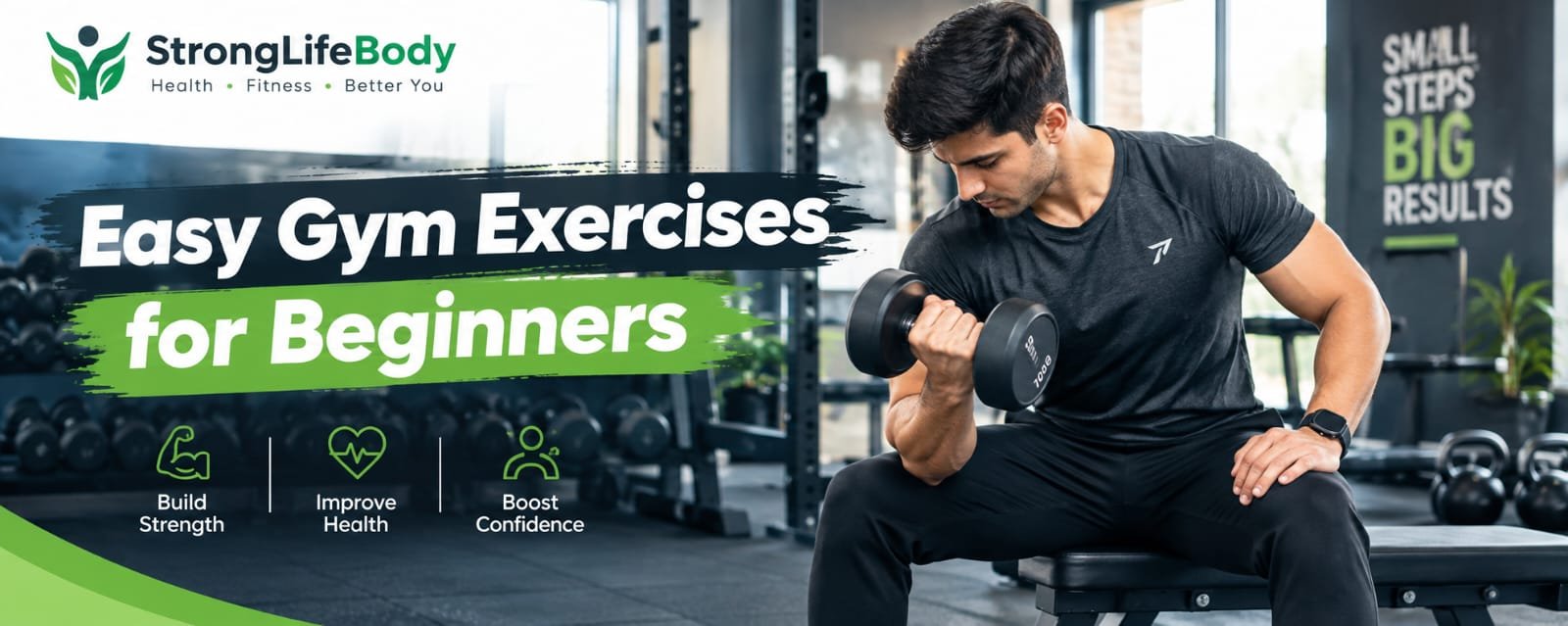
Starting a gym routine can feel intimidating, especially for someone who is unfamiliar with workout equipment or unsure where to begin. The good news is that a beginner does not need to start with complicated movements or heavy weights. Simple exercises can help build strength, improve fitness, and create confidence over time.
This guide covers Easy Gym Exercises for Beginners that are practical, manageable, and suitable for developing a consistent workout routine. With proper form, gradual progression, and regular practice, beginners can make steady progress without feeling overwhelmed.
Why Beginners Should Start With Simple Exercises
A beginner-friendly workout provides an opportunity to learn basic movement patterns before progressing to more challenging exercises. Starting slowly also allows the body to adjust to physical activity and helps reduce the risk of poor technique.
Simple exercises can target major muscle groups while keeping the workout easy to understand. They can also help a new gym-goer become comfortable with equipment such as treadmills, exercise bikes, machines, dumbbells, and benches.
The main goal at the beginning is not to lift the heaviest weight or complete the hardest workout. It is to establish a routine that can be maintained consistently.
Best Easy Gym Exercises for Beginners
1. Treadmill Walking
Treadmill walking is one of the easiest ways for a beginner to introduce cardio into a gym routine. It requires little technical skill and allows the pace and incline to be adjusted according to fitness level.
A beginner can start with a comfortable walking speed for around 10–20 minutes. As fitness improves, the duration or incline can gradually increase.
Beginner tip: Maintaining an upright posture and avoiding excessive support from the treadmill handles can make the movement more natural.
2. Stationary Bike
The stationary bike provides a low-impact cardio option that is easy to control. It can help improve cardiovascular endurance while placing relatively little stress on the joints.
A beginner can begin with a light resistance level and pedal at a comfortable pace. After several sessions, resistance or workout duration can be increased gradually.
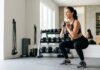
3. Bodyweight Squats
Squats are a fundamental lower-body exercise that works several muscles, including the quadriceps, glutes, and hamstrings.
To perform a basic squat, the exerciser stands with the feet approximately shoulder-width apart, pushes the hips back, bends the knees, and lowers the body while keeping the chest comfortably upright. The movement is then reversed to return to standing.
Beginners should focus on controlled movement rather than depth or speed.
4. Leg Press
The leg press machine can be useful for beginners because it provides support while training the lower body. It primarily works the legs and can be easier to learn than some free-weight exercises.
The seat and foot position should be adjusted before starting. A light resistance should be selected, and the movement should remain slow and controlled.
Important: The knees should not be forced into an uncomfortable position, and the weight should never be so heavy that proper technique becomes difficult.
5. Seated Chest Press
The seated chest press machine is a straightforward way to introduce pushing movements into a beginner’s workout. It primarily targets the chest while also involving the shoulders and triceps.
The handles should be positioned comfortably, with the back supported against the seat. The handles can then be pushed forward and slowly returned to the starting position.
Using a manageable resistance helps beginners learn the movement without sacrificing control.
6. Lat Pulldown
The lat pulldown is a beginner-friendly exercise for the upper back and arms. It can help introduce the pulling movement while allowing the user to control the resistance.
The exerciser sits upright, grips the bar, and pulls it toward the upper chest before slowly allowing it to return upward.
The movement should come from the upper body rather than from swinging or using momentum.
7. Seated Cable Row
The seated cable row works the back and arms and can complement exercises such as the chest press.
A beginner sits with the feet supported, holds the handle, and pulls it toward the torso while keeping the movement controlled. The handle is then returned slowly.
Keeping the shoulders relaxed and avoiding excessive leaning can help maintain good form.
8. Dumbbell Bicep Curls
Dumbbell curls are a simple exercise for training the biceps. They require only a pair of light dumbbells and can be performed while standing or seated.
The weights should be lifted by bending the elbows while keeping the upper arms relatively still. The dumbbells are then lowered under control.
Beginners should avoid swinging the body to move the weights.
9. Dumbbell Shoulder Press
The dumbbell shoulder press introduces an easy-to-understand pressing movement for the shoulders and arms.
A beginner can start with light dumbbells, hold them around shoulder height, and press them upward before returning them slowly.
A comfortable weight is more useful than a heavy one because controlled repetitions help reinforce proper technique.
10. Plank
The plank is a simple core exercise that does not require gym equipment. It involves holding the body in a stable position while engaging the abdominal and other supporting muscles.
A beginner can start with a short hold and gradually increase the duration as strength improves. If a full plank is too challenging, a modified version can provide an easier starting point.
How to Create a Beginner Gym Workout
A beginner does not need a complicated training schedule. A basic full-body workout can include a few exercises that cover cardio, legs, pushing, pulling, and core work.
For example:
| Exercise | Beginner Starting Point |
|---|---|
| Treadmill walking | 10–15 minutes |
| Bodyweight squats | 2 sets of 8–12 |
| Leg press | 2 sets of 8–12 |
| Chest press | 2 sets of 8–12 |
| Lat pulldown | 2 sets of 8–12 |
| Plank | 2 short holds |
The exact amount should be adjusted according to individual fitness level. Someone completely new to exercise may benefit from doing less initially and building up gradually.
Tips for Exercising Safely as a Beginner
Start With a Warm-Up
A few minutes of light cardio followed by gentle movement can help prepare the body for exercise. A warm-up can also provide time to become comfortable with the gym environment.
Focus on Proper Form
Good technique is more important than lifting heavy weights. Beginners should learn each movement carefully and use a resistance that allows them to maintain control throughout the exercise.
Increase Difficulty Gradually
Progress does not require dramatic increases in weight. A beginner can gradually increase repetitions, resistance, duration, or exercise difficulty as the body becomes more accustomed to training.
Allow Time for Recovery
Rest is an important part of a sustainable fitness routine. Muscles need time to recover between challenging sessions, particularly when someone is new to resistance training.
Listen to the Body
Normal exercise fatigue is different from sharp or unusual pain. Anyone experiencing concerning pain, dizziness, or other unusual symptoms should stop exercising and seek appropriate professional advice.
How Often Should Beginners Go to the Gym?
There is no single schedule that works for everyone. For many beginners, starting with two or three gym sessions per week can be more manageable than exercising every day.
Consistency matters more than trying to do too much at once. A realistic routine gives the body time to adapt while making it easier for the exerciser to maintain the habit.
As fitness and confidence improve, workout frequency, duration, or intensity can be adjusted.
Common Mistakes Beginners Should Avoid
New gym-goers often make the mistake of trying to progress too quickly. Lifting excessive weight, skipping warm-ups, copying advanced workouts, and ignoring recovery can make a routine unnecessarily difficult.
Another common mistake is expecting immediate results. Building strength and fitness takes time. A consistent approach with sensible progression is more sustainable than relying on short-term intense workouts.
Beginners should also remember that every gym-goer starts somewhere. Comparing an early workout to someone else’s advanced routine can create unnecessary pressure.
Making Gym Exercise a Sustainable Habit
The easiest workout to maintain is one that fits comfortably into everyday life. Beginners can make exercise more sustainable by choosing realistic workout times, keeping sessions manageable, and focusing on gradual improvement.
Tracking workouts can also provide motivation. Recording exercises, repetitions, resistance, or workout duration allows progress to become easier to recognize.
Most importantly, exercise does not have to be perfect to be effective. Regularly completing simple workouts can provide a stronger foundation than occasionally attempting extremely demanding sessions.
Final Thoughts
Easy Gym Exercises for Beginners can provide a practical starting point for anyone who wants to become more active and comfortable in the gym. Exercises such as treadmill walking, squats, leg presses, chest presses, lat pulldowns, dumbbell curls, and planks can help beginners develop strength, endurance, and confidence.
The key is to start at an appropriate level, prioritize proper form, and progress gradually. With patience and consistency, a simple beginner routine can become the foundation of a long-term fitness habit.





[…] structured exercise can be helpful, it is not the only way to increase daily activity. Walking, household chores, […]
[…] wants to improve strength, increase endurance, manage weight, or simply become more active, regular workouts can help turn those goals into achievable […]