
Starting a fitness journey can feel exciting and intimidating at the same time. For many beginners, the biggest challenge is simply knowing what to do after walking through the gym doors. A First Day At Gym Workout does not need to be complicated, exhausting, or filled with heavy weights. The goal is to become familiar with the environment, learn a few basic movements, and leave with enough energy to return.
This guide explains how a beginner can approach the first gym session, including warming up, choosing simple exercises, using appropriate weights, and finishing with a proper cool-down.
What Should a Beginner Do on the First Day at the Gym?
The first workout should focus on learning rather than pushing the body to its limits. A beginner does not need to train every muscle with maximum intensity on day one.
Instead, a simple full-body routine can help the body become familiar with common movements and gym equipment. The main priorities should include:
- Learning proper exercise form
- Choosing manageable weights
- Understanding how different machines work
- Avoiding excessive fatigue
- Building confidence for future workouts
The first session is an opportunity to create a positive experience rather than a test of strength or endurance.
Start With a Proper Warm-Up
Before beginning the main workout, spending around 5 to 10 minutes warming up can help prepare the body for exercise.
A beginner can use a treadmill, stationary bike, or elliptical machine at a comfortable pace. The purpose is not to complete an intense cardio session. Instead, the warm-up should gradually increase body temperature and get the muscles moving.
Simple dynamic movements, such as arm circles, bodyweight squats, and gentle leg swings, can also help prepare the body for the exercises ahead.
A Simple First Day At Gym Workout Routine
A beginner-friendly full-body workout can include basic movements that target the major muscle groups.
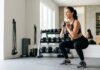
1. Bodyweight Squats
Bodyweight squats are a simple way to introduce the lower body to resistance training.
A beginner can start with:
- 2 sets
- 8 to 12 repetitions
The focus should remain on controlled movement and comfortable depth rather than completing as many repetitions as possible.
2. Chest Press Machine
The chest press machine can help beginners become familiar with pushing movements.
Two light sets of 8 to 12 repetitions are often enough for the first session. The weight should feel manageable and should allow proper form throughout the movement.
3. Seated Row
A seated row can introduce the back muscles to a pulling movement.
A beginner should keep the shoulders controlled and avoid using momentum. Starting with a light resistance makes it easier to understand the movement pattern.
4. Leg Press
The leg press is another beginner-friendly option for training the lower body.
Two sets of 8 to 12 repetitions with a comfortable weight can be sufficient. The machine should be adjusted correctly before starting, and the movement should remain controlled.
5. Lat Pulldown
The lat pulldown is commonly used to train the upper back.
The beginner should select a light weight and focus on pulling smoothly rather than leaning backward or using excessive force.
6. Dumbbell Shoulder Press
Light dumbbells can be used to introduce a basic shoulder exercise.
One or two sets of controlled repetitions are enough for the first workout. If the movement feels uncomfortable, it can be skipped until proper guidance is available.
7. Plank
A simple plank can help introduce basic core training.
A beginner can start by holding the position for 15 to 30 seconds and repeat it once or twice if comfortable.
How Much Weight Should a Beginner Lift?
One of the most common mistakes during a first gym session is choosing a weight that is too heavy.
The ideal starting weight should allow the person to complete the exercise with controlled form. The final few repetitions may feel challenging, but the movement should not become unstable or painful.
It is perfectly acceptable to begin with very light dumbbells, resistance machines with minimal weight, or bodyweight exercises. Strength develops gradually, and starting lighter provides an opportunity to learn proper technique.
How Long Should the First Gym Workout Last?
The first session does not need to last for hours. For most beginners, around 45 to 60 minutes, including the warm-up and cool-down, can be more than enough.
A shorter and manageable workout is often more sustainable than an overly demanding session that leaves the body extremely sore.
The goal of the first day is to create a foundation that can be built upon gradually.
The Importance of Rest Between Exercises
Beginners should allow enough time to recover between sets.
Resting for around 60 to 90 seconds can help maintain energy and improve exercise quality. Longer rest may be needed if breathing remains heavily elevated or if the muscles feel excessively fatigued.
There is no need to rush from one exercise to another, especially during the first few gym sessions.
Finish With a Cool-Down
After completing the workout, spending a few minutes cooling down can help the body gradually return to a resting state.
A beginner can walk slowly on the treadmill or perform gentle stretches for the muscles that were used during the workout.
The cool-down can also provide a good opportunity to reflect on which exercises felt comfortable and which movements may require more practice.
Common First-Day Gym Mistakes to Avoid
A successful first workout is often more about avoiding unnecessary mistakes than doing a large number of exercises.
Trying to Do Too Much
A beginner may feel motivated to train every muscle and try multiple machines. However, doing too much can lead to excessive soreness and fatigue.
A simple routine is usually a better starting point.
Lifting Too Heavy
Heavy weights are not necessary to make progress. Starting with manageable resistance allows the person to learn correct movement patterns and gradually build strength.
Ignoring Proper Form
Completing an exercise with poor form simply to lift more weight can increase the risk of discomfort or injury. Learning the movement correctly should always be the priority.
Comparing Progress With Others
Every person starts at a different fitness level. Comparing the first day at the gym with someone else’s years of experience can be discouraging.
Consistency and gradual improvement matter far more than what happens during a single workout.
What Should a Beginner Do After the First Gym Workout?
The work does not end when the first session is complete. Recovery plays an important role in helping the body adapt to exercise.
After the workout, a beginner should focus on:
- Drinking enough water
- Eating balanced meals
- Getting adequate rest
- Allowing sore muscles time to recover
- Planning the next workout realistically
Starting with two or three gym sessions per week may be easier to maintain than attempting to exercise every day immediately.
Final Thoughts
A First Day At Gym Workout should be simple, manageable, and focused on building confidence. There is no need to lift the heaviest weights, perform advanced exercises, or spend several hours training.
The best first workout helps a beginner learn the basics, understand the equipment, and leave the gym feeling motivated to return. By starting gradually and focusing on consistency, proper form, and sustainable habits, a beginner can build a strong foundation for long-term fitness progress.







[…] guide explores Shoulder Weight Training Exercises for Beginners, including simple exercises, proper form, and practical tips for building a safe and sustainable […]