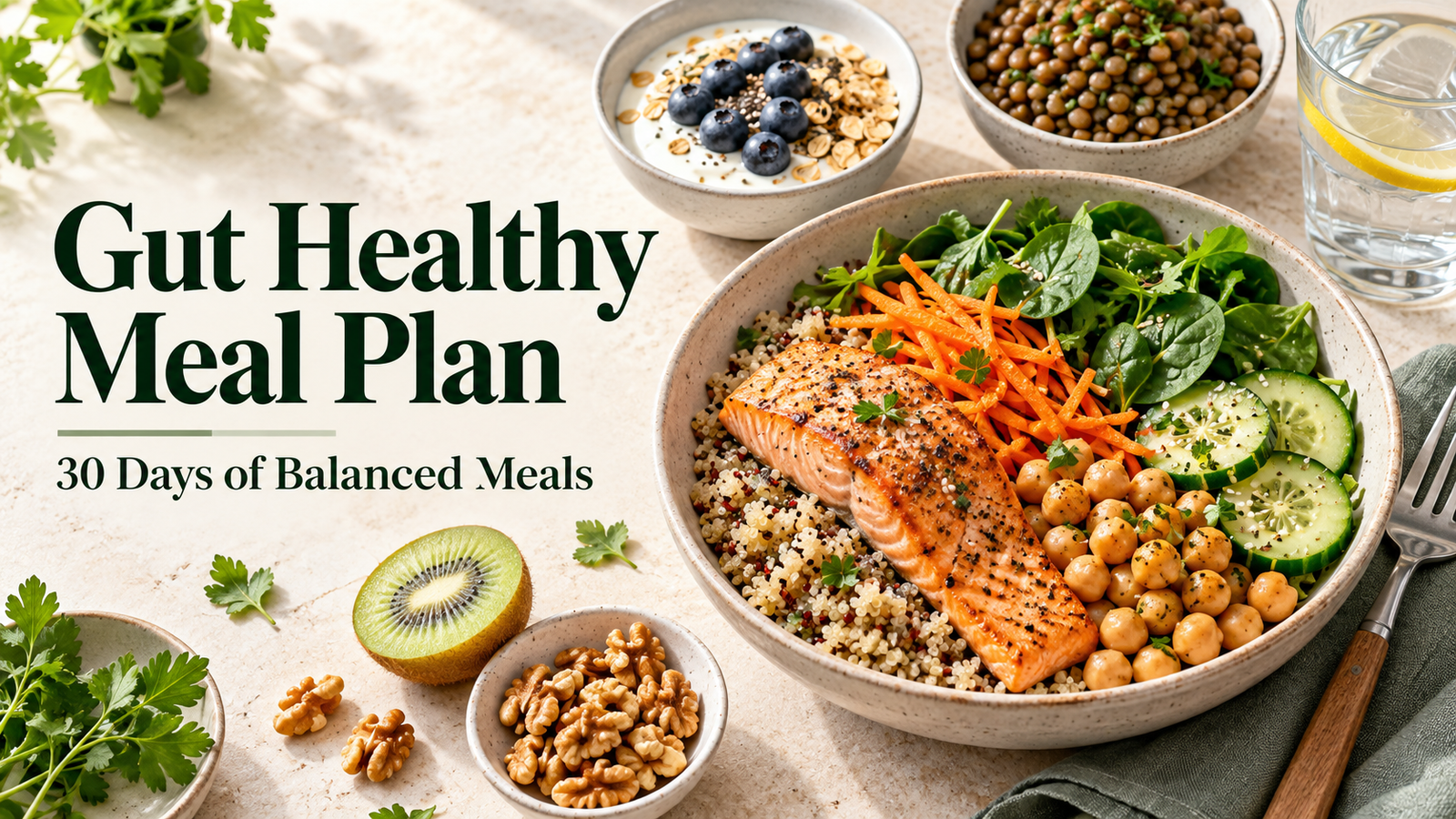
Gut Healthy Meal Plan: 30 Days of Easy, Nourishing Meals
A Gut Healthy Meal Plan brings together balanced meals, fibre-rich foods, and manageable eating habits to support digestion. For adults working towards weight loss, it also offers a practical way to organise satisfying meals without relying on restrictive food rules. This 30-day guide includes everyday ingredients, flexible meal ideas, and simple preparation tips. Its purpose is to help readers build a sustainable routine, rather than promise a particular result on the scales.
What Makes a Meal Plan Gut Healthy?
A supportive eating pattern includes variety, adequate fluids, and foods that suit the individual’s digestion. It does not require expensive powders, detox drinks, or a cupboard full of supplements.
Fibre deserves particular attention. The NHS recommends around 30 grams daily for adults, coming from different sources such as oats, wholemeal bread, beans, fruit, and vegetables. Drinking enough fluid also helps fibre work effectively.
However, increasing fibre suddenly can cause gas or bloating. Someone who currently eats little fibre may find smaller, gradual changes more comfortable.
Fibre and Prebiotic Foods
Some types of fibre provide food for beneficial gut bacteria. These are known as prebiotics and occur in foods including oats, onions, bananas, beans, and lentils. A varied menu helps include different sources across the week
Fermented Foods and Live Cultures
Plain live yoghurt is one way to include live cultures in meals. Nevertheless, probiotic effects vary, and research does not establish probiotic supplements as a reliable weight-loss solution. These products are optional additions rather than the foundation of the plan. NHS
How This Approach Can Support Weight Management
A Gut Healthy Meal Plan can make balanced eating easier to repeat, but it does not automatically cause weight loss. Changes in body weight depend on overall energy intake, activity, health, and individual circumstances.
Meals containing protein and vegetables can help with fullness. The NHS suggests including a protein source at meals and making vegetables a substantial part of the main meal.
A practical meal might combine:
- Vegetables: carrots, spinach, broccoli, courgettes, or salad.
- Protein: eggs, fish, chicken, tofu, beans, or lentils.
- Starchy carbohydrates: potatoes, brown rice, oats, or wholemeal bread.
- Some unsaturated fat: olive oil, nuts, seeds, or avocado.
Portions still matter. Olive oil and nuts can fit a balanced diet, but adding large amounts to every meal may make a weight-loss goal harder to achieve.
How to Follow the Gut Healthy Meal Plan
The following menu is a flexible example for generally healthy adults. It does not prescribe calories, portion sizes, or guaranteed weight loss. Each person’s needs differ, and the meals may need adjusting for appetite, activity, allergies, and medical conditions.
The menu also allows repetition. Leftover dinner can become lunch, frozen vegetables can replace fresh produce, and familiar ingredients can appear in several meals.
Before Day One
A little preparation makes the first week more manageable:
- Choose several breakfasts that are easy to repeat.
- Check existing cupboard and freezer supplies.
- Prepare a shopping list around the week’s meals.
- Identify suitable alternatives for foods that cause discomfort.
- Set aside time for cooking and safely storing leftovers.
Someone with irritable bowel syndrome, coeliac disease, inflammatory bowel disease, or another condition requiring dietary changes may need a tailored plan from a registered dietitian.
The Complete 30-Day Meal Plan
Snacks are optional and can be added according to hunger and nutritional needs. Suitable choices include fruit, plain yoghurt, a boiled egg, or a small portion of unsalted nuts.
Week 1: Establish a Comfortable Routine
The first week focuses on familiar meals and modest changes. People increasing their fibre intake can begin with smaller servings of beans, lentils, and whole grains.
| Day | Breakfast | Lunch | Dinner |
|---|---|---|---|
| 1 | Porridge with banana and plain yoghurt | Chicken and vegetable sandwich on wholemeal bread | Baked salmon, potatoes, and carrots |
| 2 | Scrambled eggs on wholemeal toast | Red lentil soup with bread | Chicken stir-fry with rice and courgettes |
| 3 | Plain yoghurt with oats and berries | Tuna and baked potato with salad | Tofu with brown rice and cooked vegetables |
| 4 | Porridge with stewed apple | Leftover tofu and rice bowl | Turkey meatballs, wholewheat pasta, and tomato sauce |
| 5 | Eggs, toast, and tomatoes | Chickpea and cucumber wrap | Baked cod, mashed potatoes, and green beans |
| 6 | Overnight oats with milk and berries | Chicken and vegetable soup with toast | Mild lentil dhal, rice, and spinach |
| 7 | Plain yoghurt, banana, and oats | Egg sandwich with vegetable sticks | Roast chicken, potatoes, and mixed vegetables |
Weekly focus: consistency matters more than novelty. A person who enjoys porridge every morning can repeat it and vary the fruit.
Week 2: Introduce More Variety
The second week offers different vegetables, grains, and protein sources. Portions of pulses can remain small if digestion is still adjusting.
| Day | Breakfast | Lunch | Dinner |
|---|---|---|---|
| 8 | Porridge with pear and cinnamon | Leftover chicken and wholemeal pitta | Salmon with quinoa and roasted vegetables |
| 9 | Eggs on toast with spinach | Lentil and carrot soup with bread | Tofu stir-fry with rice |
| 10 | Plain live yoghurt with oats and kiwi | Tuna and sweetcorn baked potato | Chicken and vegetable traybake |
| 11 | Overnight oats with banana | Chickpea and quinoa bowl | Turkey chilli with rice |
| 12 | Cottage cheese on toast with tomatoes | Leftover chilli baked potato | Baked fish, couscous, and courgettes |
| 13 | Porridge with berries and a few walnuts | Egg and spinach wrap | Lentil bolognese with wholewheat pasta |
| 14 | Plain yoghurt with oats and orange segments | Chicken and vegetable soup with bread | Tofu curry with rice and carrots |
Weekly focus: enjoyable variety can come from inexpensive swaps. Frozen spinach, canned beans, and seasonal fruit can keep the menu practical.
Week 3: Make Healthy Meals Convenient
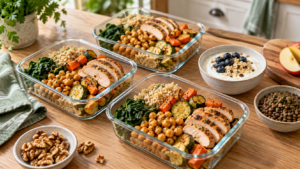
This week uses leftovers and overlapping ingredients to reduce the amount of daily cooking.
| Day | Breakfast | Lunch | Dinner |
|---|---|---|---|
| 15 | Overnight oats with apple | Lentil soup with wholemeal toast | Chicken fajita bowl with rice and peppers |
| 16 | Eggs and wholemeal toast | Leftover chicken fajita wrap | Baked salmon, potatoes, and broccoli |
| 17 | Plain yoghurt with oats and berries | Chickpea and roasted vegetable bowl | Turkey meatballs with wholewheat pasta |
| 18 | Porridge with banana | Leftover meatball sandwich with salad | Tofu and vegetable stir-fry with rice |
| 19 | Cottage cheese on toast with cucumber | Tuna baked potato | Mild chickpea curry with rice |
| 20 | Overnight oats with pear | Leftover curry with wholemeal flatbread | Roast chicken with root vegetables and potatoes |
| 21 | Scrambled eggs with spinach on toast | Chicken soup with bread | Lentil shepherd’s pie with green beans |
Weekly focus: a reliable freezer meal can make a busy evening easier. Meals should be cooled, stored, and reheated safely.
Week 4: Build a Routine That Lasts
The fourth week revisits useful meals while leaving room for personal preferences.
| Day | Breakfast | Lunch | Dinner |
|---|---|---|---|
| 22 | Porridge with berries | Leftover lentil shepherd’s pie | Baked cod, rice, and carrots |
| 23 | Plain yoghurt with banana and oats | Chicken and avocado wholemeal sandwich | Tofu traybake with potatoes and vegetables |
| 24 | Eggs on toast with tomatoes | Lentil soup with bread | Turkey and bean chilli with rice |
| 25 | Overnight oats with kiwi | Leftover chilli baked potato | Salmon with couscous and green beans |
| 26 | Porridge with stewed pear | Chickpea and cucumber wrap | Chicken and vegetable pasta |
| 27 | Cottage cheese on toast with fruit | Tuna and brown rice salad | Lentil dhal with rice and spinach |
| 28 | Plain yoghurt with oats and berries | Egg and vegetable sandwich | Roast chicken, potatoes, and broccoli |
Weekly focus: meals that fit a person’s budget, schedule, and tastes are easier to maintain after the month ends.
Days 29–30: Practise Independence
| Day | Breakfast | Lunch | Dinner |
|---|---|---|---|
| 29 | Favourite oat-based breakfast with fruit | Leftover chicken or tofu grain bowl | Favourite fish or pulse dish with vegetables and potatoes |
| 30 | Eggs on wholemeal toast with tomatoes | Lentil soup or chickpea wrap | A balanced meal chosen from the previous four weeks |
These final days encourage readers to choose meals themselves. A sustainable routine should remain useful without a strict daily menu.
Simple Swaps for Individual Preferences
The plan can accommodate different eating styles, although substitutions may change the nutritional balance.
| Original ingredient | Possible alternative |
|---|---|
| Chicken or turkey | Tofu, tempeh, beans, or lentils |
| Regular milk | Lactose-free milk or a calcium-fortified soya drink |
| Regular yoghurt | Lactose-free yoghurt or a suitable fortified soya alternative |
| Wholemeal bread | Certified gluten-free bread when medically necessary |
| Fresh vegetables | Frozen vegetables |
| Canned chickpeas | Lentils, tofu, or another tolerated protein |
| Brown rice | Potatoes, quinoa, or another preferred grain |
Dairy alternatives differ in protein and fortification, so checking labels helps. Anyone with coeliac disease also needs certified gluten-free oats and suitable replacements throughout the menu.
Meal Preparation Without Spending All Sunday Cooking
A Gut Healthy Meal Plan becomes easier to follow when preparation stays realistic. Two short cooking sessions each week may suit a busy household better than one lengthy session.
Useful preparation tasks include:
- Cooking a pot of soup or dhal.
- Roasting vegetables for several meals.
- Portioning oats for breakfast.
- Keeping frozen fish, vegetables, and bread available.
- Rinsing canned pulses before adding them to meals.
- Freezing suitable spare portions promptly.
There is no need to prepare every meal in advance. Even having tomorrow’s lunch ready can reduce last-minute decisions.
Common Mistakes That Make the Plan Harder
Increasing Fibre Too Quickly
Large portions of beans, bran, and raw vegetables can be uncomfortable for someone unused to them. Smaller additions allow the person to notice what feels manageable.
Treating Every Symptom as a Food Intolerance
An uncomfortable meal does not automatically establish an intolerance. Keeping a brief record of food and symptoms may help identify patterns, while persistent symptoms deserve professional assessment.
Depending on “Gut Health” Products
A premium label does not make a product essential. Everyday foods such as oats, potatoes, lentils, eggs, and vegetables can form a practical menu.
Expecting Guaranteed Weight Loss in 30 Days
The month is a starting point for building habits. This menu has not been calorie-calculated, so it cannot predict a particular weight change.
Frequently Asked Questions
Can this plan be followed without dairy?
Yes. Suitable fortified alternatives can replace dairy foods. Their protein and calcium content should be checked, particularly when several dairy servings are being replaced.
Are beans necessary every day?
No. The menu can include different protein sources. Someone who finds beans uncomfortable may prefer smaller portions or alternatives such as eggs, fish, or tofu.
Are probiotic supplements required?
No. They are not a requirement of this menu, and their effects depend on the product and intended use. People with an existing health condition or weakened immune system should discuss supplements with a clinician.
What should happen if bloating continues?
Continuing discomfort should prompt a review of portions, recent dietary changes, and possible triggers. Persistent or worsening symptoms should be discussed with a healthcare professional rather than managed through increasingly restrictive eating.
Conclusion
A Gut Healthy Meal Plan works best as a flexible structure for everyday eating. Across these 30 days, readers can practise preparing balanced meals, introducing fibre gradually, and choosing foods they enjoy and tolerate.
Lasting progress comes from a routine that remains manageable after day 30. Repeating favourite meals, adjusting portions appropriately, and seeking individual support when needed can make that routine more sustainable.