Walking vs Running for Fat Loss: Which Exercise Is Better?
Walking vs Running for Fat Loss is a common debate among people who want to burn calories, reduce body fat, and improve their overall fitness. Both activities offer excellent health benefits, but choosing the right exercise depends on fitness level, lifestyle, and personal goals.
Running generally burns more calories in less time, while walking provides a low-impact alternative that many people find easier to maintain. However, successful weight management involves more than simply choosing the most intense workout.
This article explores the differences between walking and running, their calorie-burning potential, health benefits, and how each activity can contribute to sustainable fat loss.
Understanding Walking vs Running for Fat Loss
Walking and running are aerobic exercises that increase heart rate, improve cardiovascular health, and help the body use energy.
Although both activities support weight management, they differ in intensity, calorie expenditure, and physical demands.
How Walking Supports Fat Loss
Walking is a low-impact activity that can help people increase their daily calorie expenditure without placing excessive stress on their bodies.
Brisk walking raises the heart rate, engages major muscle groups, and improves endurance.
Regular walking may also help individuals maintain an active lifestyle, especially when combined with balanced nutrition.
For beginners, walking for 20–30 minutes daily can provide a manageable starting point.
How Running Supports Fat Loss
Running is a higher-intensity cardiovascular exercise that typically burns more calories per minute than walking.
It increases energy expenditure, strengthens the cardiovascular system, and can improve physical endurance.
Because running requires greater effort, shorter sessions may provide substantial fitness benefits.
However, beginners should increase their running duration gradually to reduce the likelihood of injuries and excessive fatigue.
Walking vs Running: Calories Burned
Calorie expenditure is one of the biggest differences between walking and running.
The number of calories burned depends on several factors, including body weight, exercise duration, speed, terrain, and individual fitness.
Estimated Calories Burned in 30 Minutes
The following figures are approximate estimates for a person weighing 70 kg (154 pounds).
| Activity | Duration | Estimated calories |
|---|---|---|
| Slow walking (3 km/h) | 30 minutes | 75–85 |
| Brisk walking (5 km/h) | 30 minutes | 120–130 |
| Fast walking (6.5 km/h) | 30 minutes | 165–175 |
| Jogging (8 km/h) | 30 minutes | 280–300 |
| Running (10 km/h) | 30 minutes | 350–370 |
These estimates are based on typical activity-intensity values and are not guaranteed results.
Running usually burns more calories within the same amount of time. However, longer walking sessions can also produce meaningful energy expenditure.
For example, someone who walks consistently for an hour may burn more total calories than someone who runs for only a short period.
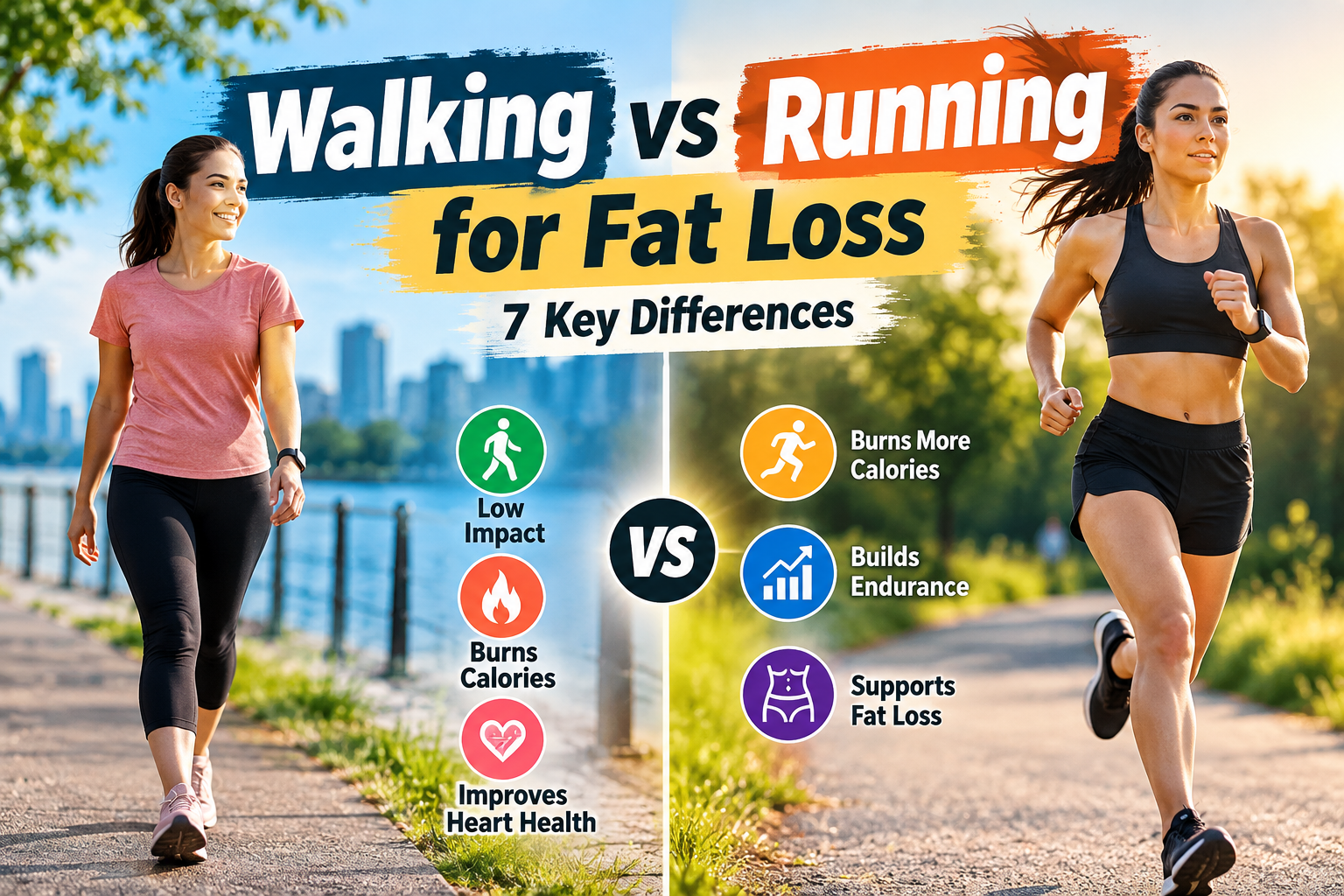
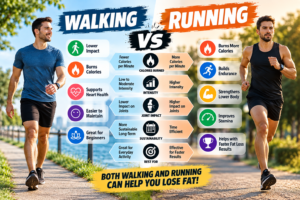
7 Key Differences Between Walking and Running for Fat Loss
1. Calorie-Burning Efficiency
Running generally burns more calories per minute because it requires greater muscular effort and energy.
Walking burns fewer calories per minute but can be performed for longer periods without causing significant fatigue.
Both activities can support a calorie deficit, which is important for reducing body fat.
2. Exercise Intensity
Walking is usually considered a low- to moderate-intensity exercise, depending on speed and fitness level.
Running is typically vigorous-intensity exercise that places greater demands on the cardiovascular and muscular systems.
People who are new to exercise may find walking more comfortable and manageable.
3. Impact on Joints
Walking places relatively low impact forces on the knees, ankles, and hips.
Running involves higher impact forces with each stride, although healthy joints can often adapt to appropriately progressed running.
Individuals with joint discomfort or previous injuries may prefer walking initially.
4. Fat Utilization During Exercise
During lower-intensity exercise, the body often uses a higher proportion of fat relative to carbohydrates for energy.
Higher-intensity activities generally rely more heavily on carbohydrates.
However, burning a greater percentage of fat during a workout does not automatically result in greater long-term body-fat loss.
Overall energy balance and consistency remain more important.
5. Recovery Requirements
Walking usually requires less recovery time than intense running.
Many people can comfortably include walking in their daily routines.
Running, especially at faster speeds or longer distances, may require additional recovery between demanding sessions.
Adequate sleep, nutrition, and rest support both activities.
6. Time Efficiency
Running can be useful for individuals with limited exercise time.
A 20-minute run may burn more calories than a 20-minute walk at a comfortable pace.
However, walking can be incorporated into commuting, lunch breaks, and everyday activities.
This flexibility makes walking practical for people with busy schedules.
7. Long-Term Sustainability
Sustainable fat loss requires habits that can be maintained over time.
Some individuals enjoy running and find it motivating, while others prefer walking because it feels less demanding.
Neither activity is automatically superior for everyone.
The most effective choice is often the exercise that a person can perform regularly without excessive discomfort or burnout.
Is Walking Better Than Running for Belly Fat?
Both walking and running can help reduce overall body fat, including abdominal fat.
However, no exercise can specifically target fat loss from the stomach.
The body determines where fat is lost based on factors such as genetics, hormones, and overall energy balance.
Regular aerobic activity, balanced eating habits, and strength training can contribute to improved body composition.
Walking may be particularly useful for people who want to gradually increase their physical activity without following demanding workout routines.
Running can offer additional calorie expenditure for individuals who enjoy vigorous exercise.
Benefits of Walking for Weight Loss
Walking provides several advantages beyond calorie burning.
Suitable for Beginners
Walking requires little equipment and can be performed at different speeds.
Beginners can start with short sessions and gradually increase their duration.
Supports Cardiovascular Health
Regular brisk walking can improve cardiovascular fitness and help support healthy blood pressure.
It may also contribute to better blood sugar regulation.
Easy to Include in Daily Life
Walking can be incorporated into everyday routines through activities such as:
-
Walking after meals.
-
Taking short breaks from sitting.
-
Walking to nearby destinations.
-
Using stairs when appropriate.
-
Taking evening walks.
These small activities can increase total daily movement.
Supports Mental Well-Being
Walking outdoors may help improve mood, reduce stress, and support mental well-being.
Enjoyable physical activity can also make long-term exercise habits easier to maintain.
Benefits of Running for Weight Loss
Running offers several advantages for people who can tolerate higher-intensity exercise.
Higher Calorie Expenditure
Running typically burns more calories per minute than walking.
This makes it a time-efficient option for increasing physical activity.
Improves Cardiovascular Endurance
Regular running challenges the heart and lungs, helping improve aerobic capacity.
As fitness develops, individuals may find everyday physical activities easier.
Builds Lower-Body Strength and Endurance
Running engages muscles in the legs, hips, and core.
Although it does not replace resistance training, it can improve muscular endurance and support lower-body conditioning.
Supports Long-Term Fitness
Running can improve stamina and provide opportunities for progressive fitness goals.
Individuals may gradually increase their distance, pace, or running duration as their endurance improves.
Walking vs Running for Fat Loss: Which Is Better for Beginners?
Walking is generally the more accessible starting option for beginners, particularly those who have been physically inactive.
It allows individuals to develop cardiovascular endurance while becoming comfortable with regular movement.
A beginner may start with 15–20 minutes of walking and gradually progress toward longer sessions.
Once walking feels comfortable, short jogging intervals can be introduced.
For example, a person might alternate one minute of gentle jogging with three minutes of walking.
This gradual approach can help improve endurance without immediately requiring continuous running.
How Much Walking or Running Is Needed for Fat Loss?
The amount of exercise needed varies depending on body weight, nutrition, activity level, and individual goals.
General physical activity guidelines recommend that adults aim for:
-
150–300 minutes of moderate-intensity aerobic exercise per week, such as brisk walking.
-
75–150 minutes of vigorous-intensity aerobic exercise per week, such as running.
-
Muscle-strengthening activities on at least two days each week.
These recommendations support overall health. Some people may need additional activity, alongside dietary changes, to achieve their desired fat-loss results.
Example Weekly Exercise Plan
| Day | Activity | Duration |
|---|---|---|
| Monday | Brisk walking | 30 minutes |
| Tuesday | Walking and jogging intervals | 25 minutes |
| Wednesday | Comfortable walking | 30 minutes |
| Thursday | Rest or gentle walking | 20 minutes |
| Friday | Brisk walking | 40 minutes |
| Saturday | Walking and jogging intervals | 30 minutes |
| Sunday | Relaxed walking | 30 minutes |
This sample routine can be adjusted based on fitness level, recovery needs, and personal preferences.
Beginners do not need to run immediately. Consistent walking can provide a strong foundation for future progress.
How Nutrition Affects Walking and Running Results
Exercise alone does not determine fat loss.
Nutrition plays an important role because body-fat reduction generally requires a sustained calorie deficit.
A balanced eating pattern can support exercise performance, recovery, and overall health.
Eat Adequate Protein
Protein helps maintain muscle mass during weight loss.
Foods such as eggs, fish, chicken, beans, lentils, and dairy products can contribute to daily protein needs.
Choose Nutrient-Dense Foods
Vegetables, fruits, whole grains, and other fiber-rich foods provide important nutrients.
These foods can also help individuals feel satisfied while managing calorie intake.
Stay Hydrated
Adequate hydration supports physical performance and general well-being.
Fluid requirements vary depending on activity intensity, temperature, and individual needs.
Avoid Extreme Dieting
Highly restrictive diets may cause fatigue and make regular exercise more difficult.
Gradual, sustainable dietary changes are generally easier to maintain.
Common Mistakes That Can Slow Fat Loss
Exercising Without Considering Nutrition
Even regular exercise may not lead to fat loss if overall calorie intake consistently exceeds energy expenditure.
A balanced approach considers both movement and eating habits.
Increasing Running Intensity Too Quickly
Sudden increases in running distance or intensity can contribute to overuse injuries.
Gradual progression allows the body to adapt.
Ignoring Recovery
Insufficient rest may contribute to fatigue and reduced exercise performance.
Recovery should be considered part of a balanced fitness routine.
Expecting Immediate Results
Body composition changes usually take time.
Daily weight fluctuations can occur because of hydration, food intake, and other factors.
Long-term trends are generally more meaningful than individual measurements.
Can Walking and Running Be Combined for Better Results?
Combining walking and running can provide a flexible approach to cardiovascular exercise.
Walking can serve as a warm-up, recovery activity, or lower-intensity workout.
Running intervals can increase exercise intensity and improve endurance.
For example, someone may begin with five minutes of walking, alternate gentle jogging and walking for 15–20 minutes, and finish with a comfortable cooldown.
This approach allows individuals to adjust workout intensity according to their fitness and recovery needs.
Combining both activities is not essential for fat loss, but it may help make exercise more varied and enjoyable.
Frequently Asked Questions
Is walking or running better for losing weight?
Running generally burns more calories per minute, while walking may be easier to maintain consistently. Both can support weight loss when combined with appropriate nutrition.
Can walking 30 minutes a day help reduce body fat?
Yes. Walking for 30 minutes daily can increase calorie expenditure and support weight management, especially when combined with balanced eating habits.
Does running burn belly fat faster than walking?
Running may increase calorie expenditure more quickly, but neither activity specifically targets belly fat. Overall fat reduction depends on sustained energy balance and other individual factors.
Is walking every day better than running three times a week?
The answer depends on total exercise duration, intensity, recovery, and consistency. Either routine can provide meaningful health and fitness benefits.
Can someone lose fat without running?
Yes. Running is not necessary for fat loss. Walking, strength training, other physical activities, and sustainable nutrition habits can all contribute to reducing body fat.
Conclusion
Walking vs Running for Fat Loss ultimately comes down to choosing an activity that matches individual fitness levels, preferences, and long-term goals.
Running generally provides greater calorie expenditure in less time, making it useful for individuals who enjoy vigorous exercise. Walking offers a low-impact, accessible alternative that can be incorporated into everyday life.
Both activities can improve cardiovascular fitness and support healthy weight management.
Rather than focusing only on which exercise burns the most calories, individuals can achieve more sustainable progress by combining regular physical activity with balanced nutrition, adequate recovery, and realistic expectations.