

Starting a workout routine can feel exciting, but maintaining it over time is often the real challenge. Busy schedules, low motivation, and unrealistic expectations can make regular exercise difficult. The good news is that workout consistency does not depend on motivation alone. With realistic goals, a manageable routine, and a few sustainable habits, individuals can make exercise a regular part of their lifestyle. This guide explores How to Improve Workout Consistency through practical strategies that help people stay active, overcome common barriers, and build a fitness routine that lasts.
Why Workout Consistency Matters
Regular exercise supports physical health, improves energy levels, and can contribute to better mood and overall well-being. However, occasional intense workouts are often less sustainable than a routine that can be maintained over time.
Consistency allows individuals to make gradual progress without feeling pressured to achieve everything at once. Whether someone wants to improve strength, increase endurance, manage weight, or simply become more active, regular workouts can help turn those goals into achievable habits.
The key is not perfection. A sustainable routine allows room for busy days, rest, and occasional setbacks.
Set Realistic and Specific Fitness Goals
One of the first steps in improving workout consistency is setting goals that match an individual’s current fitness level and lifestyle. Unrealistic targets can quickly lead to frustration and make exercise feel overwhelming.
Instead of aiming to work out every day immediately, a person might begin with three manageable sessions per week. Clear goals also make progress easier to recognize.
For example, a realistic goal could be:
- Completing three workouts each week
- Walking for 20 minutes on most days
- Improving flexibility through regular stretching
- Gradually increasing the number of repetitions during strength training
Small, measurable goals can create a sense of achievement and encourage continued effort.
Create a Workout Routine That Fits Daily Life
A workout routine is more likely to last when it fits naturally into an individual’s schedule. Choosing a convenient time and location can remove some of the barriers that often lead to missed sessions.
Some people may prefer exercising in the morning, while others may find it easier to work out after work or in the evening. The most effective time is usually the one that can be maintained consistently.
A simple weekly plan might include:
- Monday: Strength training
- Tuesday: Walking or light cardio
- Wednesday: Rest or stretching
- Thursday: Strength training
- Friday: Cardio or recreational activity
- Weekend: Rest, walking, or an enjoyable physical activity
A flexible schedule gives individuals structure without making the routine feel restrictive.
Start Small and Build Gradually
Trying to make major changes overnight can make a workout plan difficult to maintain. Starting with shorter sessions can help individuals develop confidence and establish a regular exercise habit.
A beginner might start with 15 to 20 minutes of activity and gradually increase the duration as fitness improves. Even a short workout can be valuable when it helps maintain momentum.
The goal is to make exercise feel manageable rather than exhausting. Over time, small efforts can develop into a consistent and rewarding routine.
Make Exercise More Enjoyable
Enjoyment plays an important role in long-term workout consistency. When exercise feels like a punishment, individuals may be less likely to continue. Choosing activities that are enjoyable can make regular movement easier.
Different people may prefer different forms of exercise, such as:
- Walking outdoors
- Dancing
- Cycling
- Swimming
- Strength training
- Group fitness classes
- Yoga or mobility exercises
- Recreational sports
Trying different activities can help a person discover what feels enjoyable and sustainable. Exercise does not have to follow one specific format to be effective.
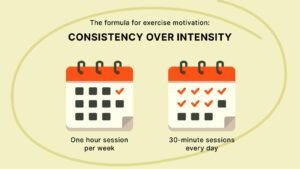
Focus on Progress, Not Perfection
Many individuals lose motivation because they expect perfect results or never want to miss a workout. However, occasional interruptions are a normal part of life.
A missed session does not mean the entire routine has failed. Instead, the individual can return to the schedule at the next available opportunity. This approach prevents one setback from becoming a long-term break.
Tracking progress can also help. A person might record completed workouts, walking distance, exercise duration, or improvements in strength. These small signs of progress can provide encouragement when results are not immediately visible.
Remove Common Workout Barriers
Identifying obstacles in advance can make it easier to stay consistent. Common barriers include a lack of time, tiredness, limited equipment, and uncertainty about what to do.
Practical solutions may include:
- Preparing workout clothes the night before
- Scheduling exercise sessions in a calendar
- Keeping workouts short on busy days
- Following a simple home workout plan
- Choosing exercises that require little or no equipment
- Preparing a backup activity for days when the usual routine is not possible
A flexible approach helps individuals continue exercising even when their original plan needs to change.
Build Accountability and Support
Accountability can make a workout routine easier to maintain. Exercising with a friend, joining a fitness class, or sharing progress with a supportive person can provide encouragement.
Some individuals may also benefit from working with a qualified fitness professional who can help create a suitable exercise plan and demonstrate proper technique.
Support should make exercise feel encouraging rather than competitive. The purpose is to help a person remain committed to personal goals.
Prioritize Rest and Recovery
Rest is an important part of a sustainable workout routine. Exercising too intensely without allowing adequate recovery can lead to excessive fatigue, discomfort, or reduced motivation.
A balanced approach includes rest days, sufficient sleep, hydration, and appropriate nutrition. Individuals should also pay attention to how their bodies feel and adjust activity when necessary.
Recovery does not mean giving up. It helps create a routine that can be maintained safely and comfortably over time.
Track Habits and Review Progress
Tracking workouts can help individuals understand what is working and where adjustments may be needed. A simple notebook, calendar, or fitness app can be used to record activity.
Instead of focusing only on physical results, a person can also track:
- Number of workouts completed
- Energy levels
- Mood after exercise
- Improvements in endurance
- Changes in strength or flexibility
- How often the routine was maintained
Reviewing progress every few weeks can help individuals celebrate achievements and make realistic changes to their routine.
What to Do After Missing a Workout
Missing a workout is not unusual, and it does not have to disrupt long-term progress. The most useful response is to avoid guilt and return to the routine as soon as possible.
If a person misses a session because of a busy day, a shorter workout or a walk may be a practical alternative. If fatigue or discomfort is the reason, rest may be more appropriate.
The important lesson is that consistency is built through repeated effort over time—not through never making mistakes.
Final Thoughts
Learning How to Improve Workout Consistency is about creating habits that fit an individual’s lifestyle. Realistic goals, enjoyable activities, flexible scheduling, and proper recovery can make regular exercise easier to maintain. Rather than relying entirely on motivation, individuals can focus on building a routine that remains manageable during both busy and productive periods. With patience and gradual progress, consistent workouts can become a natural and rewarding part of everyday life.